How to Delegate Tasks in Aesthetic Practices
Delegate non-clinical tasks in your aesthetic clinic: identify what to hand off, train staff, set clear expectations, and use SOPs and tech to boost efficiency and revenue.


Delegating tasks in your aesthetic practice is the key to improving efficiency, reducing burnout, and focusing on what matters most - patient care. Many clinic leaders struggle to let go of responsibilities, but effective delegation can save hours each week, boost revenue by 33% using growth-focused features, and improve team morale. Here’s how to do it:
- Identify tasks to delegate: Hand off anything that doesn’t legally require your expertise, such as scheduling, inventory, or follow-up calls.
- Choose the right team members: Match tasks to staff strengths and provide clear protocols and training.
- Set clear expectations: Define goals, deadlines, and success benchmarks for each task.
- Maintain communication: Use regular check-ins and feedback to monitor progress without micromanaging.
- Leverage technology: Tools like Prospyr help streamline task management, scheduling, and communication.
Delegation isn’t just about offloading work - it’s about empowering your team and creating a more efficient practice. Start small, stay consistent, and watch your practice thrive.
Identifying Which Tasks to Delegate
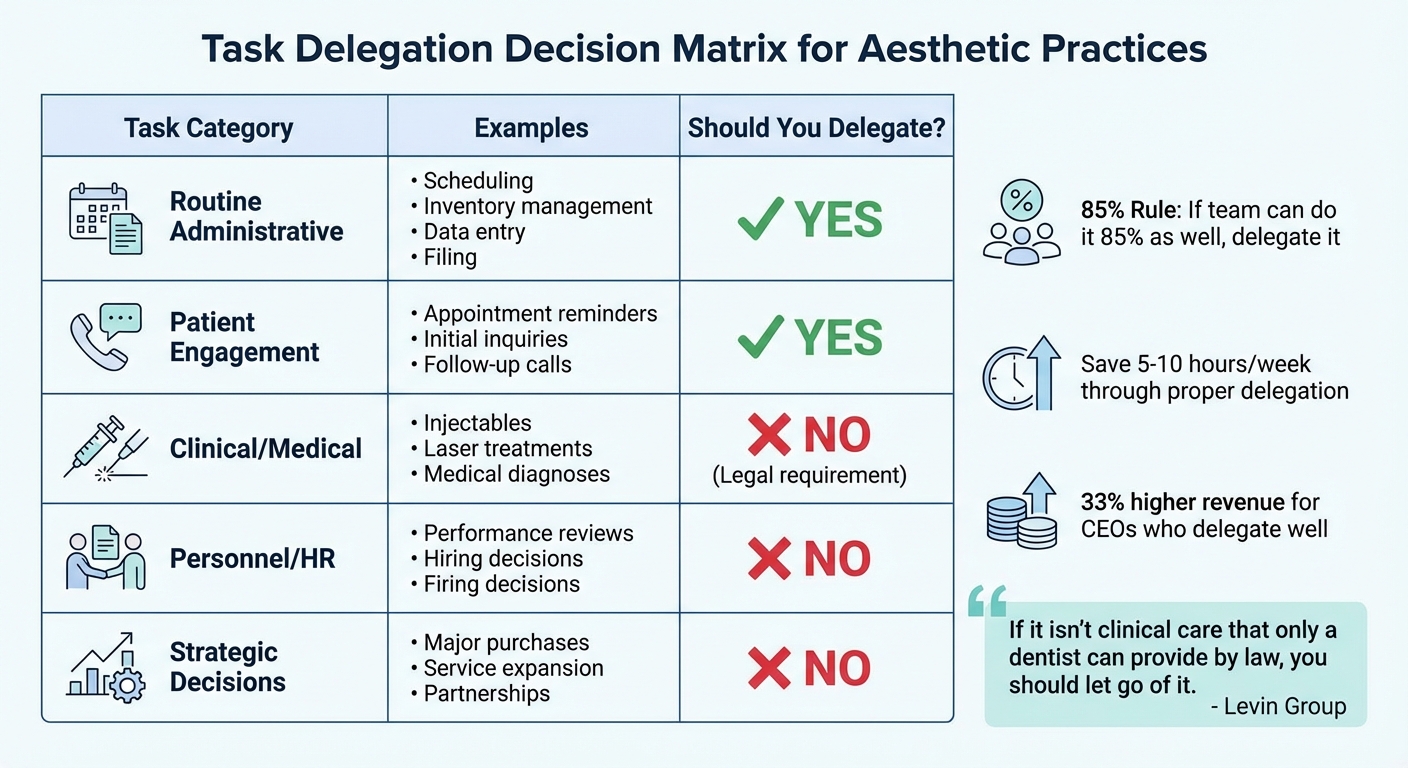
Task Delegation Guide for Aesthetic Practices: What to Delegate vs Keep
The cornerstone of effective delegation lies in figuring out what tasks you can pass on. A handy guideline from practice management experts is to delegate any task that doesn't legally require your personal attention.
One helpful method is the 85% rule: if someone on your team can complete a task at least 85% as well as you can, it's ready to be delegated. The goal here isn't perfection but rather reclaiming your time for responsibilities that truly need your expertise. In fact, CEOs who are skilled at delegating see 33% higher revenue compared to those who aren't.
Start by auditing your schedule for a week. Write down every task you handle and ask yourself, "Am I the only one legally required to do this?" If the answer is no, that task can likely be delegated. This simple exercise could save your practice 5–10 hours each week. It also helps you clearly separate tasks you need to keep from those you can hand off.
Routine Administrative Duties
Administrative tasks are prime candidates for delegation. These include scheduling, managing inventory, processing payments, and data entry - tasks that follow clear procedures and don't require clinical judgment. For instance, your front desk staff can confirm appointments, order supplies, process payments, and maintain electronic records. One practice reported saving 10 hours a week by delegating lead follow-up, which allowed the medical director to see three additional patients daily. By entrusting these routine tasks to your team, you free up time to focus on revenue-generating activities like patient care.
Patient and Client Engagement Tasks
Beyond administrative duties, many patient engagement activities can also be delegated. Tasks like initial consultations, appointment reminders, basic patient education, and follow-up communications can be handled by your team. Staff members can take care of new patient inquiries, explain pre-treatment guidelines, and notify patients about logistical updates, such as parking changes or office hours. Additionally, implementing automated lead management systems can boost lead-to-booking conversion rates by up to 65% when these tasks are assigned to properly trained staff. This allows your team to manage patient interactions effectively, leaving you to focus on clinical assessments and treatment planning.
Tasks That Should Not Be Delegated
Certain tasks require your direct involvement and should not be handed off. First, any clinical or medical task restricted by law - like injectables, laser treatments, surgical procedures, or medical diagnoses - must remain under your control.
"If it isn't clinical care that only a dentist can provide by law, you should let go of it." - Levin Group
Second, personnel-related responsibilities such as performance reviews, hiring decisions, and handling sensitive employee matters should stay with you. Lastly, strategic decisions like expanding services, purchasing major equipment, or forming partnerships demand your direct oversight.
| Task Category | Examples | Should You Delegate? |
|---|---|---|
| Routine Administrative | Scheduling, inventory, data entry, filing | Yes |
| Patient Engagement | Appointment reminders, initial inquiries, follow-up calls | Yes |
| Clinical/Medical | Injectables, laser treatments, medical diagnoses | No (Legal requirement) |
| Personnel/HR | Performance reviews, hiring, firing | No |
| Strategic Decisions | Major purchases, service expansion, partnerships | No |
Choosing and Training the Right Team Members
Once you’ve figured out which tasks to delegate, the next step is matching those tasks to the right team members. It’s all about aligning responsibilities with individual strengths and giving your team the tools they need to succeed.
Matching Skills to Tasks
Start by categorizing tasks based on the skills they require. For example, team members with strong attention to detail are perfect for analytical tasks like inventory management, billing, or data entry. On the other hand, those who excel at creative problem-solving are a better fit for handling social media, addressing patient recovery concerns, or designing patient engagement strategies.
A helpful framework for assigning roles is the 5 Ps Model: Pilots (proactive leaders), Participants (reliable contributors), Passengers (passive followers), Protestors (critical thinkers), and Prisoners (disengaged staff). Pilots are great for leadership roles, Participants thrive in collaborative settings, and Protestors add value by identifying flaws and improving processes.
For patient-facing roles, consider the "Nordstrom Rule" - look for candidates with experience in high-end customer service environments like Nordstrom or Starbucks. These individuals often bring the interpersonal skills and positive attitudes that are crucial in aesthetic practices. Assign tasks based on proven expertise and natural strengths.
Conduct a delegation audit by tracking your weekly tasks. This can uncover "blind spots" - things you handle out of habit that could be better managed by someone else with a specific interest or skill in that area.
Providing Training and Clear Protocols
Training isn’t just about showing someone how to do a task - it’s about explaining why it’s done that way. When employees understand the reasoning behind procedures, they develop better judgment and can handle unexpected situations more effectively. For example, instead of teaching a script for patient consultations, explain how treatments work and why certain patients may or may not be candidates. This builds confidence and equips your team to triage independently.
"People who understand concepts rather than just memorize facts are also better prepared to manage the unusual and to build on their knowledge base and will grow into more effective employees for the long term." - Dr. Heidi Waldorf, MD, FAAD
Use a shadowing approach for training. New hires can observe senior staff for a few days or weeks to learn techniques. Then, reverse the process - have the trainee perform tasks while being observed by the senior employee. This builds confidence and ensures accuracy before they work independently.
Standard Operating Procedures (SOPs) are essential for consistency. Document every step of treatments and administrative processes so any trained team member can follow them. For example, in August 2024, Dr. Sarah Thompson’s aesthetic clinic implemented detailed SOPs for every treatment, from pre-treatment consultations to post-treatment care. Combined with structured training, this led to a 25% revenue increase and higher patient satisfaction within six months.
Start with small, low-stakes tasks - like confirming appointments or processing payments - before assigning more complex responsibilities. This gradual approach helps team members build confidence without feeling overwhelmed. Make sure they have the tools, resources, and authority they need to complete tasks independently, whether that’s software access, training materials, or budget authority.
Cross-Training for Team Flexibility
Cross-training is a game-changer for building a flexible and resilient team. It ensures multiple team members can handle different roles, which keeps things running smoothly during lunch breaks, vacations, or unexpected absences. For example, a clinical assistant trained in front desk duties can step in during peak check-in times, avoiding patient delays.
"Cross-training your staff is a strategic approach to foster adaptability... it creates a safety net where various team members can fill in for one another, preventing disruptions in service delivery." - Josh Gosnell, VP of Revenue, Adit
This approach not only prevents bottlenecks but also encourages problem-solving and teamwork. Practices led by strong delegators have been shown to grow 112% more than those managed by individuals who struggle with delegation. Patients notice this seamless coordination, which strengthens trust and confidence in your practice.
When offering cross-training, align opportunities with team members' career goals. For instance, a medical assistant interested in management might take on logistics or vendor relations tasks, gaining valuable experience while addressing operational needs. This blend of personal growth and practical contributions keeps employees engaged and motivated, while also building a stronger, more adaptable team.
Reading about the problem? See how Prospyr solves it in one platform.
Book a DemoSetting Clear Expectations and Communication Channels
Building on the idea of targeted task delegation, setting clear expectations ensures your team can work confidently and effectively. Without clear success criteria, even the best delegation efforts can fall short. Kevin Sharer, a professor at Harvard Business School, emphasizes this point:
"You've got to have real clarity of objective... alignment on 'what does good look like' and by what timeline, and the technique of measuring accomplishment".
In short, clarity is the foundation of successful teamwork. Without it, even skilled team members can struggle to meet expectations.
Defining Goals and Success Metrics
Focus on results, not micromanaging the process. Instead of dictating every step, describe the desired outcome and let your team figure out the best way to achieve it. For instance, if you're delegating patient follow-up calls, define the goal as: "Contact all post-treatment patients within 48 hours and document their recovery status." This approach gives your team the flexibility to work in their own style while still meeting your standards.
Clear, measurable outcomes, deadlines, and quality benchmarks are essential. For example, if someone is managing your practice's Instagram account, specify tasks like posting three times a week, focusing on content themes such as testimonials or educational posts, and responding to comments within 24 hours. These parameters not only set your team up for success but also make it easier for you to evaluate their work.
It’s also important to explain why a task matters. When people understand how their efforts contribute to broader goals - like reducing no-shows or improving patient retention - they’re more likely to feel motivated and engaged. For example, when delegating appointment reminder calls, explain how consistent reminders help streamline scheduling and improve patient satisfaction.
Encourage two-way communication by asking for input on timelines and resources. This dialogue can uncover potential challenges before they become problems. And here’s a compelling stat: CEOs who excel at delegation generate 33% higher revenue than those who don’t. A big part of that success comes from setting clear, actionable goals, which also lays the groundwork for effective monitoring.
Establishing Regular Check-Ins
Delegation doesn’t mean handing off a task and forgetting about it. As Kevin Sharer points out:
"It isn't fire and forget. That is, 'I just give you the task and I don't worry about it anymore. We've got to have some way to monitor the progress along the way without me getting in your way'".
The trick is finding that balance between staying informed and avoiding micromanagement.
Schedule brief, regular check-ins - whether weekly or daily 10–15-minute huddles - to keep tabs on progress without hovering. These updates give team members a chance to share what they’ve accomplished, what they’re working on, and any roadblocks they’ve encountered. For instance, if a front desk coordinator mentions that new patient intake forms are delayed due to software glitches, you can address the issue right away instead of finding out too late.
Another helpful method is the "repeat back" technique. After assigning a task, ask the team member to summarize it in their own words. This ensures everyone is on the same page and helps avoid misunderstandings. For team members taking on new responsibilities, consider using a "trust but verify" approach - set up formal review points early on until they’ve proven their ability to handle the task independently. Regular updates naturally encourage open communication and collaboration.
Creating an Environment for Open Communication
Open communication is key to catching small issues before they become big problems. When team members feel safe asking questions or sharing concerns, they’re more likely to bring up potential challenges early. This kind of environment drives better performance.
Start by actively seeking input. Before finalizing a delegated task, ask questions like, "What challenges do you foresee?" This not only shows you value their perspective but also builds trust and engagement.
Frequent, informal conversations can be more effective than formal performance reviews. Adobe, for example, reduced voluntary turnover by about 30% after replacing annual reviews with regular check-ins. Make yourself available for questions and establish multiple communication channels - whether through quick in-person chats, messages, or scheduled one-on-one meetings.
To avoid confusion, standardize how your team communicates updates. Instead of juggling emails, texts, and verbal requests, choose one primary system - like a task management tool or a daily wrap-up email. For example, you might ask team members to send a quick end-of-day summary outlining what they completed, what’s next, and any challenges they’re facing.
Steve Jobs once said:
"It doesn't make sense to hire smart people and tell them what to do. We hire smart people so they can tell us what to do".
Using Technology to Simplify Delegation
Delegation becomes far more effective when supported by technology that brings essential functions together in one place. Relying on fragmented systems for scheduling, record-keeping, and task tracking often leads to confusion and inefficiency.
Platforms like Prospyr streamline these processes by combining everything into a single solution. For example, when Dr. Daniel Lee consolidated four separate systems into Prospyr, his practice saw a 50% revenue increase and a 40% jump in appointments. By integrating task management, scheduling, and communication, Prospyr eliminates the hassle of juggling multiple tools.
Task Assignment and Monitoring with Prospyr
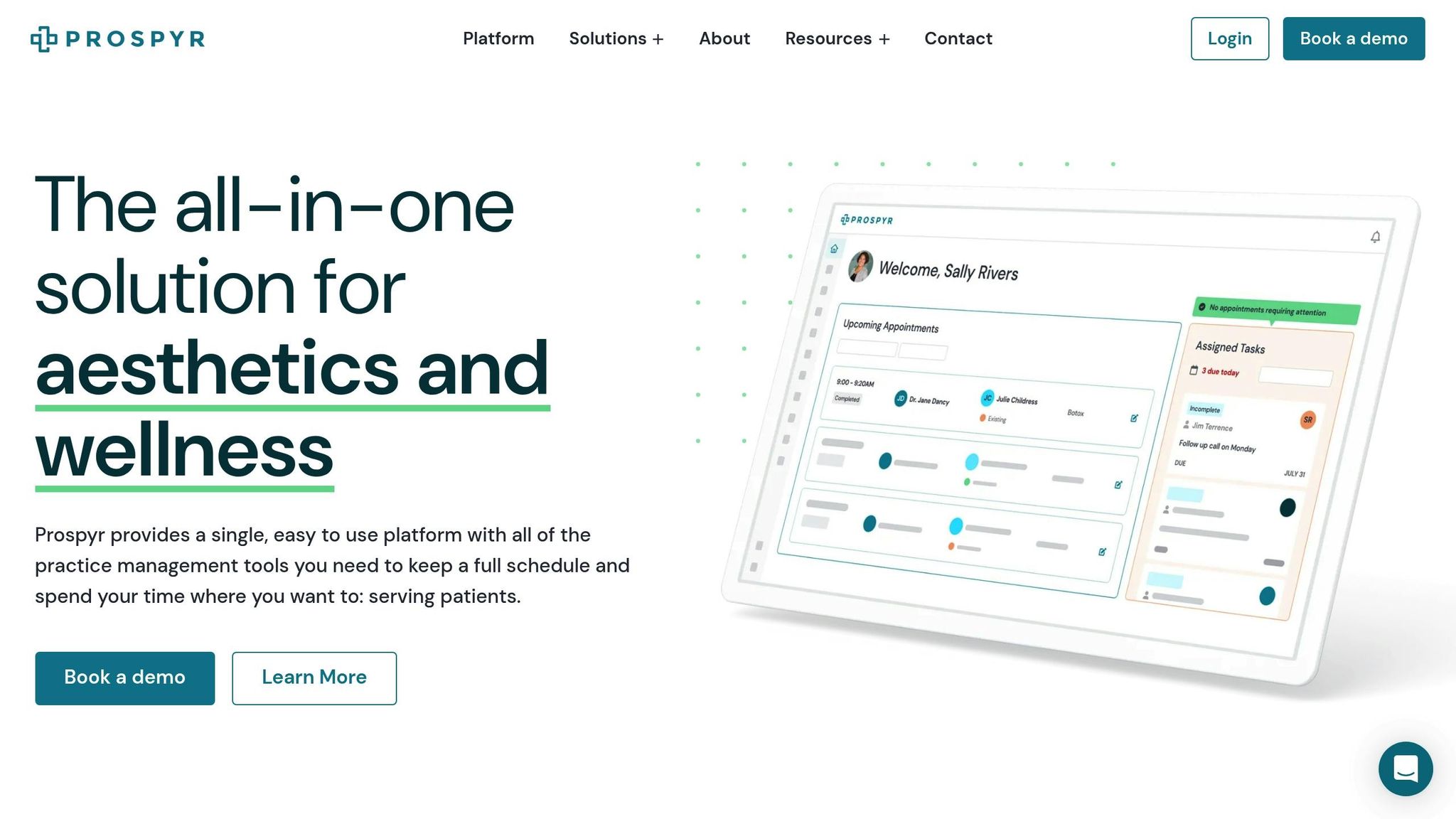
Prospyr simplifies task management by keeping everything in one place. You can assign tasks, prioritize them, and monitor progress in real time without needing multiple apps. Tasks can include relevant patient notes pulled directly from the platform’s integrated EMR, and automatic updates notify you when tasks are completed.
The real-time analytics feature provides a clear overview without requiring constant oversight. For example, if you notice delays in appointment confirmations or incomplete intake forms, you can quickly reassign tasks to keep things moving smoothly. This system not only ensures efficiency but also gives your team the flexibility to manage their responsibilities effectively.
Integrating Scheduling and Analytics
Prospyr’s scheduling tools take delegation a step further by linking schedules with analytics. With a comprehensive view of appointments and patient histories, you can make informed adjustments to task assignments.
For instance, if certain time slots consistently result in no-shows, you can delegate follow-up actions like reminder calls or automated SMS messages to address the issue. This approach worked wonders for SOM Aesthetics, led by Dr. Saami Khalifian. Using Prospyr to organize their launch, the practice achieved its sales targets 21 times faster than expected. Dr. Khalifian shared:
"Their powerful platform and helpful support have enabled us to exceed our financial targets while delivering an unmatched experience for our patients."
Improving Communication Through Prospyr
Prospyr also enhances communication by integrating email and SMS features directly into the platform. This means team members can send appointment reminders or follow-up messages without switching between systems, and all interactions are automatically documented alongside patient records.
Additionally, lead information from your website and social media flows directly into Prospyr’s CRM. From there, it can be assigned for follow-up tasks, minimizing manual work and ensuring every potential patient is accounted for. This seamless communication system strengthens feedback loops and ensures no detail is overlooked, making delegation more effective than ever.
sbb-itb-02f5876
Balancing Oversight and Autonomy
Striking the right balance between keeping an eye on progress and giving your team the freedom to work is essential for effective delegation. When done well, this balance not only empowers team members but also ensures accountability. And let’s not forget, successful delegation can directly impact revenue growth. The secret? Focus on outcomes rather than micromanaging every step.
Conducting Regular Progress Reviews
Instead of hovering over daily tasks, schedule brief, focused check-ins. For example, morning huddles - lasting just 10–15 minutes - can be incredibly effective in aesthetic practices. Use this time to discuss what’s been completed, what’s in progress, and what needs attention. For longer projects, plan milestone reviews at key transition points rather than frequent interruptions.
When checking in, the way you ask questions matters. Try open-ended phrases like "How’s everything coming along?" or "What’s been your experience so far?" instead of demanding exhaustive updates. Harvard Business School Professor Kevin Sharer explains it best:
"You've got to have some way to monitor the progress along the way without me getting in your way."
These structured reviews pave the way for meaningful feedback and help fine-tune delegation strategies.
Providing Constructive Feedback
Once you’ve gathered insights from these reviews, the next step is offering clear and actionable feedback. Be specific and timely - focus on what your team members did and how it impacted the outcome. When someone performs well, highlight the exact behaviors or decisions that led to success rather than resorting to vague compliments.
Stick to the golden rule: "Praise in public, criticize in private." This approach preserves morale and respect. If performance gaps arise, treat them as opportunities for growth. Keep in mind that newer team members may take longer to complete tasks - say, 60 minutes instead of 30 - but this extra time is an investment in their future efficiency.
Adjusting Delegation Based on Performance
Feedback isn’t the end of the process - it’s a foundation for adjusting responsibilities. Use a "trust but verify" mindset: step back to give your team room to work, but maintain periodic check-ins. If someone consistently delivers beyond expectations, increase their autonomy and responsibilities. On the other hand, if tasks fall short, take the opportunity to provide guidance and recalibrate your approach.
Effective leaders set clear expectations from the start, minimizing the need for constant oversight. In fact, dedicating just 1% of your time to ongoing reviews can make a big difference. This method ensures your team knows exactly what success looks like, fostering a culture built on trust, accountability, and continuous growth within your practice.
Evaluating Outcomes and Improving Delegation Processes
Delegation isn’t a “set it and forget it” deal - it’s an ongoing process that requires regular evaluation. Claudia Paye, Practice Administrator, sums it up perfectly:
"Without delegation in place, it's difficult to measure our own shortcomings or room for growth with all of the responsibilities we carry."
By using the right metrics and creating feedback loops, you can consistently improve your delegation strategy while building a stronger, more capable team. Start by focusing on measurable outcomes to identify areas that need adjustment.
Measuring Success with Key Metrics
To assess how well delegation is working, track specific performance indicators. Look at quantifiable metrics like clinical production, revenue growth, task completion rates, and how time is being reallocated. Ideally, effective delegation should free up practitioners to focus more on high-value clinical tasks and less on administrative work.
Quality is just as important as quantity. Compare completed tasks against your established standards. Are patient intake forms being filled out accurately? Are appointment confirmations going out on time? A well-delegated office often leads to a more organized environment, which directly impacts patient satisfaction. Additionally, pay attention to your team’s development. If staff are growing through cross-training and taking on new responsibilities, it’s a clear sign that your delegation approach is on the right track.
Gathering Feedback from Your Team
Your team’s perspective is crucial - they’re the ones carrying out the tasks. Establish a two-way feedback loop to assess how delegation is functioning. After tasks are completed, ask questions like, “Did you have everything you needed?” or “Were there any challenges that could have been avoided?”
Feedback should be gathered at multiple points: before a task begins, during periodic check-ins, and after the task is completed. This allows you to identify and address potential issues early. Create an environment where your team feels comfortable sharing honest feedback. Remember, leaders who excel at delegation generate 33% more revenue than those who don’t.
Making Ongoing Improvements
Use team feedback to refine your protocols. If multiple staff members are struggling with the same tasks, update training materials or adjust procedures to make things clearer. Address performance challenges by providing better instructions, adding resources, or redefining authority levels.
Adapt your approach as your team grows. If someone consistently performs well, consider giving them more autonomy or assigning more complex tasks. On the other hand, treat mistakes as opportunities to learn and improve your delegation process instead of reasons to scale back. Keep monitoring results and make small, consistent adjustments without falling into the trap of micromanaging.
Conclusion
Delegation isn't just about offloading tasks - it's about building a more capable and efficient practice from the ground up. When done thoughtfully, it allows you to focus on high-value clinical work and strategic decision-making while empowering your team to grow their skills and stay engaged. The evidence supports this: a Gallup study of 143 CEOs from the Inc. 500 list found that leaders who excel at delegation drive stronger business growth and generate higher revenue compared to those bogged down by daily operations.
But here's the thing: delegation is a partnership, not a one-and-done transaction. It requires identifying the right tasks, aligning them with your team's strengths, setting clear expectations, and maintaining regular communication to fine-tune the process. As Deborah Grayson Riegel, a management expert, explains: "Delegating, when done well, not only reduces your own workload, it develops your employees, gives you and your team a bigger range of skills and impact, provides emergency back-up... creates inclusive opportunities, empowers people, and retains talent".
Technology can make this process even smoother. Tools like Prospyr simplify delegation by centralizing patient records, automating routine tasks, and offering reporting dashboards that keep you informed without requiring constant oversight. Features like digital intake forms and automated appointment reminders allow your team to handle responsibilities independently while maintaining the high standards your practice is known for.
The key is to start small, stay consistent, and trust the process. Every task you delegate effectively is an investment in your practice’s future and your team’s professional development. The payoff? A more streamlined operation, a happier and more capable staff, and the time to focus on what truly matters - delivering outstanding patient care and growing your aesthetic practice.
FAQs
How do I decide which tasks to delegate in my aesthetic practice?
Delegating tasks in your aesthetic practice is a smart way to free up your time for what matters most: patient care and growing your business. Start by listing everything you handle in a typical week, from clinical procedures to administrative duties. Once you have a clear picture, pinpoint the tasks that directly generate revenue - like consultations and treatments. These should stay on your plate. On the other hand, routine, non-clinical tasks - like managing appointment reminders or tracking supplies - are perfect candidates for delegation.
When assigning tasks, match them to team members based on their strengths and career goals. Be sure to clearly outline the desired results, deadlines, and quality standards. To make the process even smoother, consider using tools like Prospyr, which let you assign tasks, set priorities, and monitor progress in real time. Regular check-ins and adjustments will help ensure your delegation strategy stays aligned with your practice’s goals and keeps your team running like a well-oiled machine.
What’s the best way to train team members on delegated tasks?
Effective training for delegated tasks relies on clear communication, practical experience, and regular feedback. Start by defining the end goal and providing easy-to-follow written instructions or checklists. Show how the task is done - whether in person or via a short video - and let the team member observe you in action, encouraging them to ask questions along the way. Once they’re familiar with the process, assign them a low-stakes trial run with a clear deadline. Be available to answer questions, but resist the urge to step in and take over.
After the task is completed, hold a review session to discuss how it went, identify areas for improvement, and make any necessary tweaks to the process. As the team member becomes more confident and consistent, you can gradually expand their responsibilities, helping them build both trust and a sense of ownership.
Tools like Prospyr can make this process smoother. You can create task templates, set deadlines, and monitor progress in real time. Features like notifications and comment threads allow for quick feedback, while regular check-ins help address any roadblocks early. This structured method not only promotes accountability but also supports your team’s professional development.
How can Prospyr simplify task delegation in aesthetic clinics?
Prospyr simplifies task delegation by bringing critical clinic operations - like patient records, scheduling, billing, and communications - into a single, HIPAA-compliant platform. With this centralized system, clinic leaders can assign tasks such as follow-ups, collecting consent forms, or sending post-treatment reminders to specific team members while monitoring their progress in real time. Automated tools, including appointment reminders and online booking, take over repetitive tasks, giving staff more time to focus on responsibilities that matter most.
The task management dashboard in Prospyr helps leaders stay organized by setting due dates and tracking status updates, ensuring tasks are completed with accountability and transparency. Plus, AI-driven features like note transcription and automated patient communication lighten the administrative load. By allowing the system to handle routine tasks, clinicians can create a more efficient team dynamic, boost productivity, and deliver a better experience for patients.