
Want more clients without overspending on ads? Referral programs are one of the most cost-effective ways to grow your med spa. By encouraging happy clients to share their experiences, you can attract pre-qualified leads who are more likely to book services and stay loyal. Here’s a quick overview of how to create a referral program that works:
- Set clear goals: Define measurable targets like increasing new client appointments by 20% in three months.
- Offer rewards: Use simple incentives like “Give $50, Get $50” or tiered perks for multiple referrals.
- Use digital tools: Automate tracking and reward distribution with software to save time and avoid errors.
- Promote the program: Share it via email, SMS, social media, and in-office signage to boost participation.
- Focus on service quality: Deliver excellent care to ensure clients are excited to recommend you.
- Follow legal guidelines: Avoid offering rewards for medical treatments in states with strict regulations.
Referral programs can deliver consistent results when paired with great service and smart automation. Let’s dive into the details.
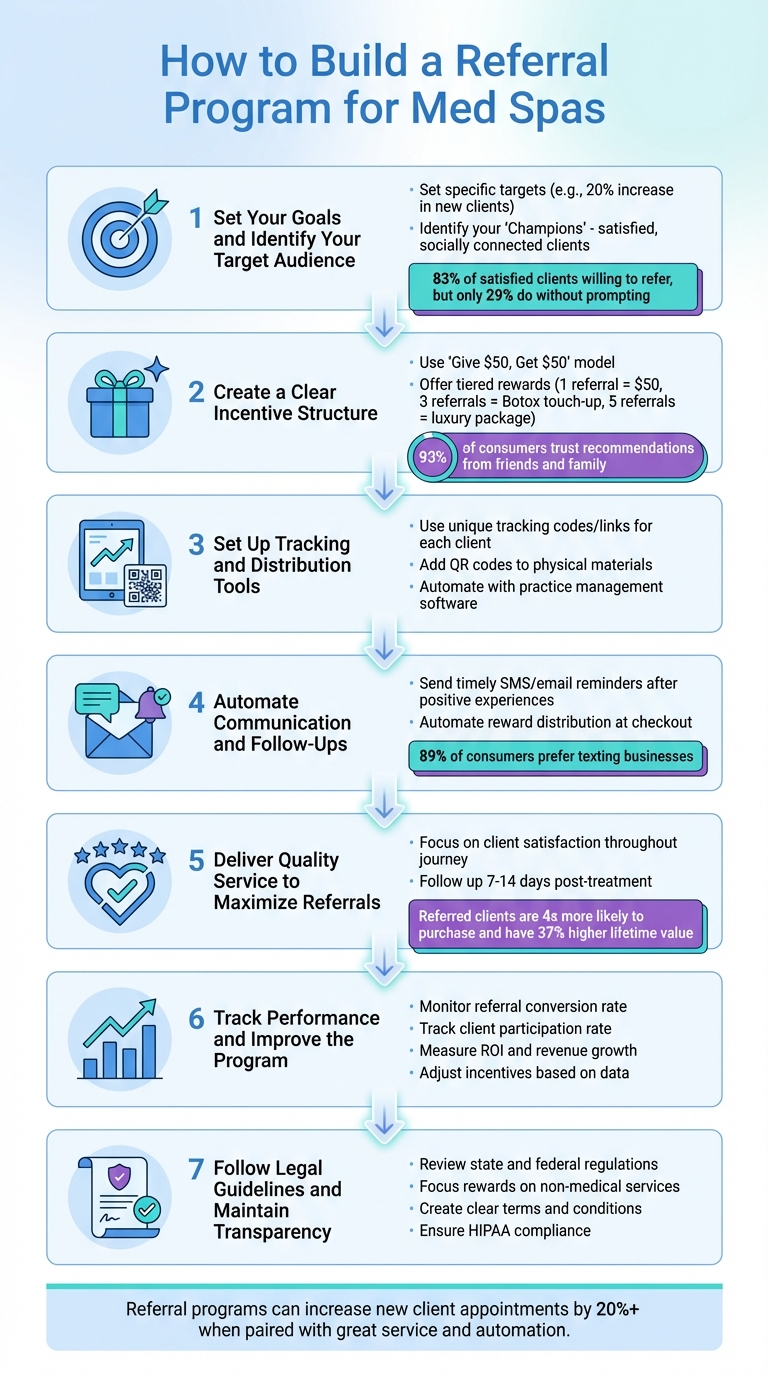
7-Step Process to Build a Successful Med Spa Referral Program
Step 1: Set Your Goals and Identify Your Target Audience
Start by defining clear, measurable goals for your referral program. Avoid vague ambitions like "get more clients." Instead, aim for specific targets, such as boosting new client appointments by 20% in the next quarter or increasing monthly revenue by $5,000 through referrals. For example, Elite Med Spa Marketing shared a case study in June 2025 where a medical spa booked 51 appointments in just six days by using a structured referral program - without spending a single dollar on paid ads. Here’s how you can set up your goals and pinpoint the right audience.
Set Specific Goals
Your goals should address your business's key challenges. If you're overspending on Facebook ads or influencer campaigns, consider focusing on reducing client acquisition costs (CAC). Referral programs are often far less expensive than traditional advertising methods. If retaining clients is a concern, aim to increase lifetime value (LTV). Referred clients, on average, have a 16% higher lifetime value compared to clients acquired through other channels. You can also focus on promoting treatments that naturally encourage word-of-mouth, like laser hair removal or injectables, which tend to deliver noticeable results that clients are eager to share.
Identify Your Ideal Referrers and New Clients
Pinpoint your "Champions" - clients who are highly satisfied, socially connected, and align with your brand's values. Use your practice management software to analyze patient history and identify those who have booked multiple services or left glowing reviews. Tools like Prospyr can provide detailed analytics and insights into your client base. Beyond clients, think about professional referral partners such as primary care physicians, dermatologists, dentists, or beauty salons. These professionals frequently interact with people interested in aesthetic treatments.
While 83% of satisfied clients are willing to recommend your business, only about 29% actually do so without a structured program or prompt. Make it simple for them to share their experiences. This targeted approach not only helps you identify the right people but also lays the groundwork for tracking and follow-up in the next steps.
Step 2: Create a Clear Incentive Structure
Designing rewards that appeal to both your current clients and their referrals is key. A straightforward "Give $50, Get $50" model works wonders - your client gets a $50 treatment credit, and their friend enjoys $50 off their first service. This approach taps into the power of generosity. As Referral Factory explains:
"The reward motivates the patient. The offer motivates the friend. One feels selfish. One feels generous. Generous wins".
Choose the Right Rewards
Treatment credits often outperform cash rewards because they encourage repeat visits and keep revenue within your med spa. For higher-priced services like laser treatments or injectables (ranging from $150 to $700+), offering credits between $50 and $100 strikes a balance - clients get meaningful value, and your profit margins remain intact.
You can also implement tiered rewards to inspire more referrals. For example:
- One referral earns a $50 credit.
- Three referrals unlock a complimentary Botox touch-up.
- Five referrals grant access to a luxury spa package.
For high-value clients, non-monetary perks like priority booking during peak seasons or exclusive event invitations can be especially appealing. Another option? Offer free add-ons, such as LED therapy or dermaplaning. These extras feel indulgent and introduce clients to services they may purchase later.
However, no matter how enticing the rewards, they need to be simple to understand and easy to redeem.
Make Incentives Easy to Understand
Simplicity is crucial. Your program should be explainable in one quick sentence, like: "Refer a friend and get 10% off your next treatment when they book". Overcomplicated steps or unclear terms can discourage participation before it even begins.
Automation can eliminate confusion and streamline the process. Sudheer Koneru, CEO of Zenoti, emphasizes the importance of a seamless system:
"A good digital referral program for salons, spas, and medspas should allow referral discounts to be applied automatically at checkout, a smooth experience for both guests and staff".
This ensures rewards are applied effortlessly, boosting satisfaction for both clients and employees.
It’s worth noting that 93% of consumers trust recommendations from friends and family, and nearly 47% of customers choose a spa based on referrals. That said, it’s essential to issue rewards only after the referred client has completed and paid for their first qualifying treatment. This safeguards your margins and ensures you're rewarding genuine, paying customers rather than casual inquiries.
Step 3: Set Up Tracking and Distribution Tools
Now that your incentives are sorted, the next step is creating a system that efficiently tracks referrals and delivers rewards. Forget outdated methods like paper punch cards or spreadsheets - they’re prone to errors and can’t keep up as your business grows. Instead, digital tracking tools offer real-time insights while eliminating the guesswork.
Use Digital Tools for Tracking
A solid referral program hinges on unique tracking codes or links assigned to each client. When clients share their personalized links via text or social media, the system automatically connects new bookings to the right referrer. This automation not only simplifies the process but also saves your front desk staff from constantly asking, "Who referred you?" during appointments.
For example, Prospyr integrates referral tracking directly into your practice management system. Since it already manages scheduling, payments, and client profiles, adding referral tracking ensures everything operates from a single platform.
Once your tracking system is in place, shift your attention to actively promoting the program to drive engagement.
Promote Your Referral Program
The success of any referral program depends on how well your clients know about it. Start by creating a referral page on your website with clear instructions and an easy sign-up form. You can also add QR codes to physical referral cards, treatment rooms, or post-care instruction sheets, making it simple for clients to join on the spot.
Don’t stop there - use appointment confirmation emails and SMS reminders to keep the program in front of your clients. A quick message like, "Love your results? Refer a friend and get $50 off your next visit", keeps the program fresh in their minds. Social media is another great tool - share posts or Instagram Stories to boost visibility.
Automation can take things even further. For example, set up a trigger to send referral links immediately after a client leaves a glowing five-star review. This taps into their positive experience and makes sharing effortless. The easier you make it for clients to participate, the more referrals you’ll see rolling in.
Step 4: Automate Communication and Follow-Ups
Once your clients are aware of your referral program, the next challenge is keeping it fresh in their minds. As your program scales, manually managing reminders and tracking becomes impractical. This is where automation steps in, handling repetitive tasks and ensuring every referral is promptly acknowledged. By integrating automation with your existing digital tools, you can maintain consistent engagement and streamline the referral process.
Send Timely Reminders
Timing is everything when it comes to asking for referrals. The best moment to ask is right after a client has had a great experience - when they’re most excited to share. Automated SMS and email campaigns can help you hit these prime moments, like during online bookings, in appointment confirmations, or right after a glowing five-star review is submitted.
For example, if a client leaves a positive review, you can automatically send a message like: "Thanks for the love! Share your experience with friends using your personal link and enjoy a reward on your next visit." This approach builds on the good vibes of their feedback. Considering that 89% of consumers prefer texting businesses over other communication methods, SMS reminders often feel more natural and less intrusive.
After sending reminders, automating the reward process ensures clients stay engaged with your program.
Automate Reward Distribution
Nothing kills enthusiasm faster than delayed rewards. Automating reward distribution ensures referral credits are applied immediately after the referred client completes their treatment. Instant notifications then reinforce trust in the program. Tools like Prospyr make this process seamless by storing referral credits in a client’s digital profile and applying them automatically at checkout.
"A good digital referral program for salons, spas, and medspas should allow referral discounts to be applied automatically at checkout, a smooth experience for both guests and staff." - Sudheer Koneru, CEO, Zenoti
Automation that rewards both the referrer and the new client simultaneously keeps everyone motivated. When rewards are applied instantly and effortlessly, clients are more likely to view the program as dependable and worthwhile.
sbb-itb-02f5876
Step 5: Deliver Quality Service to Maximize Referrals
While automation and incentives can help, they can’t replace outstanding service. Personal recommendations are trusted by the majority of buyers, so the success of any referral program depends on whether clients feel their experience is worth sharing. When someone leaves your med spa genuinely excited about their results and the care they received, they naturally become your best promoters. Exceptional service is the foundation for every referral strategy you implement.
Focus on Client Satisfaction
Great service starts well before the treatment begins. Every step of the client journey - from booking an appointment to the care they receive in person - should leave a positive impression. For aesthetic treatments like laser hair removal or skin rejuvenation, results are highly visible, making quality service even more impactful. When someone compliments a client’s glowing skin or smooth complexion, they’re much more likely to share their experience - especially if the process felt seamless and professional.
For example, Tricoci Salon & Spa’s two-sided $20 bonus program not only made it easy for clients to redeem rewards but also reinforced the brand’s reliability. This operational excellence gave clients the confidence to recommend the spa to their friends.
Referred clients aren’t just more likely to book - they’re 4 times more likely to purchase services compared to other leads. Plus, they tend to have a 37% higher lifetime value, thanks to their loyalty. This trust, built on personal recommendations, means new clients arrive already believing in your quality. But that trust can be fragile. Long wait times, confusing processes, or inconsistent results can quickly undermine it. Ensuring every aspect of the experience is smooth and satisfying will not only keep clients loyal but also encourage them to spread the word.
Improve Post-Treatment Follow-Ups
The client experience doesn’t end when they leave your spa. Thoughtful, personalized follow-ups can reinforce their satisfaction and encourage referrals. For instance, scheduling a follow-up 7–14 days after injectables allows you to assess results and show your commitment to their care. Automated emails or texts with post-treatment instructions - like avoiding sun exposure or intense workouts - help clients protect their investment and feel supported.
In August 2023, Glosslab took this a step further by adding a branded "Refer Here" button to their online booking confirmations and mobile app. By engaging clients when satisfaction was at its peak, they saw a significant boost in referrals. Timing is everything - asking for a referral immediately after treatment, when clients feel their best, is far more effective than waiting weeks.
Automated feedback systems can also play a big role. Sending post-appointment surveys or using QR codes for feedback ensures you catch any issues early. If a client leaves a five-star review, you can instantly send them a personalized referral link via text. Platforms like Prospyr can help integrate these processes, making follow-ups smoother and ensuring every client interaction reinforces their positive experience.
Step 6: Track Performance and Improve the Program
To keep your referral program thriving, tracking performance is non-negotiable. Without clear data, it’s impossible to know what’s working and where tweaks are needed. The secret lies in monitoring the right metrics to see how well referrals are converting into revenue and identifying areas for improvement.
Use Analytics to Measure Success
Start by focusing on the numbers that matter most. For instance, the referral conversion rate tells you how many referred friends actually book and complete a service. If referrals are coming in, but bookings are lagging, your new client offer may not be enticing enough. Another key metric is the client participation rate, which shows how many of your existing clients are actively referring others. A low participation rate might mean your program isn’t visible enough - try promoting it through email, SMS, or even in-office signage.
It’s also important to monitor your total referral volume regularly, whether monthly or quarterly, to spot trends. Keep an eye on revenue growth from referrals to understand the financial impact of your program. Compare the lifetime value of referred clients to that of walk-in customers - referred clients are 37% more likely to stay loyal. Lastly, calculate your return on investment (ROI) by comparing the cost of rewards to the revenue they generate. As Hannah Russell puts it:
"A good referral programme links the REFERRAL to REVENUE before the REWARD is given. Only once your business has benefitted from the referral should the reward be redeemed".
Using digital tools can make tracking much easier. Platforms like Prospyr offer real-time analytics to track referral sources and key conversion events, such as when a referral books a treatment or consultation. This eliminates the hassle of manual tracking and ensures every referral is accurately attributed, giving you the insights you need to optimize your program.
Adjust Incentives and Strategies
Once you have the data, use it to fine-tune your program. If your participation rate is low, it could be a visibility issue. Increase awareness by promoting the program through post-appointment texts, email campaigns, or reminders at checkout. If the share rate isn’t where you want it to be, the incentive itself might need a refresh. Test different rewards - some clients might prefer a flat $50 discount, while others might respond better to percentage-based offers.
You could also introduce tiered rewards to keep your most loyal advocates engaged. For example, one referral might earn a $50 credit, but five referrals could unlock a premium spa package. Another option is to experiment with two-sided incentives that reward both the referrer and the new client, which can help boost conversion rates. If your analytics show that certain treatments, like Botox or laser hair removal, generate more referrals than others, shift your marketing focus to highlight those services.
Timing plays a big role too. Use your data to identify slower periods - like January or February - and launch limited-time bonus campaigns to create urgency. For example, a spa in California saw a 40% increase in client participation over six months by strategically adjusting their referral program based on performance data. Let the numbers guide your decisions and keep refining your approach.
Step 7: Follow Legal Guidelines and Maintain Transparency
Running a referral program for your med spa isn't just about attracting new clients - it’s also about ensuring you're operating within the law. Since the aesthetics industry includes both medical and non-medical services, legal requirements can vary significantly depending on the state and the type of treatments you offer. Missteps could jeopardize your practice license, so understanding and adhering to the rules is critical. Both federal and state regulations must be reviewed to ensure your program is compliant.
Understand State and Federal Guidelines
The Federal Anti-Kickback Statute (AKS) prohibits offering any incentives, such as cash or discounts, for referrals involving Medicare or Medicaid-covered services. However, most med spas operate on a cash-pay model, meaning this federal law often doesn’t apply. As Robert J. Fisher, JD, from ByrdAdatto, explains:
"The federal Anti-Kickback Statute likely does not apply to your aesthetic practice, since such aesthetic practices are typically cash-based, but it serves as an important building block".
State laws, however, tend to be more restrictive. For example, states like Texas, New York, Florida, and California prohibit offering any form of reward for referrals, even for cash-pay clients. In Texas, the patient solicitation law explicitly bans paying "any remuneration in cash or in kind" for "securing or soliciting" a patient. Violations could lead to serious consequences, including fines, license suspension, or reprimands, as many state medical boards consider paid referrals unethical.
The type of service also determines how strict the rules are. Medical treatments such as Botox, dermal fillers, laser procedures, or medical-grade chemical peels are tightly regulated, while non-medical services like traditional facials or retail product purchases offer more leeway. Katlin Cauffman from Diamond Accelerator emphasizes this distinction:
"Medical services cannot be included in referral reward programs. This includes injectables, laser treatments, and medical-grade skincare procedures".
To comply with these regulations, focus your rewards on non-medical offerings. For example, you could provide discounts on express facials or skincare products rather than cash or credits for medical treatments. Another safe option is a loyalty points system that rewards clients for a variety of actions - like visits, retail purchases, and referrals - without directly tying rewards to patient acquisitions. Always consult a healthcare attorney to review your program before launching, as state laws and medical board opinions can vary widely.
Create Clear Terms and Conditions
Clear documentation is just as important as following legal guidelines. Transparency isn’t just good practice - it’s a requirement. Your referral program must include written terms that align with state and federal advertising laws. These terms should outline which services qualify for rewards and which do not, reducing the risk of misunderstandings or claims of false advertising.
Under FTC Endorsement Guidelines, any client endorsements or referrals must be truthful and not misleading. Incentives should be reasonable and not encourage exaggerated or false claims. Display your terms prominently - include them in aftercare emails, on treatment menus, and on signage at checkout. Train your staff to clearly communicate any restrictions to clients upfront.
Leveraging digital tools can also enhance transparency. Med spa management software, like Prospyr, can track rewards directly within client profiles, reducing the likelihood of errors or disputes over lost referrals. These tools also create an audit trail, making it easier to verify compliance. Set consistent guidelines for incentives to avoid confusion or dissatisfaction among clients. Additionally, ensure your program complies with HIPAA regulations by obtaining patient consent for sharing protected health information as part of the referral process.
Conclusion
Creating a referral program that turns satisfied patients into enthusiastic advocates can be a game-changer for your growth strategy. By setting clear objectives, offering enticing incentives, automating your processes, and staying compliant with legal requirements, you can build a system that consistently delivers results. These steps lay the groundwork for fine-tuning and improvement over time.
To keep your program running smoothly, it’s essential to track its performance using analytics. Tools like Prospyr make it easier to manage everything - from monitoring referrals to distributing rewards - while keeping your strategy on track. Real-time data insights allow you to adjust and improve your program to ensure the best possible return on investment.
Ultimately, the key to success lies in delivering exceptional service. Happy patients are naturally inclined to share their positive experiences. Combine that with a simple and rewarding referral process, and you’ll create a loyal community that drives continuous growth.
Start small, perfect your system, and scale as you go. With the right approach and tools, your referral program can become a powerful asset for long-term success.
FAQs
What steps should I take to ensure my med spa's referral program complies with legal regulations?
To keep your med spa's referral program within legal boundaries, it’s crucial to understand regulations like the federal Anti-Kickback Statute. This law prohibits offering cash or other incentives to encourage referrals for services covered by federal programs. On top of that, many states enforce their own anti-kickback laws, which may add further restrictions.
Steer clear of rewards like cash, gift cards, or discounts directly linked to referrals, as these could be classified as illegal kickbacks. Instead, consider incentives that comply with legal standards - such as rewards based on customer loyalty or engagement, rather than direct referrals. Make sure your program policies are clearly documented, and consult a healthcare attorney to confirm everything aligns with legal requirements. These steps not only help you avoid fines or licensing issues but also ensure your business operates ethically and responsibly.
What are the best ways to promote a referral program for my med spa?
Promoting your med spa's referral program starts with creating a straightforward system that clients can easily follow. Offer enticing rewards - think discounts, complimentary treatments, or special perks - to motivate participation. Make sure clients can effortlessly share referral links or codes with their friends and family.
Automation tools can simplify tracking referrals and rewards, ensuring everything runs smoothly and accurately. Offering rewards to both the referrer and the new client (a win-win) can make the program even more appealing. Leveraging digital platforms, like practice management software, can help you manage referrals effectively while keeping clients excited to join in.
What are the best incentives to encourage referrals for my med spa?
Choosing the right rewards can make all the difference when it comes to encouraging referrals and expanding your med spa's client base. The key is to focus on incentives that your clients will genuinely appreciate and that are simple to manage. For instance, cash rewards, like prepaid Mastercard gift cards, are always a hit because they’re straightforward and universally appealing. Another great option? Discounts or free treatments for successful referrals - this works particularly well in the med spa world, where trust and client satisfaction are everything.
To make your referral program effective, ensure the rewards are appealing, easy to understand, and tailored to your clients' preferences. A well-designed system doesn’t just drive referrals; it strengthens loyalty and reinforces the trust clients have in your practice.