
The aesthetic and wellness industry is booming, but standing out is harder than ever. Many practices offer similar services like Botox, fillers, and laser treatments, leaving patients to choose based on price or convenience. Here’s the bottom line: creating a distinct identity for your practice is critical to attracting and retaining patients.
Key Takeaways:
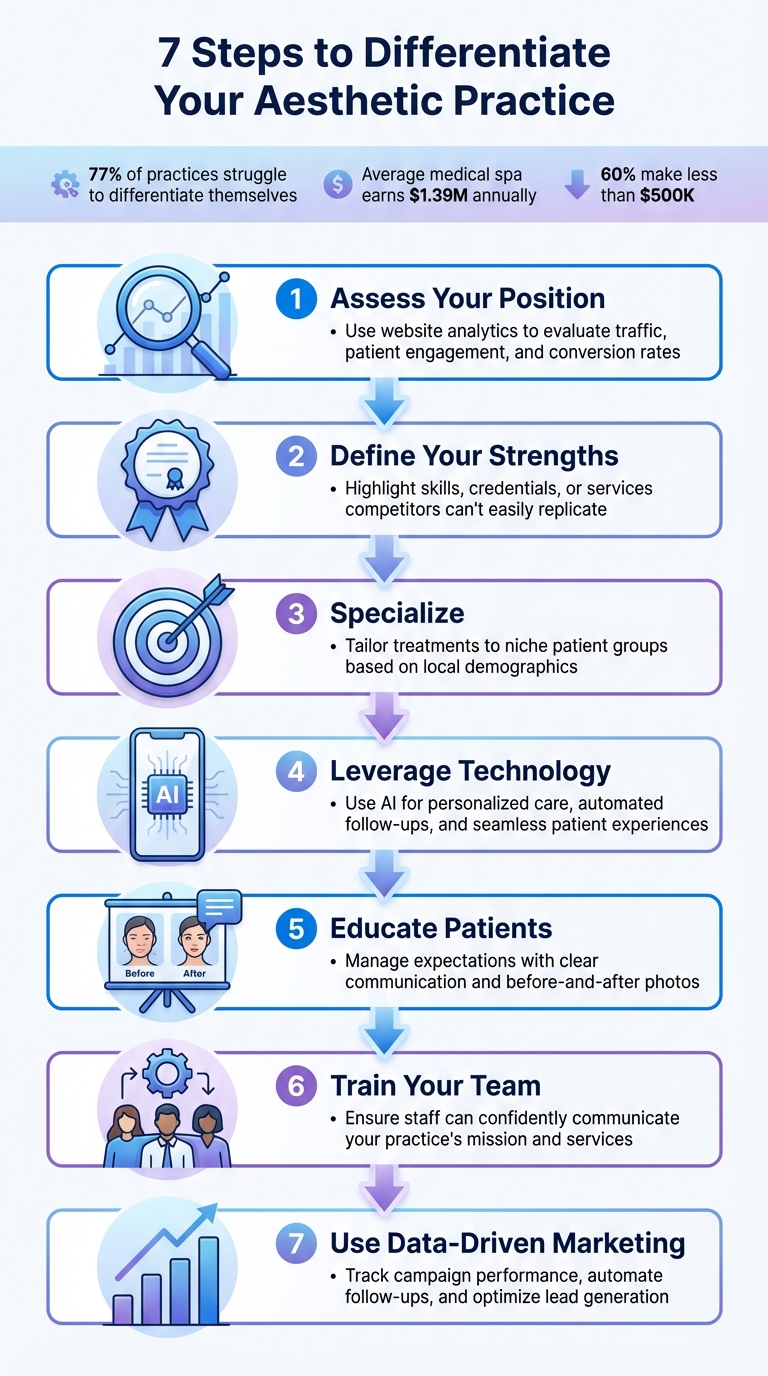
- 77% of practices struggle to differentiate themselves in a crowded market.
- The average medical spa earns $1.39M annually, but 60% make less than $500K.
- Success isn’t about offering more treatments - it’s about defining what makes your practice special.
Actionable Steps:
- Assess Your Position: Use website analytics to evaluate traffic, patient engagement, and conversion rates.
- Define Your Strengths: Highlight skills, credentials, or services competitors can’t easily replicate.
- Specialize: Tailor treatments to niche patient groups based on local demographics.
- Leverage Technology: Use tools like AI for personalized care, automated follow-ups, and seamless patient experiences.
- Educate Patients: Manage expectations with clear communication and visuals like before-and-after photos.
- Train Your Team: Ensure staff can confidently communicate your practice’s mission and services.
- Use Data-Driven Marketing: Track campaign performance, automate follow-ups, and optimize lead generation and management.
Standing out means delivering more than treatments - you need to create a memorable experience and build trust through personalization, education, and smart marketing strategies.
7 Steps to Differentiate Your Aesthetic Practice
Assess Your Current Market Position
To set your practice apart, you first need a clear understanding of where you currently stand. Start by examining your digital performance. Metrics like website traffic, visitor behavior, and geographical data from IP addresses can give you a solid snapshot of your online presence. This data acts as a starting point, helping you identify what’s working well and what needs attention.
Analyze Your Practice's Strengths and Weaknesses
Dive into your website analytics to assess overall traffic and pinpoint which pages draw the most attention. For instance, if a specific service page consistently sees higher traffic, it’s a sign that patients are particularly interested in that offering.
Next, look at patient engagement metrics. Track the number of new inquiries and how many of those convert into actual appointments. These numbers provide valuable insights into how effectively your online presence connects with potential patients - and where there’s room for improvement.
sbb-itb-02f5876
Identify Your Unique Selling Points
Once you’ve gained a clear understanding of your market, it’s time to define what sets your practice apart - those qualities that competitors can’t easily replicate. Jeff Russell, Executive Director of the IAPAM, puts it this way:
"When thinking about your USP (unique selling proposition), not only think about your unique niche, but also think about what would be difficult for your competition to copy".
Ask yourself: What makes your practice stand out? Do you have a staff member with specialized expertise, like a holistic nutritionist? Does your medical director hold advanced certifications in fields like dermatology or endocrinology? These are the kinds of credentials that create a competitive edge. Even if you’re offering popular treatments like Botox® or dermal fillers, you can stand out by bundling services in creative ways. For example, combine injections with skin-tightening treatments or include custom vitamin supplement packages designed to enhance treatment outcomes.
It’s also important to remember that patients often make decisions based on emotions rather than pure logic. Russell explains:
"People make most of their decisions based on emotions, not cold, hard facts".
Your messaging should connect with these emotions. Instead of saying, "We offer advanced treatments", craft a message that inspires and excites potential patients, such as:
"We offer full body transformations, including medical weight loss, targeted fat elimination, skin tightening, and facial aesthetics".
Offer Specialized Treatments and Expertise
Once you’ve clarified your unique strengths, use them to specialize in treatments tailored to specific patient groups. Specialization immediately sets you apart in a competitive market. The global medical aesthetics industry, valued at about $20 billion, is expected to grow to $27 billion by 2028. Despite this, only around 9% of the potential market has undergone medical aesthetic procedures. This leaves a huge opportunity for practices that can identify and serve niche patient segments.
Start by analyzing your local demographics. Are there professional women in your area focused on career advancement and concerned about aging? Or perhaps male executives seeking quick, no-downtime treatments? In May 2019, Dr. Dianne Quibell of MD TLC in Wellesley, MA, successfully differentiated her practice by targeting two groups: men interested in non-invasive body contouring and Millennials looking for preventative RF treatments. She used SculpSure technology, which reduces up to 24% of treated fat cells in just 25-minute sessions, to attract male patients while also addressing Millennials’ concerns about aging. Dr. Quibell noted:
"My Millennial patients are requesting treatments using RF technology... to address current concerns and future signs of aging".
Don’t overlook the power of highlighting your team’s experience and credentials. Whether it’s certifications in PDO threads or expertise with advanced laser platforms, these details build trust. As Terri Ross, Founder of APX Platform, explains:
"Credentialing is your time to shine. It is your opportunity to display your knowledge, education, and expertise and why patients should trust you and choose you".
Use Technology to Improve Operations
Another way to stand out is by incorporating advanced technology into your practice. Today’s patients expect smooth, tech-driven experiences - from booking their first appointment to post-treatment follow-ups. Using tools like Prospyr, you can enhance operations with AI-assisted treatment planning, automated reminders, digital intake forms, and personalized marketing messages that keep patients engaged.
The right technology doesn’t just streamline operations - it also boosts your reputation. Choose platforms that provide turnkey solutions, offer ongoing training for your staff, and regularly update their features. These systems can simplify scheduling, payments, and patient communications while also tracking treatment outcomes.
Technology can also help you demonstrate results in a tangible way. For example, mobile apps and integrated CRM systems allow you to document patient progress across multiple treatments. Sharing measurable outcomes and visual records with your patients positions your practice as both premium and results-focused. This kind of transparency fosters a sense of partnership, making patients feel more invested in their aesthetic journey.
Improve Patient Experiences with Personalization
Personalizing patient interactions is a game-changer for standing out in a crowded market. Today’s patients expect more than just quality care - they want care that feels tailored to their unique needs. By combining a human touch with smart technology, you can create experiences that are both meaningful and seamless. This approach not only strengthens patient loyalty but also encourages referrals, setting your practice apart. Personalization also lays the groundwork for leveraging AI tools to elevate care even further.
Use AI Tools for Personalized Care
AI tools are reshaping how aesthetic practices deliver customized treatments. Increasingly, medspas are turning to AI for creating high-end, tailored experiences that align with individual patient goals. These tools analyze patient data, treatment history, and personal preferences to recommend solutions that address specific concerns.
Digital patient portals are now a standard feature patients expect. These portals give patients easy access to their medical records, treatment photos, appointment history, and test results. When integrated with CRM and EMR systems, they create a smoother experience, making patients feel informed and in control of their care. Platforms like Prospyr take this a step further by offering AI-powered features such as automated note-taking and real-time analytics, which help practices anticipate patient needs before they arise.
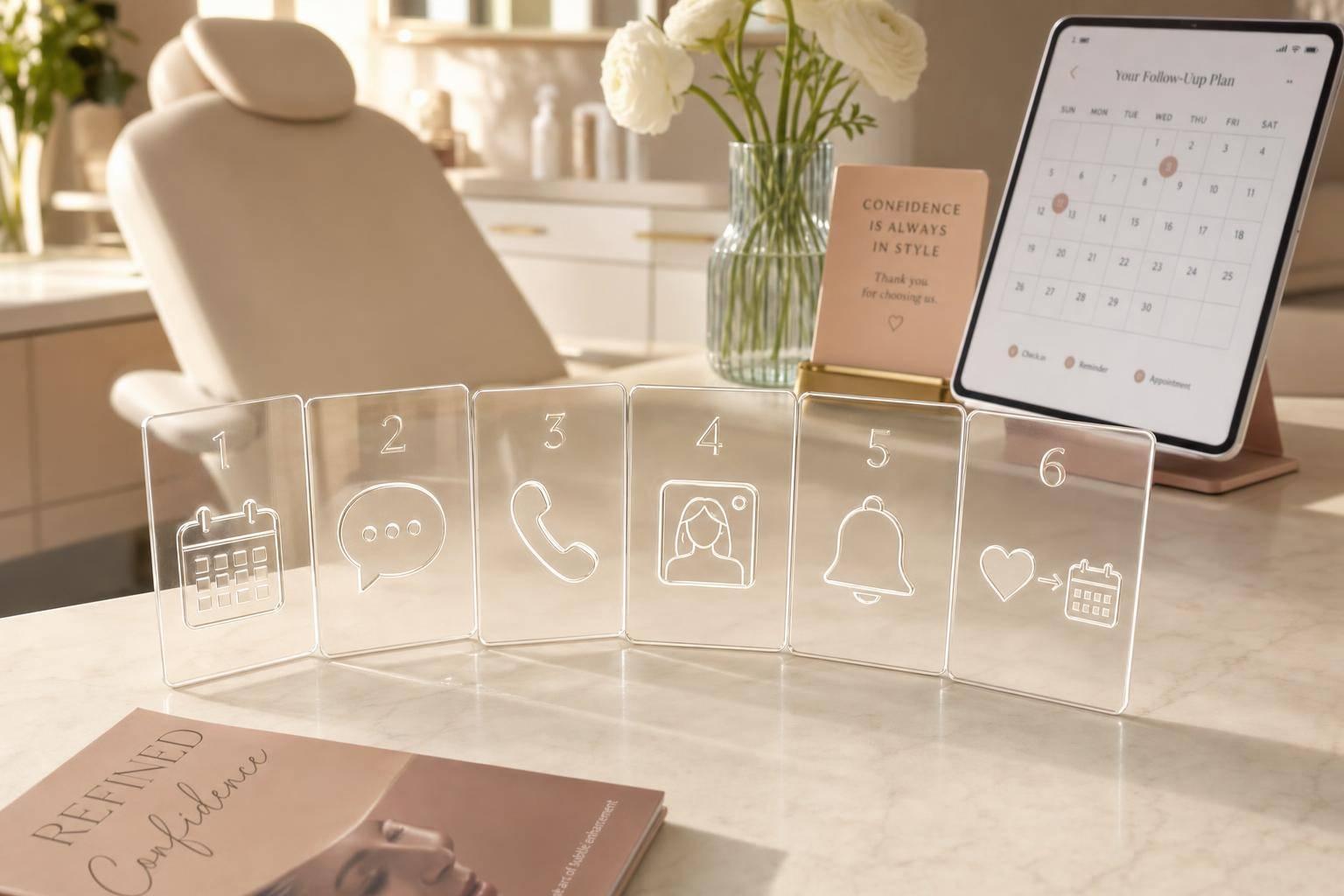
Another key aspect of personalization is automated follow-ups. Reaching out via text or email within 24 to 48 hours of a visit shows a genuine commitment to patient well-being. These follow-ups can reference specific treatments or recovery milestones, making them feel personal rather than generic. While AI fine-tunes treatment plans, efficient operational processes ensure every interaction feels thoughtfully customized.
Streamline Operations for Better Patient Journeys
Every step of the patient journey matters - from discovering your practice online to post-treatment care. Start by applying the three-click rule: make sure your website allows patients to schedule appointments, access FAQs, or find insurance details in no more than three clicks. Since most patients search for providers on smartphones, prioritize a mobile-first design for all digital tools.
Automation can also enhance the pre-visit experience. For example, digital check-in options save time by eliminating repetitive paperwork, allowing staff to focus on individual patient needs. In the waiting area, real-time appointment updates help reduce stress and make the wait feel more productive.
Smart scheduling tools with automated waitlist features are another way to improve efficiency. These tools fill last-minute cancellations quickly, ensuring patients are seen sooner while maximizing your clinic’s capacity. This not only boosts patient satisfaction but also helps prevent staff burnout. Considering that losing a single provider can cost a practice between $85,000 and $125,000, investing in supportive technology makes financial sense.
After treatment, follow-ups are essential. Sending automated texts or emails within 24 to 48 hours to check on recovery and request reviews shows patients they’re valued. Consistent follow-up transforms one-time visitors into loyal patients who feel cared for throughout their journey. These strategies enhance your practice’s unique strengths, creating a patient experience that competitors will find hard to match.
Build Your Brand Through Education and Culture
After tailoring patient experiences through personalization, strengthening your brand with education and a clear ethos can set your practice apart. While technology and customized care enhance the patient journey, an informed team and a strong brand culture leave a lasting impression.
Your brand isn’t just about the message you promote - it’s about the experiences your patients have and what they take away from them. Educating your patients and fostering a unified team culture can build trust and loyalty. When patients understand both the "what" and the "why" behind their treatments, they’re more likely to trust your expertise. At the same time, a team that truly embodies your mission ensures consistent, positive interactions, encouraging patients to keep coming back.
Educate Patients to Build Trust
Patient education is a game-changer when it comes to turning one-time visitors into long-term advocates. Breaking down treatments in simple, clear terms empowers patients, helps them feel informed, and sets realistic expectations. Dr. Susan O'Malley, Owner of Madison Med Spa, emphasizes the importance of managing expectations:
"When you don't manage people's expectations, no one is happy... when you under promise and over deliver, people are pleasantly surprised by their results and tell their friends".
Visual tools are especially helpful in building trust. According to a survey by RxPhoto, before-and-after galleries are the most influential factor in encouraging patients to move forward with aesthetic treatments. These visuals are also powerful tools for lead capture when shared on your website or social media. Showcasing results across various ages, genders, and ethnicities makes it easier for patients to visualize outcomes that feel relevant to them. Warren Danforth, Owner of Spa 35 Med Spa, highlights this point:
"The use of high-quality visuals allows the client to see the benefits of their treatments, increasing client satisfaction and supporting the development of trust between the client and the provider".
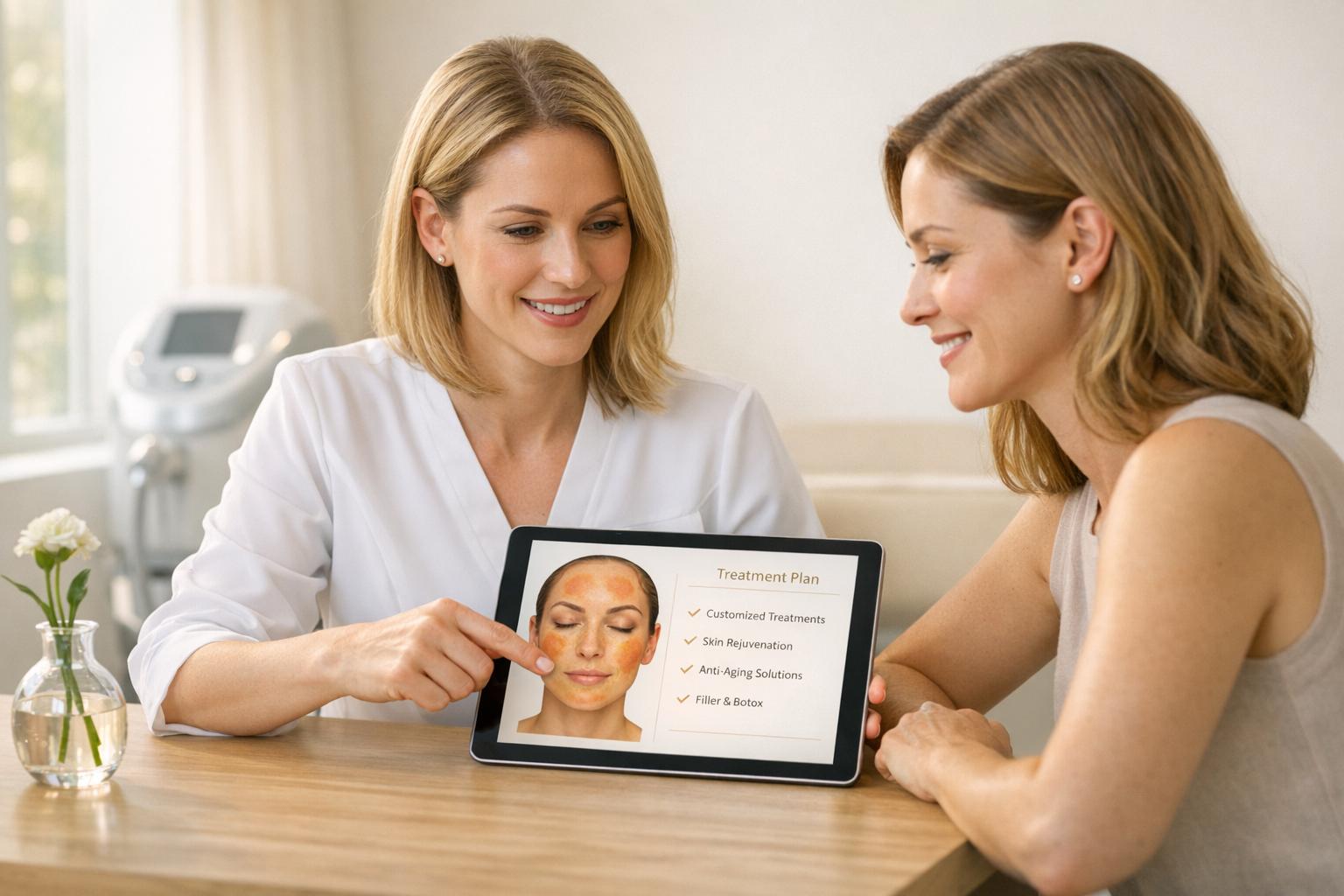
Short videos are another effective way to educate patients. Simple explanations of procedures like injections or body contouring can demonstrate the ease and comfort of treatments. During consultations, you can build on this educational approach by creating personalized treatment plans that address both immediate goals and long-term care. This not only fosters accountability but also encourages repeat visits. The more informed patients feel, the stronger the bond between them and your practice.
Train Your Staff Regularly
Your staff plays a crucial role in shaping your brand. Regular training ensures that everyone - from the front desk to clinicians - can confidently explain treatments and reflect your practice's core values. An empowered team not only helps retain patients but also reinforces the unique identity of your practice.
Ongoing training also prepares your team to handle sensitive situations, such as welcoming back patients who haven’t visited in a while. Patients may feel nervous or embarrassed about long gaps in care, but a trained team can help ease these concerns and make them feel comfortable returning. This is important, as even a 5% increase in patient retention can boost profits by 25% to 95%.
Additionally, when your staff understands the deeper purpose of your practice beyond just profits - something 82% of employees find meaningful - they naturally become ambassadors for your brand. Their enthusiasm and alignment with your mission can attract patients who share similar values, creating a stronger connection and a more loyal patient base.
Use Data-Driven Marketing Strategies
Once you've established a strong brand and a memorable patient experience, the next step is all about fine-tuning your approach with data. In the aesthetics industry, making informed, data-driven decisions is essential. By tracking performance metrics, you can see which campaigns attract the most valuable patients and which channels provide the best return on investment. This insight allows you to allocate your marketing budget more wisely and grow your practice more effectively.
The right tools can make this process much easier. Take Prospyr's marketing automation, for example. It enables you to send personalized email and SMS campaigns based on patient interests. Let’s say someone visits your anti-aging page - you can follow up with a targeted offer for Botox treatments. Drip campaigns like these are excellent for converting leads into scheduled appointments. Add in social media management features that let you schedule posts, track engagement, and analyze performance metrics like clicks on before-and-after photos, and you have a powerful marketing toolkit. Regular posting on platforms like Instagram keeps your practice visible, while targeted ads for specific treatments can drive inquiries up by 20–30%.
Another important piece is review management. Automating the process of collecting and displaying patient testimonials - like following up after a laser treatment - can result in more positive online reviews. Practices using similar systems have reported a 15–25% boost in retention rates as happy patients return and recommend your services to others. These reviews not only help attract new patients but also strengthen the bond with current ones, turning occasional visitors into loyal clients. With these automated tools, you can streamline lead capture and build lasting patient relationships.
Optimize Lead Generation and Patient Retention
Understanding where your patients come from and what drives them to book appointments is key to effective lead generation. Prospyr's lead capture tools allow you to trace the origins of new patients, whether from social media platforms or specific marketing campaigns, helping you identify what resonates with your target audience. Meanwhile, an AI-powered conversation agent can handle inquiries on your website or social media around the clock. This tool qualifies leads by gathering details like skin concerns and then triggers tailored follow-up emails. Practices using this approach see 30% higher response rates compared to manual methods.
For retention, staying in touch after the initial visit is crucial. Automated follow-up messages and membership programs can re-engage inactive patients, encourage repeat visits, and promote loyalty. These strategies can increase retention rates by 30% and referrals by over 40%. By focusing on ongoing engagement, you not only maintain your patient base but also create opportunities for growth through word-of-mouth recommendations.
Track and Analyze Your Performance
While attracting and retaining patients is essential, keeping an eye on your performance ensures you’re always improving. Real-time analytics turn guesswork into actionable insights. With Prospyr's practice analytics, you can monitor metrics like lead conversion rates, patient retention, campaign ROI, and social media engagement all in one place. For example, if you spend $500 on an email campaign and it generates 10 bookings worth $1,000 each, you can quickly calculate the campaign’s success and plan your next steps accordingly.
A/B testing is another valuable tool. By experimenting with different messages and monitoring the results in real time, you can adjust your strategies to align with patient preferences, potentially boosting ROI by 15–20% annually. Analytics can also help you identify operational issues, such as high no-show rates or seasonal dips in membership renewals. Addressing these challenges early can prevent them from escalating into larger problems.
Conclusion
Stand out by focusing on what truly matters. Start by evaluating your market position through competitive analysis, then pinpoint what sets your practice apart. Whether it’s offering specialized treatments, leveraging cutting-edge technology, or providing exceptional patient care, make those strengths your cornerstone. Enhance every patient interaction by using AI tools and streamlined processes to deliver a seamless, personalized experience.
Your brand thrives on the patient experience. Build trust by prioritizing education and investing in staff training. As Insync Insurance wisely states:
"People may come for the treatment, but they stay - and tell others - because of the experience".
This emotional connection fosters loyalty, often outweighing clinical results. A foundation built on trust and education also empowers you to refine your strategies using clear, actionable data.
Differentiation is key. By adopting data-driven methods - like tracking lead conversion rates and patient retention - you can fine-tune your approach and stay ahead.
Operational efficiency and smart marketing are what set exceptional practices apart. Consider how Prospyr can simplify your operations by integrating scheduling, patient communication, marketing automation, and analytics into a single HIPAA-compliant platform. This approach not only boosts efficiency but also enhances the patient experience you’ve worked so hard to create. With these systems in place, you can focus less on administrative tasks and more on delivering outstanding care.
Take action now: evaluate your position, define your strengths, and invest in integrated solutions to ensure sustainable growth.
FAQs
What’s the fastest way to find my practice’s unique selling point?
To figure out what makes your practice stand out, start with a local competitor analysis. Take a close look at the services, pricing, and online presence of your top five competitors. This will help you spot potential gaps or opportunities in the market.
Ask yourself: What do you offer that others don’t? It could be exclusive services, more competitive pricing, or even a strong, recognizable brand identity.
Keep in mind, this isn’t a one-and-done task. Regularly revisiting and updating this analysis ensures you stay ahead in an ever-changing market.
How do I choose a niche without losing potential patients?
To select a niche without turning away potential patients, focus on what makes your practice stand out and evaluate your local market to pinpoint unmet needs in services or pricing. Develop a clear and genuine brand that emphasizes your expertise while still offering a variety of treatments to cater to different preferences. By specializing in a distinct area, you can differentiate your practice while maintaining broad appeal, helping you thrive in the competitive aesthetics industry.
Which metrics should I track to prove my marketing is working?
To understand how effectively your marketing efforts are performing, focus on these critical metrics:
- New Client Acquisition Rate: This shows how successfully you're converting leads into new clients. Aim for a rate between 55% and 75%.
- Lead Conversion Rate: This measures the percentage of leads that turn into paying clients. While the industry average is 12.5%, top-performing clinics achieve rates of 55% to 75%.
- Client Retention Rate: A strong indicator of client loyalty, with a target range of 60% to 70%.
- Average Revenue Per Client: This metric highlights overall profitability. The industry benchmark typically falls between $1,500 and $2,500.
Make sure to leverage real-time analytics to track these metrics and adjust your strategies as needed for better outcomes.