
Event marketing is now a core strategy for aesthetic clinics in 2026. Clinics are using events not just to promote services but to boost revenue, reactivate patients, and build trust. Here's what you need to know:
Key Trends:
- Educational Events: Seminars, live demos, and product launches are driving patient engagement and conversions.
- Personalized Experiences: Clinics are leveraging patient data to tailor events, leading to higher attendance and bookings.
- AI Integration: AI tools streamline event workflows, from RSVPs to follow-ups, improving speed and conversion rates.
- Wellness Themes: Clinics are focusing on broader wellness topics, such as hormonal health and skin restoration, to attract diverse demographics.
- Proof-Based Messaging: Patients value transparency, with clinics using expert-led events and measurable results to build trust.
Why This Matters:
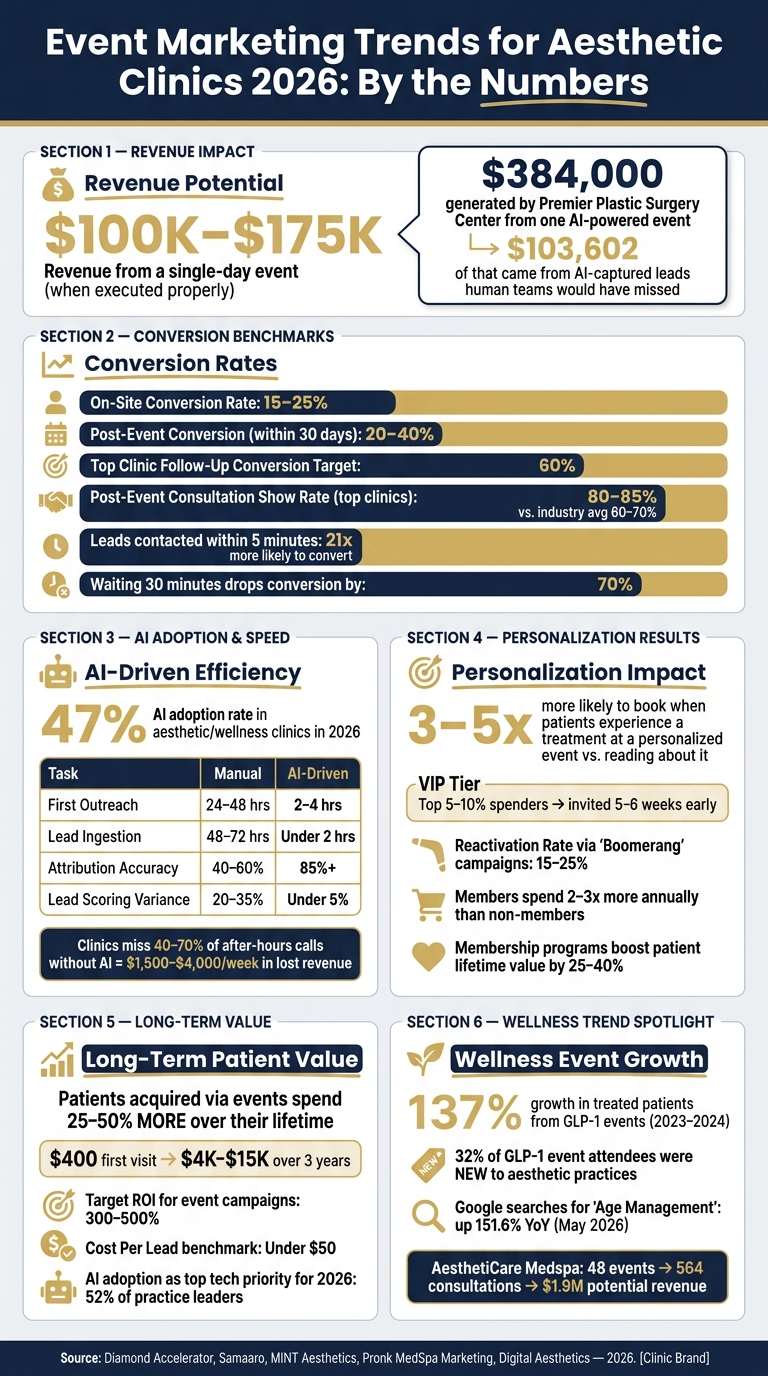
- Revenue Impact: Clinics report earning $100,000–$175,000 from single-day events when executed properly.
- Conversion Rates: Post-event follow-ups convert up to 60% of attendees into paying patients.
- Long-Term Value: Patients acquired through events often spend 25–50% more over time.
To succeed, clinics need clear planning, effective promotion, and strong follow-up systems. The combination of educational content, personalized outreach, and AI-driven efficiency is reshaping how aesthetic clinics connect with patients.
Event Marketing Stats for Aesthetic Clinics 2026
Trend 1: Educational Patient Events as a Lead Generation Tool
Aesthetic clinics are shifting away from casual appreciation parties and embracing educational events designed to drive conversions. Whether it’s live injectable demonstrations, skincare seminars, or new service launches, the aim is simple: build trust and inspire attendees to take action.
As MJ Clements, Senior Operations Consultant at Diamond Accelerator, puts it:
"Those owners weren't failing at events. They were failing at med spa sales execution."
Popular Event Formats for Patient Education
Different event formats cater to different goals, but they all center on engaging and educating potential patients. Here’s a breakdown of some common approaches:
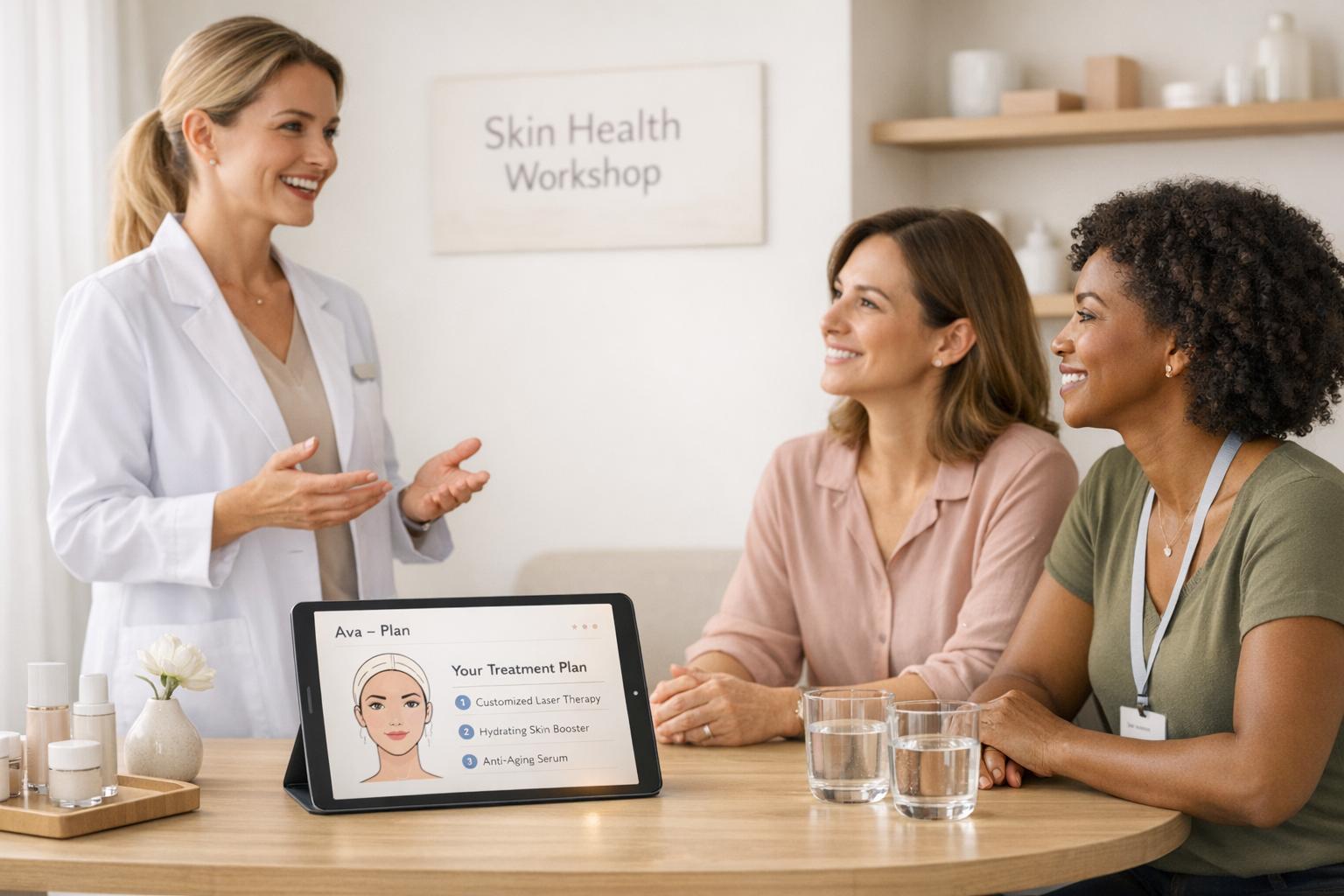
- Live Demonstrations: Watching treatments like Botox, fillers, or Hydrafacials performed in real time can ease concerns by showing immediate, tangible results.
- Educational Seminars: These typically last 45–60 minutes and feature expert-led presentations with a structured Q&A session, positioning the clinic as a trusted authority.
- New Service Launch Events: Perfect for unveiling new technology or services, these events often include same-day booking incentives to turn curiosity into commitments.
- Retail Pop-ups: These events focus on product testing, often incorporating fun engagement tools like a "Passport" system where attendees collect stamps at education stations for raffle entries.
- Virtual Webinars: Designed for a broader audience, webinars use features like interactive quizzes or downloadable guides to engage prospects who may not be ready to visit in person.
| Event Format | Primary Goal | Primary Engagement Tactic |
|---|---|---|
| Educational Seminar | Authority building | 45–60 min expert presentation + Q&A |
| Live Demonstration | Reducing hesitation | Real-time procedure viewing (e.g., Botox/Fillers) |
| New Service Launch | Fast conversion | Q&A combined with same-day booking incentives |
| Retail Pop-up | Lead generation | Hands-on product testing with "Passport" stamps |
| Virtual Webinar | Top-of-funnel reach | Interactive quizzes and downloadable guides |
How to Convert Leads from Educational Events
While these events are great for generating interest, the real challenge lies in converting attendees into patients. Success hinges on a well-thought-out follow-up plan that combines personalized communication with AI-driven tools. Attendance alone isn’t enough; clinics need to implement strategic on-site promotions to maximize conversions.
Clements underscores the importance of follow-up:
"The fortune is in the follow-up. It's not enough to just say, here's our list, front desk, go ahead and call them all."
Here are some tips to boost conversion rates after an event:
- Offer event-exclusive pricing or limited-time service credits to create urgency.
- Train staff on event scripts at least a month in advance to ensure smooth execution.
- Aim to follow up promptly - clinics can convert up to 60% of attendees within 48 hours with the right approach.
sbb-itb-02f5876
Trend 2: Personalized Event Experiences
Generic events are falling out of favor. By 2026, the most successful clinics are those that treat every attendee as an individual, not just another name on a list.
Using Patient Data to Shape Events
The backbone of personalized event marketing is your patient database. By categorizing patients based on spending habits, treatment preferences, and engagement status (active or dormant), clinics can tailor invitations to fit each individual’s profile. This ensures the right people receive the right message at the right time.
One effective approach is a tiered invitation timeline. High-spending patients - typically the top 5–10% - receive exclusive early invitations about 5–6 weeks before the event, while the rest are invited closer to 4 weeks out. This strategy creates urgency while maintaining the clinic's premium image.
Behavior-based targeting takes it a step further. Imagine a clinic introducing a new anti-aging laser. By analyzing CRM data, they could identify patients over 40 who’ve previously tried Botox and invite only them to a private preview. This kind of precise targeting not only increases attendance but also drives same-day bookings.
As Colleen Bisconti from IBM aptly said:
"We created 30,000 attendee experiences versus one experience for 30,000 attendees. Once we start thinking that way, we make better decisions - and the data helps us do that."
These data-driven tactics don’t just sound good - they deliver measurable results, as the following examples show.
Examples of Personalized Event Strategies
The numbers speak for themselves: patients who experience a new treatment at a personalized event are 3 to 5 times more likely to book compared to those who simply read about it on a menu later.
Take Premier Plastic Surgery Center as an example. In early 2026, they teamed up with Diamond Accelerator for an "Ideal You" social event. Using an AI-powered CRM, they created a 55-seat VIP experience, including mini-consultations for their top-tier patients before the main event. The outcome? Over $384,000 in revenue, with 27 surgical bookings and an additional $103,602 generated through automated follow-ups post-event.
Another standout case is Lumina Aesthetics in Phoenix. Their "Glow & Go: Botox Brunch Bash" combined on-the-spot wrinkle consultations with a membership program launch. Within six months, the membership generated $14,280 in Monthly Recurring Revenue (MRR), with members spending 3.1 times more than non-members.
For reactivating dormant patients, "Boomerang" sequences have been highly effective. These personalized email and SMS campaigns target patients who haven’t visited in over six months, tying their outreach to event invites. Clinics using this strategy have seen reactivation rates between 15% and 25%, filling events with familiar faces who are ready to re-engage.
| Event Tier | Target Audience | Personalization Strategy | Key Metric |
|---|---|---|---|
| VIP Tier | Top 5–10% spenders | Mini-consults, early access, bonuses | Surgical booking rate |
| Reactivation | Lapsed patients (6+ months) | "Boomerang" campaigns, tailored invites | Reactivation rate (15–25%) |
| New Launch | Patients interested in tech | Live demos, exclusive pricing | 3–5x booking increase |
Trend 3: AI-Driven Event Marketing Workflows
The use of AI in aesthetic and wellness practices has surged, reaching 47% in 2026. These clinics are no longer relying on AI solely for chatbots - they're implementing purpose-built AI agents to manage everything from RSVPs to follow-ups. This level of AI integration not only speeds up lead response times but also enhances post-event engagement strategies.
AI for Event Invitations and Bookings
A major shift in event marketing is the focus on speed-to-lead. Studies show that leads contacted within 5 minutes are 100 times more likely to convert, while waiting 30 minutes can cause conversion rates to drop by 70%.
"Speed to lead is the single biggest conversion lever most practices ignore." - Matt Watson, Founder, Pronk MedSpa Marketing
AI makes this rapid response possible at scale. For example, when a patient registers for an event, automated CRM systems can send a personalized text within 30 seconds. AI receptionists are available 24/7 to handle incoming calls and book RSVPs directly into the clinic’s calendar. Without this AI-driven efficiency, clinics miss 40–70% of after-hours calls, resulting in a weekly revenue loss of $1,500–$4,000 from unbooked appointments.
But AI's impact doesn’t stop at the initial engagement - it plays a critical role in the post-event follow-up process as well.
Post-Event Follow-Up and Lead Nurturing with AI
The 48 hours following an event are crucial for converting leads. Manual follow-up processes often fall short, as most teams take 24–48 hours to send their first outreach message. In contrast, AI workflows can engage the most interested attendees within 2–4 hours after the event ends.
"The 48-hour post-event window is where most pipeline is won or lost, and manual workflows are too slow to act when intent is still high." - Megha, Samaaro
The payoff for getting this right can be enormous. In April 2026, Premier Plastic Surgery Center earned $384,000 from a single event by using AI for call handling and automated follow-ups. Of this, $103,602 came from leads that human teams would have missed.
"Post-event revenue ($103K) was only possible because AI call agents caught the leads that the human team missed." - Diamond Accelerator
AI also simplifies lead prioritization. Instead of having staff manually sift through attendee lists, AI tools analyze behavioral signals - such as email opens and clicks on treatment links - to identify high-intent leads. These leads are then routed to the appropriate staff member, complete with a detailed briefing. Clinics using AI for segmentation report 25–40% higher event lead conversion rates compared to manual methods.
| Follow-Up Task | Manual Workflow | AI-Driven Workflow |
|---|---|---|
| Lead Ingestion & Deduplication | 48–72 hours | Under 2 hours |
| First Personalized Outreach | 24–48 hours | 2–4 hours |
| Lead Scoring Consistency | 20–35% variance | Under 5% variance |
| Attribution Accuracy | 40–60% | 85%+ |
(Source: Samaaro)
Trend 4: Wellness-Focused Event Themes
Clinics are shifting their focus to wellness-oriented themes for aesthetic events, moving away from terms like "fix" and "erase" and emphasizing concepts such as "optimize", "restore", and "prevent".
Expanding the Scope of Aesthetic Events
This evolution signals a significant change in how clinics position themselves. They're no longer just offering cosmetic services - they're becoming partners in long-term wellness. Topics like hormone optimization, IV therapy, and peptide therapy are now integral to this approach.
"Wellness-first marketing shifts your aesthetic brand from 'treating a concern' to supporting whole-person outcomes - skin health, stress, sleep, metabolic balance, and long-term confidence." - Brandignity
Wellness-focused programming is also drawing in new demographics, such as male patients, through topics like testosterone optimization and sexual wellness. For women aged 40–65, themes addressing hormonal changes and menopausal skin care are particularly impactful.
The numbers back up this trend. In January 2026, AesthetiCare Medspa hosted 48 targeted, in-clinic events aimed at driving consultations rather than casual gatherings. Utilizing automated lead capture tools ensures these high-intent attendees are efficiently converted into patients. Spearheaded by Kathy Jones, Senior Consultant at MINT Aesthetics, these events resulted in 564 booked consultations, with an average annual client spend of $3,500 - adding up to a potential $1.9M in new revenue.
This shift in strategy opens the door for event topics that align with the wellness-focused priorities of today’s patients.
Examples of Wellness-Centered Event Topics
Several event themes are gaining traction in 2026. For instance, GLP-1 events have driven a documented 137% growth in treated patients between 2023 and 2024, with 32% of those patients being new to aesthetic practices. These events create a natural opportunity for follow-up sessions on post-weight-loss skin restoration.
Another high-performing topic is menopausal skin protocols. A nine-month clinical sequencing trial led by Dr. Andreas Nikolis demonstrated that combining Restylane Skinboosters with Sculptra significantly improved skin barrier function and hydration. The most noticeable results occurred when Skinboosters were administered first. Events centered around such evidence-based treatments provide attendees with actionable insights.
Additionally, nutritional integration is becoming a key part of the conversation. Covering the benefits of Vitamin D, Zinc, and Selenium for skin and hair health, these events align perfectly with the growing interest in "beauty from within."
The data underscores this demand. Google searches for "Age Management" rose 151.6% year-over-year as of May 2026. Clinics that tailor their event programming to these interests are well-positioned to engage patients and meet their evolving needs.
Trend 5: Building Patient Trust Through Proof-Based Messaging
Patients in 2026 are more cautious than ever. They've grown wary of polished ads, dramatic transformations, and lofty promises. What truly resonates now is proof - evidence shared by experts in settings where patients can ask questions and verify results themselves.
"In a more crowded and more sceptical market, clinics need tools that make invisible problems visible and abstract claims measurable." - Digital Aesthetics
The Role of Expert Presenters at Events
A key shift in 2026 is the elevated visibility of medical authority. Clinical credentials are no longer buried in the fine print of a website. Instead, they’ve become a powerful marketing tool, prominently showcased during events.
The best events keep providers front and center. Instead of limiting their presence to private consultations, having injectors and medical staff at demo stations fosters direct interactions. This setup allows patients to ask questions, address concerns, and gain a better understanding of clinical protocols - something no brochure can achieve.
"A seminar holds their attention for an hour. That difference completely changes the patient psychology behind the interaction... They begin connecting emotionally with your process and approach." - Justin Ingram, Healthcare Marketing Expert, ModFXMedia
Effective presentations follow a clear structure. They start by identifying a specific patient problem, then explain why traditional solutions often fall short, and finally present the clinic’s evidence-backed approach as the most logical solution. This approach reframes consultations as a natural extension of the conversation, rather than a sales pitch. By engaging experts visibly and authentically, clinics set the stage for showcasing real outcomes, further strengthening patient trust.
Using Real Results and Testimonials at Events
While before-and-after photos remain common, documenting longer-term results is now far more impactful. Showing patient outcomes over several months - rather than just immediate post-treatment results - conveys transparency and reinforces trust in a way that a single dramatic photo cannot.
"The market is tiring of exaggerated before-and‑afters, performative live treatment moments, and visuals that create excitement but not understanding." - Digital Aesthetics
Diagnostic tools like skin scanners are becoming event staples. These tools provide patients with measurable, concrete data about their skin, replacing vague claims with tangible proof. By incorporating this evidence into the event experience, clinics make the decision-making process smoother and build patient confidence. Clinics that prioritize expert-led, evidence-focused programming report higher conversion rates, with post-event follow-ups often converting 60% of attendees into booked treatments.
Event Formats and Channels for Aesthetic Clinics
Comparing Event Formats
The type of event you choose can make or break your results. Pick the wrong format, and you risk wasting resources. As MJ Clements, Senior Operations Consultant at Diamond Accelerator, explains:
"I have so many practice owners that will tell me they stopped doing events like 10 years ago. It was just too much on their team. They would generate like $2,000 for an entire day, and it just didn't seem worth it."
But when done right, structured sales events can be game-changers. Clinics have reported earning between $100,000 and $175,000 in a single day. One standout example? A clinic pulled in $150,000 from a single event - $80,000 of that came from pre-sales before the event even began - all thanks to a disciplined 8-week marketing plan.
Here’s a quick comparison of popular event formats, their goals, and how they perform:
| Event Format | Primary Goal | Lead Gen Potential | Operational Complexity |
|---|---|---|---|
| VIP Appreciation Night | Retention/Reactivation | High (Existing Patients) | Medium |
| Educational Seminar | Authority/Trust | High (New/Cold Leads) | Medium |
| Service Launch Event | Immediate Revenue | High (New & Existing) | High |
| Virtual Webinar | Education/Reach | Medium | Low |
| Hybrid Model | Reach + Connection | High | Very High |
If you’re looking for simplicity, virtual webinars are a solid choice. They’re cost-effective - no venue or catering - and work well for reaching skeptical or cold leads. On the other hand, in-clinic sales events have the highest earning potential but demand more effort, including detailed planning, trained staff, and vendor partnerships.
Once you’ve nailed the event format, the next challenge is making sure people show up - and that’s all about smart promotion.
Choosing the Right Channels to Promote Events
After deciding on the event type, the focus shifts to promotion. In 2026, the most effective strategy is omnichannel marketing. Combining email, SMS, paid ads, and social media ensures your event stays top of mind for potential attendees.
Timing matters just as much as the channels. Start by sending exclusive early invitations to VIP patients 5–6 weeks before the event. Then, follow up with general invitations 4 weeks out to create urgency and boost RSVPs. Paid ads - especially Google Search Ads and Meta campaigns - should go live about 3 weeks before the event to attract new leads outside your existing database.
Here’s how different paid channels work best:
- Google Search Ads: Perfect for reaching people actively searching for treatments like "Botox near me."
- Meta Ads: Great for sparking interest among people who may not have considered a procedure yet.
Don’t overlook direct mail. With open rates of 80–90% and response rates 5–9 times higher than digital channels, it’s a powerful way to connect with affluent local households.
For a creative twist, partner with local businesses like wellness studios, gyms, or boutiques. This can give you access to a pre-qualified audience without increasing your ad spend.
Finally, urgency messaging can work wonders for boosting attendance. Phrases like "Only 10 spots left" or "First 20 RSVPs get double raffle entries" create a sense of exclusivity. Pair this with automated reminders sent at key intervals, and you’ll see a noticeable improvement in show rates.
Measuring Event Marketing Success: Key Metrics
A successful event isn’t just about drawing a crowd - it’s about proving its ROI. Understanding whether your event delivered results and why it did (or didn’t) is what sets thriving clinics apart from those that quietly abandon their event strategies by using growth-focused practice features.
Primary Metrics for Event ROI
To truly measure ROI, you’ve got to track the entire conversion chain - from ad spend and registrations to attendance, consultations, and revenue. Skipping any step leaves you with an incomplete picture of costs and returns.
Here are some key benchmarks for 2026: the average attendance rate across the industry is 52%, but well-executed premium events can hit 80–90%. When it comes to on-site conversions - attendees who book or purchase during the event - the typical range is 15–25%, while post-event conversions within 30 days average 20–40%. Top clinics aim for a 60% conversion rate on their follow-up campaigns.
For campaigns to be considered successful, they generally target a 300–500% ROI, with a cost per lead (CPL) under $50. Speed also matters - contacting a lead within 5 minutes makes them 21 times more likely to move into the sales process compared to waiting 30 minutes.
| KPI Phase | Metric | 2026 Benchmark |
|---|---|---|
| Pre-Event | Registration Rate | 5–15% of impressions |
| Pre-Event | Cost Per Lead (CPL) | Under $50 |
| During Event | Attendance Rate | 52% avg / 80–90% premium |
| During Event | On-Site Conversion | 15–25% |
| Post-Event | Purchase Conversion (30 days) | 20–40% |
| Post-Event | ROI | 300–500% |
While these metrics are crucial for immediate evaluation, they don’t tell the whole story. Long-term indicators provide deeper insights into an event’s lasting value.
Secondary Metrics for Long-Term Impact
The real value of an event often lies in its long-term effects, such as patient retention and lifetime value. Tandem Medical Marketing explains it well:
"A new patient acquisition isn't a $400 Botox transaction - it's the first touch in what should become a $4K–$15K three-year relationship."
This perspective shifts how you assess an event’s success. For instance, a patient who spends $400 at your event but returns multiple times a year for several years is far more valuable than that initial transaction suggests. Patients acquired through experiential events often show a 25–50% increase in customer lifetime value (CLTV) compared to those brought in through traditional methods.
Membership programs are another key indicator of long-term success. Events provide an ideal opportunity to introduce memberships - typically priced between $79–$299/month - which can boost patient lifetime value by 25–40%. Tracking membership conversions over the 30–90 days following an event can reveal the true depth of your ROI.
Another metric that’s often overlooked is the show rate for post-event consultations. While the industry average sits at 60–70%, clinics with strong follow-up and confirmation processes can achieve 80–85%. This difference represents a significant revenue opportunity - and it’s entirely within your control to improve.
How Prospyr Supports Event Marketing for Aesthetic Clinics
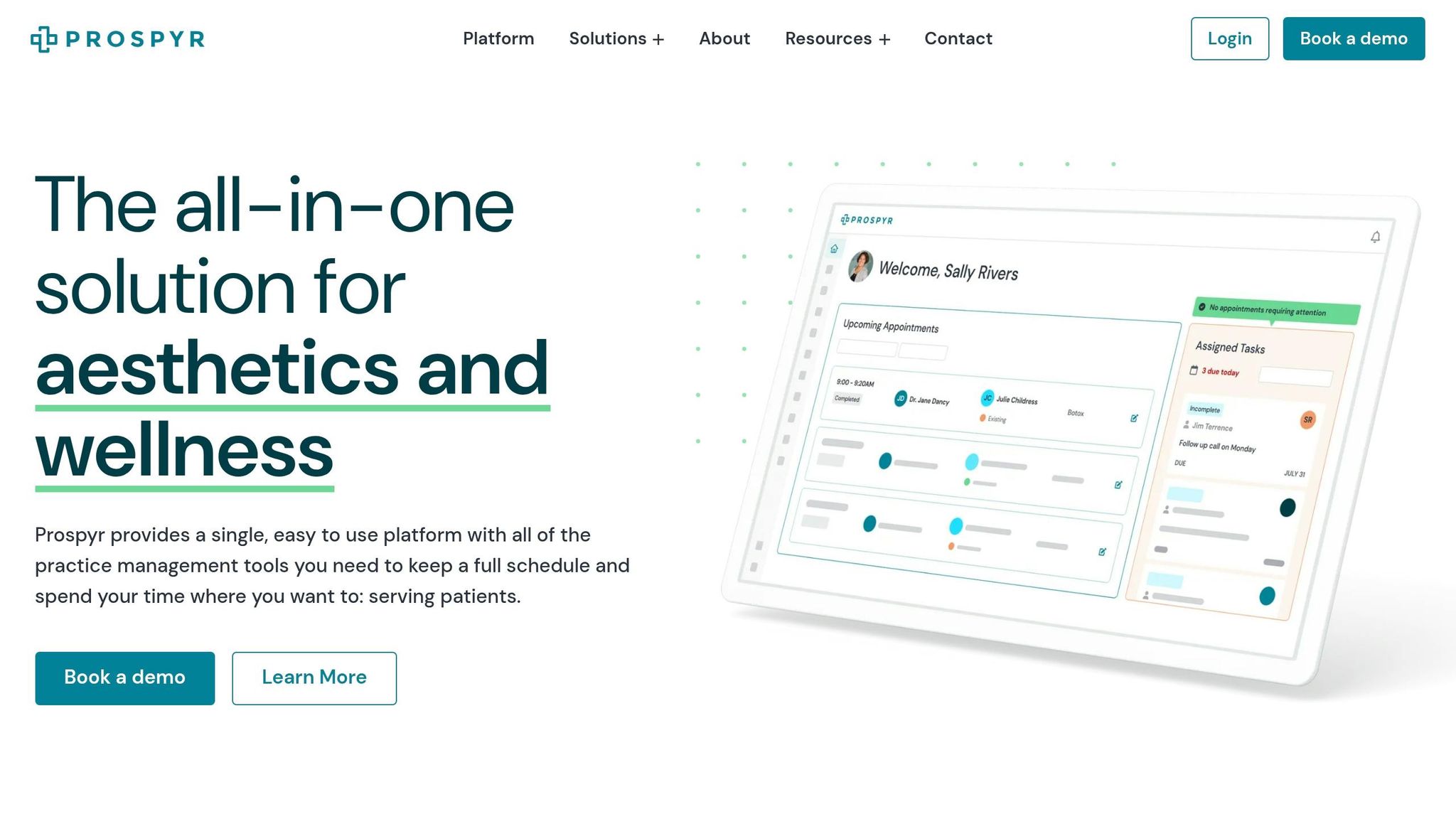
Understanding your key metrics is just the starting point. To truly optimize event marketing, you need a platform that not only tracks these metrics but also simplifies execution and follow-up. Prospyr steps in to make this process seamless.
Prospyr Features That Support Event Management
Prospyr is tailored specifically for aesthetics and wellness clinics, bringing scheduling, lead management, and follow-ups into one HIPAA-compliant system. This eliminates the hassle of juggling multiple tools.
Its scheduling engine is designed with precision. You can block event time slots, cap attendance, and assign specific providers and rooms. For example, it ensures a live injectable demo doesn’t conflict with regular patient appointments. Lead capture forms go a step further by tagging RSVPs directly in the CRM, streamlining attendee management.
Prospyr also amplifies event performance through email and SMS automation. A well-planned communication sequence could include a save-the-date, RSVP confirmation, a 72-hour reminder, and a final SMS sent just hours before the event. Clinics using automated reminders have reported a 20–30% drop in no-show rates compared to manual outreach. Additionally, task management tools help clinics avoid oversights by assigning responsibilities - like confirming speakers or preparing consent packets - with deadlines and status tracking.
These features ensure every aspect of event planning and execution is smooth and efficient.
| Event Workflow Stage | Prospyr Feature |
|---|---|
| Planning & Promotion | Social media scheduling, media archive, email/SMS campaigns |
| Lead Acquisition | Lead capture forms, 2-way SMS, CRM/EMR integration |
| Execution & Booking | Online scheduling, 1-click booking, digital intake forms |
| Follow-Up & Retention | Automated SMS/email sequences, membership management |
| Analysis | Practice analytics, lead attribution, ROAS tracking |
This integrated approach aligns perfectly with the growing focus on data-driven, personalized patient engagement.
Improving Patient Engagement and Follow-Up with Prospyr
The post-event phase is where many clinics miss out on revenue opportunities. Prospyr’s Direct Marketing module tackles this by automating follow-ups. It sends a same-day thank-you message, a 48–72 hour booking reminder with one-click scheduling, and a final promotional nudge.
What sets this apart is its ability to personalize follow-ups. Prospyr consolidates clinical history, treatment interests, and event attendance into one patient profile. This allows clinics to send highly relevant messages. For instance, someone who inquired about RF microneedling could receive detailed information on that treatment, while a patient familiar with neurotoxins might get a targeted introduction to fillers.
Membership management is another standout feature. Clinics can offer event-specific deals with automated billing and reminders, encouraging attendees to transition into membership programs. Industry data reveals that members typically spend 2–3 times more annually than non-members, making membership conversion a key priority in the 30–90 days after an event.
Conclusion: Acting on Event Marketing Trends in 2026
Key Takeaways for Aesthetic Clinics
By 2026, clinics are focusing on smarter, more efficient events rather than simply hosting more of them. A single med spa event has the potential to generate between $100,000 and $175,000 in just one day. However, achieving this kind of success requires a seamless blend of marketing and operational efforts.
"Success is 50% marketing and 50% operations. If either side is missing, the whole event fails." - MJ Clements, Senior Operations Consultant, Diamond Accelerator
Several overarching themes stand out. Patients are increasingly drawn to educational experiences rather than constant promotional pushes. AI is becoming a game-changer for streamlining workflows, while personalization only works effectively when it relies on clean, first-party data. These foundational principles are the key to creating events that truly drive results. Use these insights to fine-tune your strategies and take actionable steps toward operational improvements.
Next Steps for Putting These Trends Into Practice
The trends make one thing clear: success in 2026 depends on combining strategic planning with operational precision. Advanced tools and personalized approaches are essential for elevating event performance. Start by fortifying your internal processes before scaling up. This means implementing a strong follow-up system, clearly defining staff responsibilities, and integrating technology into every stage of your event planning.
Set yourself up for success by finalizing event details eight weeks in advance, assigning specific roles to your team, and aiming for a 60% conversion rate from your post-event follow-up list. Many clinics miss out on significant revenue simply because their follow-up processes fall short.
A recent survey revealed that 52% of practice leaders see technology integration as their top priority for 2026. With a fully integrated system that offers scheduling, CRM, automated follow-ups, and analytics - all within a HIPAA-compliant platform - clinics can eliminate the bottlenecks that often hinder post-event progress. The message is clear: those who invest in the right infrastructure now will be the ones leading the industry by the end of the year.
FAQs
How do I choose the best event type for my clinic goals?
- Reactivating and Converting Patients: Host VIP appreciation nights or seasonal events. These create a sense of exclusivity and remind patients of the value you offer.
- Reducing Hesitation and Building Authority: Run educational seminars. These events position you as a trusted expert while addressing common questions or concerns.
- Launching New Services or Devices: Organize demo events featuring live Q&A sessions and same-day booking incentives. These help showcase your offerings and encourage immediate action.
Always pair your event with an offer that aligns with your revenue goals. This approach ensures a smooth path from generating interest to securing bookings.
What should my follow-up system look like after the event?
A strong follow-up system should be efficient, well-organized, and aligned with your clinic’s treatment timelines. Platforms like Prospyr can streamline operations, helping you stay on top of every lead.
Here’s how you can build an effective process:
- Quick responses: Send a thank-you message within 4 hours to make a lasting impression.
- Automated follow-ups: Set up scheduled care check-ins after procedures and share educational content at optimal times.
- Targeted rebooking: Time reminders to match treatment maintenance schedules, using multiple communication channels for smooth tracking.
Which event metrics matter most for proving ROI?
To measure the ROI of aesthetic clinic events effectively, it’s crucial to track metrics throughout the entire conversion funnel - not just surface-level numbers like impressions. Key performance indicators to monitor include:
- Cost per lead: How much you’re spending to generate each lead.
- Show-up rate: The percentage of registered attendees who actually show up.
- Consultation-to-booking conversion rate: How many consultations turn into actual bookings.
- Total revenue per patient: The overall income generated from each patient.
Prospyr simplifies this process by integrating scheduling, CRM, and analytics into one platform. This gives you real-time data to evaluate your event's actual performance and financial impact.