Documentation templates are critical for med spas to ensure compliance, improve efficiency, and enhance patient care. These pre-designed forms standardize how patient details, medical history, consents, and treatment plans are recorded. They reduce errors, save time, and lower malpractice risks while meeting HIPAA and state licensing requirements. Key template types include:
- SOAP Notes: Structure patient interactions (Subjective, Objective, Assessment, Plan).
- Informed Consents: Detail risks, benefits, and alternatives for treatments.
- Patient Intake Forms: Collect medical history and treatment goals upfront.
- Treatment Plans: Outline multi-session care strategies.
- Good Faith Exams: Document initial medical evaluations for compliance.
Digital templates offer added benefits like secure storage, automated workflows, and better patient experience compared to paper forms. Regular updates and staff training are essential to maintain compliance and avoid legal risks. Tools like Prospyr can streamline operations by integrating templates with scheduling, patient records, and compliance protocols.
Key Takeaway: Well-designed templates are the backbone of a compliant and efficient med spa, ensuring accurate documentation, better care, and reduced liability.
Why Med Spas Need Documentation Templates
Documentation templates are essential for med spas, serving as the backbone of smooth operations and legal compliance. They tackle everyday challenges while safeguarding your practice and enhancing patient experiences. By creating consistency in how information is recorded and shared, these templates keep your med spa organized and efficient.
Reducing Administrative Work
Templates simplify the flow of information, cutting down on delays and making documentation faster and easier. This means smoother patient transitions and more time for providers to focus on delivering care.
The benefits don’t stop there. Templates can incorporate the latest billing codes for 2025 and state-specific licensing requirements (such as those in New York, Georgia, and North Carolina), which speeds up invoicing and reduces the need for manual compliance checks.
In addition to improving workflow, templates also bolster your legal and regulatory safeguards.
Meeting Legal and Regulatory Requirements
Well-designed templates create audit-ready records that show your med spa is meeting all necessary standards.
Kevin Henry, a risk management expert, explains, "Standard Operating Procedures turn expectations into repeatable steps, reducing risk and variation in care".
By including tools like checklists, role-based access, and protocols for handling Protected Health Information (PHI), templates can help embed HIPAA compliance into your daily operations.
Templates for informed consent are another key resource, ensuring that patients receive consistent, clear information about their procedures.
As noted by Accountable, "Informed Consent Forms ensure patients understand the procedure, risks, benefits, and alternatives before agreeing".
Additionally, templates can help you stay on top of other essential compliance tasks, like maintaining Business Associate Agreements (BAAs), sterilization logs for infection control, and exposure control plans for OSHA inspections. With everything organized and ready for review, you’ll be well-prepared for any audits or legal challenges.
Once compliance is under control, templates also enhance how you interact with patients.
Improving Patient Interactions
When administrative tasks are streamlined, providers can focus more on patient care. Standardized templates for before-and-after photos, for example, provide clear visual evidence of treatment progress. These photos not only set realistic expectations but also demonstrate results in a professional, organized way. Templates with built-in legal guidelines ensure that permissions for photography are handled automatically, removing the need for manual follow-ups.
Using consistent intake forms and treatment protocols also builds trust. Patients notice when care is uniform and high-quality across all providers. Coupled with secure handling of sensitive information, this consistency fosters long-term relationships based on professionalism and reliability. Providing a secure patient portal further streamlines this experience by giving clients easy access to their records.
sbb-itb-02f5876
Types of Med Spa Documentation Templates
In med spas, documentation templates play a key role in patient care and regulatory compliance. They help ensure a smooth, standardized experience for patients while safeguarding the practice.
SOAP Note Templates
SOAP (Subjective, Objective, Assessment, Plan) note templates are the backbone of clinical documentation. They create a structured way to record patient encounters, making it easier to maintain consistent care standards and track progress over time.
Informed Consent Templates
Informed consent templates are critical for both patient education and legal protection. These forms outline the benefits, risks, aftercare instructions, and alternative options for a procedure. They also include detailed descriptions of the treatment, potential risks, contraindications, and space for required signatures. For specific treatments like neurotoxins or dermal fillers, tailored consents address unique risks, ensuring that patients are fully informed before proceeding.
Patient Intake Templates
Patient intake templates gather essential information like contact details, medical history, lifestyle habits, and treatment goals before the first appointment. These forms serve as a screening tool to identify any contraindications and determine whether a patient is a good candidate for treatment. Interestingly, 81% of clients prefer completing these forms online via telehealth portals using their own devices, rather than filling out paperwork in the waiting room.
Camille Armstrong, Owner of Secret Enhancements, shares: "My appointments are shorter because the forms have already been filled out before the patient arrives".
Treatment Plan Templates
Treatment plan templates provide a roadmap for a patient’s aesthetic care journey, especially for multi-session treatments. These forms include patient selection criteria, contraindications, step-by-step procedure details, and post-treatment care instructions. They also serve as a crucial tool for managing complications and demonstrating adherence to care standards, which is essential in malpractice cases.
Good Faith Exam Templates
Good Faith Exam (GFE) templates are used to document the initial medical evaluation required before certain aesthetic treatments, such as Botox, fillers, or GLP-1s. These exams must be performed by a qualified provider - such as an MD, NP, or PA - and are legally mandated. GFE templates ensure no critical details are overlooked by prompting providers to record medical history, visual exam findings, and assessments. The validity of a Good Faith Exam varies by state; some require a new exam for every treatment, while others allow it to remain valid for a specific period if care is ongoing.
These templates form the foundation of effective med spa documentation, ensuring both patient safety and operational efficiency.
What Makes a Good Med Spa Template

HIPAA Penalty Tiers for Med Spa Documentation Violations
A well-crafted med spa template is more than just a tool for organizing information - it’s a safeguard for your practice, a time-saver, and a way to ensure patients receive consistent care. These templates are a critical component when opening a med spa and maintaining operational excellence. What separates a reliable template from a flawed one often boils down to three key features. These features align with compliance and operational standards, as previously discussed.
Consistent Structure and Fields
A standardized structure with predefined fields eliminates confusion and ensures providers document patient interactions thoroughly and predictably. This uniformity is essential for maintaining regulatory compliance. For example, med spas in states like New York, Georgia, and North Carolina face varying requirements. Some states mandate documentation of specific safety training or facility licensing details. By embedding these fields into your templates, you’ll always be prepared for audits.
Additionally, templates that include updated billing codes can help reduce administrative errors and streamline financial processes. This feature not only saves time but also ensures accuracy in billing workflows.
HIPAA Compliance Features
For med spas offering medical treatments or storing patient records, HIPAA compliance isn’t optional - it’s the law. Templates must protect Protected Health Information (PHI), which includes patient names, medical histories, treatment notes, photos, consent forms, billing records, and appointment schedules.
Failing to meet HIPAA standards can lead to severe financial penalties, ranging from $141 to over $2.1 million annually, depending on the violation’s severity.
| HIPAA Penalty Tier | Culpability | Fine per Violation | Annual Cap |
|---|---|---|---|
| Tier 1 | Unknowing | $141 – $36,054 | $25,000 |
| Tier 2 | Reasonable cause | $1,424 – $71,162 | $100,000 |
| Tier 3 | Willful neglect (corrected) | $14,232 – $71,162 | $250,000 |
| Tier 4 | Willful neglect (not corrected) | $71,162 | $2,134,831 |
Your templates should be built to support role-based access, ensuring staff can only view information relevant to their duties. They should also function within systems that offer audit trails, which automatically track who accessed or modified a patient record and when. Additionally, any software vendor managing your templates must sign a Business Associate Agreement (BAA) to accept legal responsibility for safeguarding patient data.
This level of security provides a solid foundation for integrating other essential elements, such as visual documentation.
Adding Photos and Visual Elements
Before-and-after photos are an excellent way to monitor treatment progress and showcase results to patients. However, these images are classified as PHI under HIPAA and must be protected just like any other patient record. Storing such photos on unsecured devices can lead to compliance issues.
Templates should include dedicated fields for visual records, ensuring consistent image capture (e.g., same lighting, angles, and treatment stages). They should also require explicit written consent if the photos are to be used for marketing purposes. This ensures both compliance and professionalism when incorporating visual elements into your practice.
Creating and Customizing Templates
The foundation of an effective template lies in capturing essential patient details. This includes basic identifiers like full name, date of birth (DOB), and contact information, as well as a comprehensive medical history. Using specific questions and checklists can help gather details about prior treatments (both professional and DIY), current skincare routines, and lifestyle factors such as sun exposure, smoking, and alcohol use. Don’t overlook unique circumstances - like religious restrictions, light sensitivity due to medication, or occupational risks - that could influence treatment plans. These details ensure a personalized and well-informed approach.
Required Components for Each Template Type
Each template should include sections for patient expectations and goals. These might cover focus areas, treatment objectives, and even pain tolerance levels. Additionally, you’ll want to address legal requirements, such as:
- HIPAA privacy practices
- Treatment risks and alternatives
- Financial policies (e.g., cancellation and refund terms)
- Parental consent for minors
Visual aids, like diagrams for marking treatment areas, can enhance communication, while sections for before-and-after photos provide a clear record of progress. For consent forms, create a signed document tailored to each treatment. These forms should outline benefits, risks, aftercare instructions, and the patient’s right to refuse treatment. Including a separate section for image-use permissions is also a good idea. Explaining the purpose behind each question can encourage patients to provide more accurate and thoughtful responses.
How to Customize Templates
Customizing templates with your clinic’s branding - such as colors and tone - helps build trust and familiarity. Strike a balance between thoroughness and simplicity by using checkboxes and short-answer fields. Since many patients manage their appointments on smartphones, ensure templates are mobile-friendly. Regular updates are also essential to reflect:
- New services
- State-specific compliance requirements (e.g., in New York, Georgia, or North Carolina)
- Industry updates, such as the 2025 billing codes, to avoid claim denials
Customizations can also streamline workflows. For example, include fields that automatically trigger the next step in the patient’s journey. Integrating these templates with platforms like Prospyr can further simplify operations, ensuring a seamless experience for both staff and patients.
With these customizations in place, the next step is choosing the right format for your templates.
Digital vs. Paper Templates
Deciding between digital and paper templates can significantly impact your practice’s efficiency. Digital templates offer several advantages, as shown below:
| Feature | Digital Templates | Paper Templates |
|---|---|---|
| Client Experience | 81% of clients prefer completing forms at home | Requires arriving early to fill out forms |
| Efficiency | Syncs automatically with EMR; no manual entry | Manual printing, scanning, and filing required |
| Safety | Flags contraindications before appointments | Risks may only be identified last-minute |
| Storage | Secure, encrypted cloud storage | Physical space needed; harder to search |
| Cost | Higher upfront software cost; lower labor costs | Lower upfront cost; higher long-term labor costs |
Digital systems simplify operations by sending forms to clients automatically when they book an appointment. This allows patients to complete documentation at their convenience, reducing the administrative load and minimizing human error. Additionally, practice management software with built-in form builders can sync data directly to client records. For instance, scheduling a neurotoxin appointment could automatically trigger the appropriate consent form, ensuring compliance and efficiency.
Choosing the right format not only streamlines processes but also demonstrates your practice’s dedication to accurate, efficient, and patient-centered documentation.
Using Templates in Practice Management Software
Integrating customized templates into practice management software creates a more efficient and organized workflow. With an all-in-one system, med spa operations become smoother, combining scheduling, patient records, and forms in one place. Tasks like sending consent forms or importing medical histories can be automated, reducing manual work and keeping everything connected.
Standardizing Templates Across Providers
A centralized platform ensures all providers follow the same documentation protocols, which is especially important when multiple practitioners treat the same patients. While the software locks the core structure of templates, it still allows providers to add specific details for different treatments. Features like mandatory field prompts help catch missing information before notes are saved, and analytics dashboards track how well providers complete their documentation. This approach ensures consistency and minimizes errors across the team.
Connecting Templates to EMR and Scheduling
When templates are integrated with EMR and scheduling systems, the workflow becomes seamless. For instance, patient data from digital intake forms can automatically populate SOAP notes and treatment plans, eliminating the need for repetitive data entry. If a patient books a Botox appointment, the system can automatically send the appropriate consent form and flag any contraindications in their medical history. After the treatment, notes sync with the schedule, triggering follow-up reminders and ensuring all documentation is stored securely in one place. This reduces no-shows and keeps records audit-ready.
Prospyr's Template Features
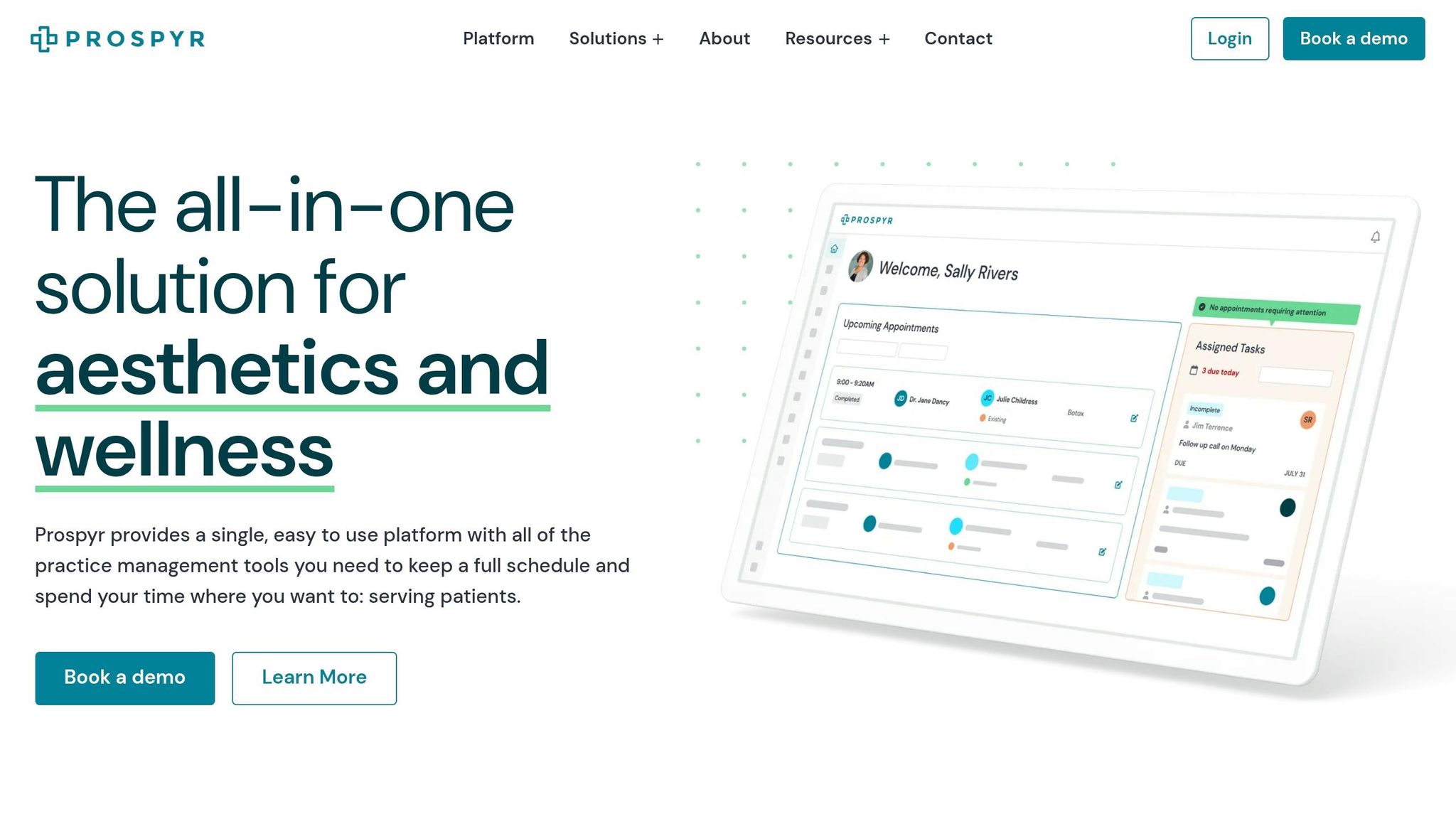
Prospyr's platform is a great example of how integration can streamline operations. Digital intake forms flow directly into the CRM/EMR, and AI-powered note creation simplifies transcription and drafting. The platform ensures HIPAA compliance with encrypted storage, role-based access controls, and audit logs to track any changes to templates. Tools for task management help prioritize daily documentation, while practice analytics provide real-time insights into completion rates.
In 2024, Dr. Daniel Lee of New Life Cosmetic Surgery transitioned from using four separate systems to Prospyr's integrated platform. This change led to a 50% increase in revenue and a 40% boost in appointments by eliminating workflow inefficiencies and centralizing patient management.
"We've seen a 50% increased in revenue and a 40% increase in appointments booked since switching away from using several different point solutions to running our practice on Prospyr." - Dr. Daniel Lee, Founder, New Life Cosmetic Surgery
Similarly, SOM Aesthetics launched their practice using Prospyr's platform. Founders Dr. Saami Khalifian and Dr. Jess Shisler generated $40,000 in revenue within their first two days and surpassed $100,000 in monthly revenue by their second month - achieving their launch goals 21 times faster than planned.
Common Template Mistakes and Compliance Issues
Mismanaged templates can lead to serious legal and financial repercussions. The biggest issues often arise from HIPAA violations, outdated forms, and insufficient staff training - each of which can result in regulatory fines, malpractice claims, or complaints to medical boards.
Ignoring HIPAA Requirements
HIPAA violations remain one of the most frequent - and expensive - errors med spas encounter. For instance, storing patient records or intake forms on non-compliant platforms like personal cloud drives or unencrypted email, without a Business Associate Agreement (BAA), can lead to hefty federal fines. Another common pitfall is neglecting the "minimum necessary" rule, which limits staff access to only the information required for their specific duties.
"Improper access by employees to information that they don't otherwise need access to can give rise to HIPAA breach issues".
To reduce these risks, implement safeguards like unique user IDs, multi-factor authentication, automatic logouts, and end-to-end encryption. Without these measures, a data breach impacting 500 or more individuals requires notifying the Department of Health and Human Services and publicizing the breach in major media outlets within 60 days. Digital templates with built-in audit trails and analytics and required fields can further support compliance efforts.
Outdated templates present another serious risk to legal and regulatory protections.
Using Old or Inconsistent Templates
Relying on outdated or inconsistent forms can expose practices to legal vulnerabilities. Many states mandate that records be retained for 7–10 years.
"If a patient has a complication and you cannot produce timestamped consent proving they understood the risks, the legal presumption shifts against you".
Additionally, "cloning" documentation - reusing generic notes - raises red flags during audits because it fails to show medical necessity or patient-specific progress. Using one-size-fits-all forms instead of tailored consents for procedures like neurotoxins, dermal fillers, or laser treatments can also lead to malpractice claims. Each procedure carries unique risks, such as vascular occlusion for fillers. Inconsistent or incomplete charting disrupts continuity of care, leaving future providers without the information needed to make informed decisions.
| Common Template Mistake | Compliance/Legal Risk | Prevention Strategy |
|---|---|---|
| Using outdated forms | Regulatory non-compliance | Annual review of all legal and clinical templates |
| Missing provider signatures | Invalid medical record | Use EMRs with automated digital signature prompts |
| Documentation "cloning" | Audit red flag; no proof of medical necessity | Train staff to personalize notes for each visit |
Skipping Staff Training
Even the best-designed templates are ineffective if staff aren't properly trained to use them. Comprehensive training is essential to ensure everyone understands the legal significance of accurate documentation and how to avoid common mistakes like cloning or incomplete notes.
"Meticulous charting can be a practice's best defense against unwarranted legal action and unforeseen complications".
Training should be tailored to specific roles. For example, front desk staff need to understand processes like identity verification and applying the "minimum necessary" rule, while providers must learn how to customize templates and document the supervision of non-licensed personnel. Regular onboarding sessions, annual refreshers, and quarterly template reviews - delivered through meetings or online modules - can help staff stay up-to-date on changes in state laws, such as new Good Faith Exam requirements or updated safety protocols.
Well-trained staff form the backbone of effective documentation, ensuring both high-quality patient care and regulatory compliance.
Keeping Templates Current and Effective
Templates need regular updates to remain compliant and practical. A 2023 survey revealed that 34% of med spas lacked written emergency protocols, and practices without documented SOPs were three times more likely to face regulatory action after an adverse event.
"SOPs aren't a 'set it and forget it' project." - MedSpa Standards
This process requires systematic reviews and incorporating team feedback to keep everything relevant and functional.
Regular Template Reviews and Updates
Keeping templates up to date is essential for maintaining compliance and ensuring smooth operations. At a minimum, conduct an annual audit to confirm that all templates align with the latest standards of care. However, updates should happen immediately in response to certain triggers, such as adverse patient events, changes in state regulations, new treatments or equipment, or staff turnover. For instance, if Florida revises its data privacy laws or new aesthetic billing codes are introduced for 2025, your templates must reflect these updates right away.
This process should involve collaboration among the business owner, Medical Director, and senior clinical staff to ensure that all forms are legally compliant and practical for daily use. Templates should also be customized to meet state-specific requirements, as documentation needs in Florida differ from those in California or New York.
| Review Trigger | Frequency/Timing | Required Action |
|---|---|---|
| Routine Audit | Annually (Minimum) | Comprehensive review of all clinical and operational templates. |
| Regulatory Change | Immediate | Update templates to reflect new state laws or licensing requirements. |
| New Equipment/Service | Before service launch | Create and vet new protocols and consent forms for the specific service. |
| Adverse Event | Post-Incident | Review and refine relevant templates to prevent recurrence. |
| Staff Turnover | During Onboarding | Ensure new hires review and sign off on all current documentation standards. |
When prioritizing updates, emergency protocols should come first - such as anaphylaxis response or vascular occlusion procedures - since these address high-risk situations with significant legal implications. Use clear, numbered steps for these protocols so staff can quickly follow them during critical moments. This ensures even new employees can act effectively.
Once emergency protocols are updated, focus on gathering staff input to refine the changes.
Getting Staff Input for Improvements
Your team - both front desk staff and practitioners - can often identify where templates fall short in practice. Whether it’s confusing wording, missing fields, or bottlenecks in treatment rooms, their feedback can highlight usability issues before they escalate into compliance risks.
Beta testing updates with experienced staff before rolling them out fully is another key step. This testing phase can reveal whether the changes improve workflows or create unexpected challenges. Once updates are finalized, document the training process by collecting signed acknowledgments from all staff, confirming they’ve reviewed the revisions. This step safeguards your practice against claims like "nobody told me" in case of documentation errors.
Using digital platforms can also simplify version control by ensuring patients automatically receive the most current forms based on their scheduled treatments.
Conclusion
Documentation templates are essential for ensuring legal compliance, patient safety, and smooth operations in your med spa. By capturing detailed, CMS-compliant patient information, well-structured templates help reduce liability and improve workflow efficiency.
Treating templates as "living documents" is critical. Conducting regular audits, updating templates to align with changing regulations, and incorporating staff input will keep them both compliant and practical for everyday use.
As mentioned earlier, periodic reviews and adopting digital tools play a big role in maintaining accurate and compliant records. These updates pave the way for digital solutions that simplify processes even further.
Digital platforms bring a new level of efficiency to med spa documentation. They standardize templates, integrate seamlessly with EMR systems, and automate version control. For example, Prospyr's HIPAA-compliant platform offers features like integrated CRM/EMR systems, digital intake forms, and AI-powered note creation tools. These tools not only ensure consistency but also reduce the administrative workload. Additionally, Prospyr’s platform connects templates directly with scheduling and patient management systems, allowing data to flow effortlessly from consultation forms to treatment records.
With regular audits, ongoing staff training, and smart software integration, your documentation can become a powerful tool. By treating it as a strategic asset, you’ll create a more efficient practice that delivers high-quality patient care while minimizing risks to your business.
FAQs
Which med spa templates do I need first?
Consent forms play a key role in protecting your practice legally, maintaining HIPAA compliance, and building trust with patients. These documents ensure that patients are informed and give their permission for treatments or procedures.
On the other hand, digital patient intake forms simplify the data collection process. They save time, reduce errors, and make operations more efficient. By prioritizing these tools, you not only meet compliance requirements but also enhance the overall patient experience.
Begin with treatment-specific consent forms and HIPAA-compliant intake forms - these should be the cornerstone of your documentation system. They provide a solid foundation for both legal security and smooth day-to-day operations.
How do I keep templates HIPAA-compliant?
To ensure templates align with HIPAA requirements, it's essential that all patient forms, consent documents, and clinical notes adhere to strict privacy and security guidelines. Look for tools that offer secure access controls, data encryption, and audit trails to protect sensitive patient information. Regular reviews and updates of templates are crucial to staying in line with current regulations and industry standards. Features like built-in prompts and secure storage options can also play a key role in safeguarding patient data effectively.
How often should I update my forms?
Forms need to be reviewed and updated at least once a year or whenever there are changes to regulations, treatment protocols, or clinic policies. This helps ensure your documentation remains accurate and aligns with current standards.