

Nevada's Consumer Health Data Privacy Act (SB 370) is a strict law that governs how clinics handle health data from Nevada residents. Effective since March 31, 2024, it applies to businesses not regulated by HIPAA, such as aesthetic and wellness clinics. Violations can lead to fines of up to $5,000 per violation, or $12,500 if the affected individual is elderly or has a disability. Compliance isn't optional - it's a legal requirement and a way to build patient trust.
Key Requirements:
- Consent: Clinics must get clear, separate consent for data collection, sharing, and selling.
- Consumer Rights: Patients can request data access, deletion, and a list of third parties who received their data. Clinics must respond within 45 days.
- Geofencing Ban: No tracking or ads within 1,750 feet of healthcare facilities.
- Privacy Policy: Must include details about collected data, third-party sharing, and consumer rights.
- Data Security: Implement safeguards like encryption and access controls. Breach notifications are mandatory.
Best Practices:
- Maintain clear records of all patient requests and consents.
- Use technology to automate compliance tasks like consent tracking and data deletion.
- Update privacy policies annually and notify patients of changes.
Staying compliant protects your clinic from penalties and fosters patient confidence in how their sensitive data is handled.

Nevada SB 370 Compliance Checklist for Clinics
Creating a Compliant Data Privacy Policy
A well-crafted privacy policy is essential to meet the requirements of Nevada Senate Bill 370. It should be easy to locate on your website, allowing patients to review it before sharing sensitive health information. Write the policy in plain, straightforward language - steer clear of legal jargon that might confuse readers. To make complex details easier to follow, consider using bullet points, tables, or accordion-style formatting. This policy serves as the groundwork for implementing the specific requirements outlined below.
Privacy Policy Requirements Checklist
Nevada law mandates that your privacy policy include 11 specific elements. Start by listing the types of consumer health data you collect, such as biometric data, medication usage, or genetic information. Additionally, identify where this data comes from, whether through patient forms, surveys, cookies, or third-party partnerships.
You’ll also need to disclose which third parties or affiliates receive patient data and explain why. For example, your policy should provide a detailed breakdown of data categories, sources, and include a dedicated contact for privacy rights inquiries.
Make sure the policy outlines how consumers can exercise their rights, such as accessing, deleting, or opting out of data collection. Clearly describe the steps for reviewing or requesting changes to their information. If third parties collect health data across different websites over time, this must also be disclosed. Lastly, include the policy’s effective date so readers know how current it is.
Documentation and Transparency Standards
Keeping thorough records is just as important as the policy itself. Update the policy’s effective date at least once a year, even if no major changes have been made, to show that compliance is actively monitored. If significant updates occur, notify patients using the method outlined in your policy, such as email, homepage banners, or pop-up messages. Be sure to document these notifications and maintain records of all policy versions to demonstrate transparency.
Provide at least two ways for patients to contact you with privacy-related questions - such as a toll-free phone number and a dedicated email address. This makes it easier for them to reach out with concerns or rights requests. Keep in mind, 87% of consumers report they would avoid doing business with a company if they’re worried about its security practices. Clear communication isn’t just about meeting legal requirements - it’s a key factor in building trust. Accessible policies and detailed documentation set the stage for achieving broader compliance goals.
Managing Consumer Rights Requests
Nevada law grants patients specific rights concerning their personal data. To comply, it's essential to respond to verified requests within 45 days after confirming the requester's identity. To make this process smoother, establish a clear request channel - like a toll-free number, email, or online portal - so patients know exactly where to go for their requests. Below, we'll break down how to handle access, deletion, and consent withdrawal requests effectively.
Processing Access and Deletion Requests
Start by verifying the identity of the requester. Use methods like multi-factor authentication or ask for Nevada residency documentation. If verification fails, notify the requester promptly and request additional details to proceed.
Once verified, patients have the right to:
- Confirm whether their data is being collected, shared, or sold.
- Request a list of third parties or affiliates who have received their data.
- Obtain copies of written authorizations related to data sales.
For deletion requests, you must erase the consumer's health data and notify all processors and third parties who received it to do the same. Keep a record of all requests and responses for at least two years. If a request is denied, provide a written explanation and outline an appeals process for the patient to follow.
| Consumer Right | Obligation | Legal Deadline |
|---|---|---|
| Access/Confirm | Confirm if data is collected, shared, or sold | 45 days post-authentication |
| List Third Parties | Provide a list of all third parties receiving data | 45 days post-authentication |
| Deletion | Delete data and notify third parties to do the same | 45 days post-authentication |
| Appeal | Offer a written explanation for denials and appeals | Must be established |
Handling Consent Withdrawal and Data Sharing Requests
Consent withdrawal and data sharing need slightly different handling. When a patient withdraws consent, you must immediately stop collecting, sharing, or selling their data. Make sure that consent for data collection is handled separately from consent for data sharing to keep things straightforward and transparent.
If your clinic works with a Health Information Exchange (HIE), inform them of any consent revocations. Additionally, retain written authorizations for data sales for at least six years. While patients are entitled to receive this information for free once every 12 months, you may charge a reasonable fee if requests are repetitive, excessive, or clearly unfounded.
Data Security and Operational Compliance
Ensuring strong data security and clear operational practices is a cornerstone of compliance, especially when managing sensitive patient information. Safeguarding data isn’t just about responding to individual requests - it requires proactive measures and clearly defined protocols. Under Nevada law, clinics must establish and maintain administrative, technical, and physical safeguards to prevent unauthorized access, acquisition, destruction, or disclosure of records. This includes creating written policies that outline data access and breach response procedures.
Data Security Best Practices
One of the first steps is controlling access. Limit who can view consumer health data so employees and processors only see what’s absolutely necessary for their tasks. This applies not only to your internal team but also to third-party vendors, who should operate under formal written contracts explicitly detailing how they can use patient data.
Encryption is another must. Personal information should be encrypted during electronic transfers (except for faxes) and when transporting storage devices outside secure locations. Additionally, ensure compliance with the latest PCI Data Security Standards for payment card information.
Be prepared with a breach response plan. Nevada law requires clinics to notify affected residents of any security breach as quickly as possible, without unreasonable delays. If the breach impacts 1,000 or more individuals, you’re also required to inform national consumer reporting agencies. Regular staff training on security protocols and periodic updates to policies are key. Where feasible, consider deidentifying data - information that meets HIPAA deidentification standards is generally not subject to Nevada’s Consumer Health Data law.
Data Retention and Deletion Schedules
Nevada law mandates that clinics retain patient health records for at least five years from the date they were created or received. However, for patients under 23 years old, records cannot be destroyed until the patient reaches that age, as long as the five-year minimum retention period has been met.
When it’s time to destroy records, use methods like shredding physical documents or securely erasing digital files to ensure the information is unreadable. For consumer health data deletion requests under Nevada law, clinics have 45 days to comply after verifying the request. If the data is stored on backup or archival systems, deletion can be delayed for up to six months or until the next system restoration, whichever comes first.
To remain transparent, post a visible notice at all service locations and provide first-time patients with written disclosures explaining that records may be destroyed after the five-year retention period. If your clinic engages in selling consumer health data outside of HIPAA-regulated scenarios, retain the consumer’s written authorization for six years from the signature date. These authorizations expire one year after signing.
| Data Category | Retention Period | Special Conditions |
|---|---|---|
| Adult Health Records | Minimum 5 years | From receipt or production |
| Minor Health Records | Until the patient turns 23 | Cannot be destroyed before the patient reaches 23 |
| Sale Authorizations | 6 years | Authorization expires 1 year after signing |
| Backup Data (Deletion Requests) | Delete within 6 months | Or at next system restoration |
sbb-itb-02f5876
Using Technology for Compliance
Managing compliance in Nevada's data privacy landscape can feel like a juggling act, especially when you’re trying to balance patient care with tasks like managing consent, handling deletion requests, and overseeing data sharing. Technology can take a lot of this weight off your shoulders. By automating compliance tasks, the right practice management platform minimizes human error and lets your team focus on what truly matters: your patients.
Choosing Practice Management Platforms
Technology can streamline most of the administrative tasks tied to compliance. Start by selecting platforms that guarantee HIPAA compliance through a Business Associate Agreement (BAA). Any system interacting with patient data must follow HIPAA standards, and a BAA ensures the vendor is legally obligated to meet these requirements. Beyond HIPAA, it's crucial to look for features that address Nevada's unique regulations.
For example, Nevada law demands separate, timestamped consent for collecting and sharing health data. Platforms with digital intake forms that capture and timestamp these consents make it easier to stay compliant and provide clear, audit-ready records.
Encryption is another must-have. Ensure the platform uses NIST-approved encryption for protecting data both in transit and at rest.
Additionally, consumer rights tools are critical. Your system should allow you to:
- Verify if data is being processed.
- Generate a list of third parties with whom data was shared.
- Handle deletion requests efficiently.
When a deletion request comes in, the platform should not only delete the data but also notify any third-party processors to remove the consumer’s data from their records within 30 days. Access controls should also be precise, ensuring employees and processors only access data that’s "reasonably necessary" for their specific tasks.
| Feature Requirement | Nevada Legal Basis |
|---|---|
| Separate Consent | Required for collection vs. sharing of health data |
| Data Deletion | Must notify third-party processors to delete data |
| Encryption | Mandatory for data in transit and on mobile storage |
| Right to List | Must provide a list of all third parties who received the data |
These functionalities are key to addressing compliance challenges effectively.
How Prospyr Helps with Compliance
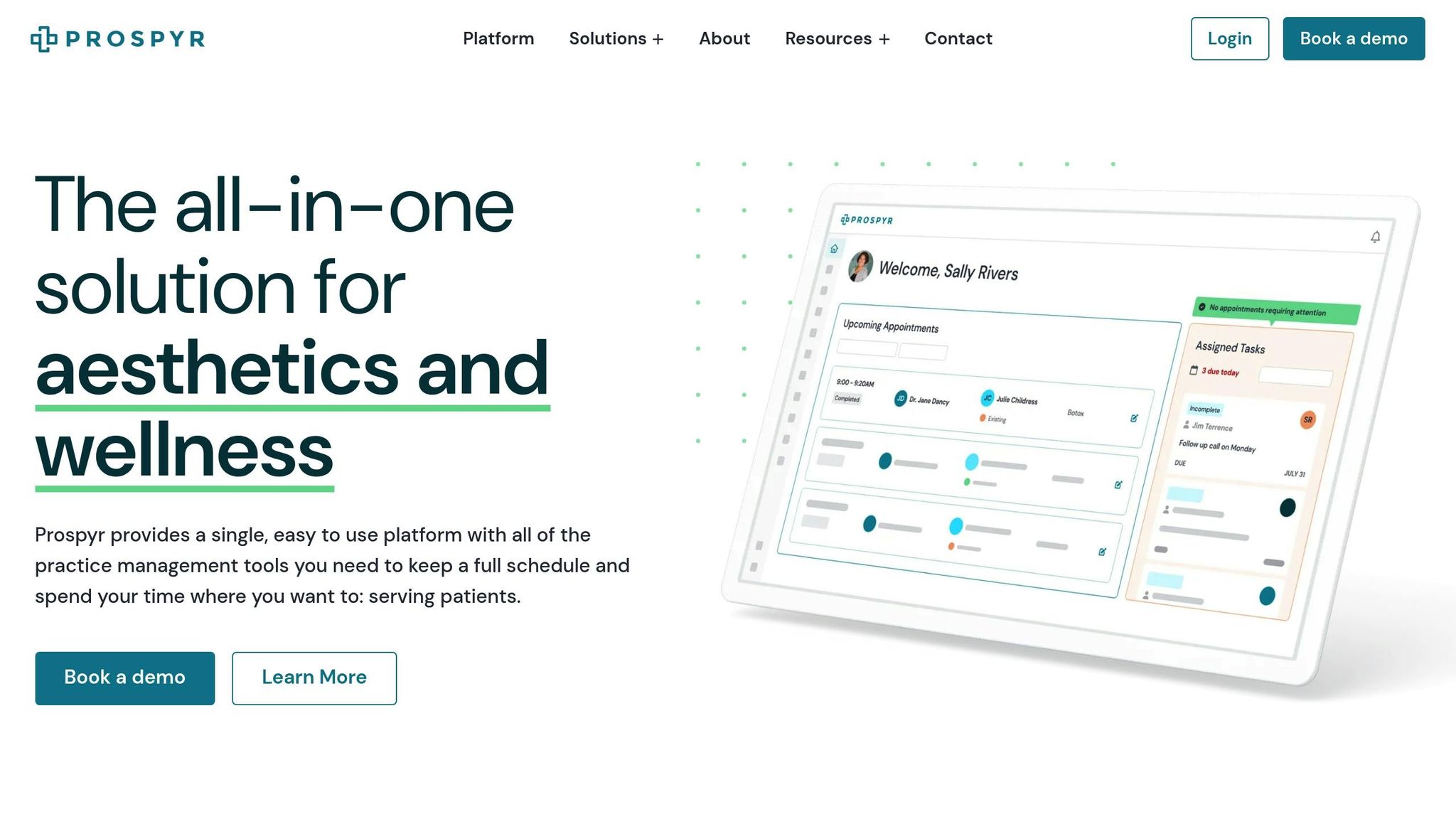
Prospyr brings all these compliance tools together in one efficient solution. As a HIPAA-compliant platform, it securely handles Protected Health Information (PHI) and operates under the BAAs that Nevada clinics require. Its digital intake forms allow you to set up separate, affirmative consent options for data collection and sharing, ensuring you meet Nevada’s transparency standards right from the start.
The platform’s integrated CRM and EMR system keeps real-time logs of all third-party disclosures. This means when a patient exercises their "right to know", you can generate the required list of third parties instantly. Prospyr also automates consumer request workflows, triggering deletion processes and notifying processors within the mandated 30- to 45-day timeframe.
With Prospyr’s granular access controls, you can limit who on your team has access to health data, ensuring it’s restricted to only what’s necessary for their tasks. On top of that, its encryption protocols meet NIST standards, safeguarding data in transit and at rest.
Conclusion
Nevada's Consumer Health Data Privacy Law, effective March 31, 2024, places a strong emphasis on protecting patient information, particularly for aesthetic and wellness clinics. Compliance isn't a one-time task - it’s an ongoing responsibility. From securing separate consent to responding promptly to consumer rights requests, every detail matters. Violations come with steep penalties: up to $5,000 per incident, or $12,500 if elderly individuals or those with disabilities are involved. With enforcement led by the Nevada Attorney General, staying compliant is not just a legal obligation - it’s also a way to safeguard your patients and your practice.
To meet these requirements, your compliance strategy should include the essentials: a health data privacy policy that’s easy to understand, well-documented consent processes, strong security measures, and efficient systems for managing consumer rights requests. These core elements are non-negotiable.
Leveraging technology can make compliance more manageable. Tools that automate consent tracking, handle deletion requests, and maintain audit-ready records can ease the administrative workload. By automating these tasks, your team can dedicate more time to what truly matters - providing excellent patient care.
Compliance isn’t just about checking off a list - it’s a continuous effort. Regularly reviewing policies, training staff, and conducting audits of your data practices will ensure your clinic stays aligned with Nevada’s regulations. More importantly, it will help build trust with your patients, showing them that their sensitive health data is in safe hands.
FAQs
What happens if a clinic doesn't comply with Nevada's Consumer Health Data Privacy Act?
Failing to comply with Nevada's Consumer Health Data Privacy Act can lead to a range of consequences. While the law doesn’t always spell out every potential penalty, violations could result in legal actions, financial penalties, or even damage to your clinic's reputation - none of which are risks worth taking.
The best way to steer clear of these outcomes? Understand the law inside and out. Make sure your clinic adopts practices that align with its requirements. This includes setting up strong data protection protocols and ensuring your privacy policies are clear and transparent. Taking these steps not only helps you comply but also builds trust with your patients.
How can clinics handle consumer rights requests under Nevada's data privacy laws?
To comply with Nevada's data privacy laws and handle consumer rights requests effectively, clinics should prioritize clarity, consent, and responsiveness. Here's how:
- Obtain explicit consent: Before collecting, using, or sharing health data, have clear procedures in place to get explicit consent. This isn't just good practice - it's a legal requirement under Nevada law.
- Maintain a clear privacy policy: Your privacy policy should clearly outline what health data is collected, how it's used, and the rights consumers have, such as accessing or deleting their information. This not only ensures compliance but also helps establish trust with patients.
- Streamline response processes: Create a straightforward system for handling requests like data access, corrections, or deletions. Make sure your staff is trained on these procedures and keep detailed records of all requests and consents as proof of compliance.
By focusing on these steps, clinics can meet legal obligations while safeguarding consumer rights.
How can technology help clinics comply with Nevada's data privacy laws?
Technology plays a key role in helping clinics navigate Nevada's data privacy laws by simplifying compliance and strengthening data security. For instance, HIPAA-compliant platforms provide essential safeguards like encryption, controlled access, and secure disposal methods. These features help clinics store sensitive patient information securely, minimizing the chances of data breaches and avoiding potential penalties.
Another benefit is how technology streamlines consent management. Clinics can use electronic systems to collect, track, and document patient permissions for data use and sharing. Automated tools also make it easier to monitor compliance, generate detailed reports, and keep privacy policies current. This ensures clinics remain aligned with legal requirements while protecting patient information. By adopting these tools, clinics can efficiently manage their responsibilities under Nevada's privacy regulations.