
Med spa insurance costs more than you think. While basic premiums might seem affordable - ranging from $2,000 to $3,500 annually - hidden expenses like deductibles, compliance penalties, and coverage gaps can quickly add up. For example, deductibles can range from $500 to $2,500, while fines for non-compliance or data breaches can exceed $30,000. Without proper coverage, you risk paying out-of-pocket for claims or facing severe penalties.
Key takeaways:
- Compliance costs: HIPAA violations can lead to fines up to $2 million.
- Coverage gaps: Missing policies for services like microneedling or PDO threads could result in $8,000+ out-of-pocket expenses.
- Cybersecurity risks: Cyber liability insurance is essential, with premiums starting at $134/month.
- Facility expenses: Buildout costs can range from $90–$130 per square foot, with additional costs for ADA compliance, equipment, and maintenance.
Med spa owners need to plan beyond basic premiums to avoid financial risks and ensure their business stays protected.

Hidden Costs of Med Spa Insurance: Complete Breakdown
Legal and Compliance Expenses
Running a med spa comes with complex regulatory demands that go far beyond typical insurance costs. Federal rules like HIPAA, OSHA's workplace safety standards, and state medical board regulations all require ongoing compliance efforts. These aren't just bureaucratic hurdles - they can translate into significant expenses when audits or penalties arise. Below, we'll break down the costs tied to these requirements.
Regulatory Compliance Consultations
Healthcare law for aesthetic services is a maze of state and federal regulations. For instance, state medical boards enforce varying rules about what nurses and aestheticians can legally do. Meanwhile, OSHA's updated 2025 standards have tightened requirements around sanitation, infection control, and workplace safety. This includes maintaining precise inventory management for medical supplies and hazardous materials. To navigate these complexities, many med spa owners turn to compliance consultants. These experts help audit operations, verify staff credentials, and ensure the business aligns with state-specific medical board rules.
HIPAA compliance adds another layer of responsibility. Annual risk assessments for electronic protected health information (ePHI) are mandatory to avoid penalties for "willful neglect". Med spas also need to establish Business Associate Agreements (BAAs) with any third-party vendors that handle patient data. These steps are essential to stay ahead of potential violations and the costly consequences that follow.
Penalties for Non-Compliance
Failing to meet compliance standards can be financially devastating. HIPAA violations, for example, are categorized into tiers, ranging from minor breaches (Tier 1) to willful neglect (Tier 4). Fines can exceed $2,000,000, with additional costs tied to forensic investigations, mandatory notifications, and corrective action plans. As of January 2024, the Office for Civil Rights had processed over 351,372 HIPAA complaints, with 2,074 cases referred to the Department of Justice for criminal investigation. On top of federal fines, state attorneys general can impose their own civil penalties.
The risks don't stop there. Operational missteps, such as practicing medicine without proper licensing, can lead to business closures, license revocations for supervising physicians, and even criminal charges.
"A single compliance lapse can trigger negative consequences that are difficult, if not impossible, to reverse".
Even seemingly small errors - like failing to provide patients with their medical records within 30 days, overcharging for record copies, or neglecting to document HIPAA and OSHA training for staff - can result in severe penalties.
"The long-term cost of negative public relations is impossible to calculate and can often be more damaging to the organization than the financial penalties of HIPAA non-compliance".
These examples underscore the importance of staying vigilant and proactive about compliance. The financial and reputational stakes are simply too high to ignore.
sbb-itb-02f5876
Malpractice and Liability Insurance Coverage Gaps
Med spas operate at the intersection of healthcare and beauty services, which means they require a mix of insurance policies to stay protected. Many owners mistakenly believe a single professional liability policy covers all risks, but that’s rarely the case. Gaps in coverage can lead to expensive claims, whether it’s due to a botched procedure, an employee’s error, or even a data breach involving sensitive client information.
Expanding services or hiring independent contractors without revisiting your insurance policies can leave you exposed to hefty legal fees or settlements. Knowing which types of coverage you need - and what factors influence your premiums - is key to avoiding these financial pitfalls. Let’s break down the types of coverage med spas typically require.
Different Coverage Types Explained
Med spas face a variety of risks, often requiring a combination of policies rather than relying on a single, all-encompassing plan. Here’s what you need to know:
- Medical Professional Liability: Also known as malpractice insurance, this covers errors in medical procedures performed by professionals like doctors, nurse practitioners, and aestheticians. Most malpractice insurance is written on a "claims-made" basis, meaning it only covers incidents reported while the policy is active. If you switch insurers or close your business, you’ll need "tail coverage" to protect against claims from past procedures.
- General Liability: This covers third-party injuries (like a slip-and-fall in your facility) or property damage. However, general liability policies usually exclude data breaches, so you’ll need Cyber Liability Insurance to handle HIPAA violations, breach notifications, ransomware attacks, and credit monitoring for affected clients.
- Property Insurance: Protects your physical assets, such as lasers, microneedling devices, and other equipment. Opt for "replacement cost" coverage rather than "actual cash value" to avoid being underinsured when replacing costly items.
- Employment Practices Liability Insurance (EPLI): Covers claims related to wrongful termination, harassment, or wage disputes from employees.
- Workers' Compensation: Required in most states if you have employees, this policy covers workplace injuries and illnesses.
"Medical spas represent one of the fastest-growing sectors in the personal wellness industry, but their insurance needs are far from simple." - Novatae
Two common gaps often catch med spa owners by surprise. First, if you use independent contractors (1099 providers) instead of employees, many liability policies won’t cover them unless specifically stated. Second, adding new procedures - like IV therapy or microneedling - without updating your policy can result in denied claims if something goes wrong.
"Gaps can quickly turn into costly claims, whether from a procedure gone wrong, an employee misstep, or a data breach involving sensitive patient information." - Bobbie Williams, Healthcare/Professional Lines Division Lead, Novatae
Factors That Affect Premium Costs
Med spa insurance premiums vary widely, depending on several factors:
- Procedures Offered: Non-invasive treatments like facials and chemical peels typically have lower premiums. In contrast, invasive procedures such as laser resurfacing or injectables increase costs. High-risk treatments, like ketamine therapy or CO₂ laser work, may even be excluded by some insurers.
- Patient Volume: The more clients you see, the greater the risk of potential claims, which can drive up your premiums.
- Location: State regulations, local litigation trends, and settlement costs play a big role. For example, med spas in New York or California often face higher premiums than those in less populated areas.
- Staff Credentials and Size: Policies must reflect the qualifications of all providers, whether they’re medical doctors, nurse practitioners, or aestheticians. Changes in staff numbers should also be reported to avoid coverage gaps or state-level fines.
- Property Valuation: Choosing "actual cash value" coverage might save money upfront but only reimburses the depreciated value of damaged items. "Replacement cost" coverage, while pricier, ensures you can replace equipment without significant out-of-pocket expenses.
Understanding these factors can help you make informed decisions about your insurance policies, ensuring your med spa stays protected from unexpected risks.
Equipment, Facility, and Infrastructure Costs
When planning a budget for med spa insurance, most owners tend to focus on premiums and deductibles. However, the real financial burden often stems from the facility itself. Buildout expenses can significantly affect your property insurance limits, and failing to account for infrastructure needs may lead to unforeseen costs.
Unexpected Buildout Costs
Setting up a med spa requires a specialized, medical-grade infrastructure, and the costs can add up quickly. If you’re starting with an empty shell space, buildout expenses generally range from $90 to $130 per square foot.
For example, laser equipment generates high heat and needs specialized ventilation. Upgrading an HVAC system to handle this can cost around $10,000. Treatment rooms must meet strict clinical sanitation standards, which often means installing sinks. Outfitting three treatment rooms with dedicated sinks typically costs $7,000. Additionally, upgrading high-voltage electrical systems to power medical devices may add another $12,000.
Compliance with the Americans with Disabilities Act (ADA) is mandatory, requiring adjustments like wider doorways and accessible entryways. These modifications usually cost about $6,000. On top of that, medical-grade finishes for surfaces - designed to withstand repeated sterilization - average around $40 per square foot.
"A med spa and wellness center build-out combines cutting-edge medical treatments with traditional spa services. These hybrid facilities require substantial upfront investment, with startup costs typically ranging from $100,000 to $500,000." – EB3 Construction Team
Equipment costs are another major factor. A single laser machine can cost between $40,000 and $80,000, while specialized equipment, like cryotherapy chambers, may run about $55,000. These high-value items increase the limits needed for Business Personal Property insurance. Experts suggest reserving 10% to 15% of your total buildout budget as a contingency fund to cover unexpected construction or regulatory expenses.
These initial investments directly influence your facility's ongoing risk exposure and insurance requirements.
Ongoing Maintenance and Repairs
Initial setup costs are just the beginning. Maintaining the facility and equipment is an ongoing expense. Medical equipment needs regular upkeep to stay functional and compliant with safety standards. For example:
- Janitorial services: $500 to $1,500 per month
- Medical supply replenishment: $2,000 to $4,000 per month
- Medical waste disposal: $500 to $1,500 per month, depending on state regulations
Given the high value of medical equipment, breakdown coverage is crucial. If a laser machine malfunctions or your HVAC system fails, you’ll want "replacement cost" coverage to ensure you can replace items at current market value, avoiding hefty out-of-pocket expenses.
The size and location of your facility also play a role in ongoing insurance costs. Larger spaces open to the public bring a higher risk of third-party injuries, which can drive up general liability premiums. Installing security systems - costing between $1,000 and $3,000 - can help reduce these premiums by showing that you’re actively managing risks. Additionally, maintaining a clean claims history through proactive facility upkeep can help keep your insurance costs under control over time.
Cyber Liability and Data Protection Expenses
With med spas increasingly relying on digital systems to handle patient records, before-and-after photos, and payment details, they’ve become attractive targets for cyberattacks. Strict HIPAA requirements mean that even a single data breach can lead to federal notification obligations and hefty penalties. With cyber incidents on the rise, any gaps in compliance can amplify these risks. This makes specialized cyber solutions more important than ever.
Cyber Liability Insurance Premiums
Cyber liability coverage is often added as an endorsement to existing malpractice insurance policies. For allied health professionals, typical costs are $87 per year for $15,000 in coverage or $141 per year for $25,000 in coverage in most states. In New York, premiums are higher, averaging $196 annually for a policy that includes $25,000 for security events and $100,000 for network security and privacy liability.
This coverage helps address multiple hidden costs that can arise after a breach. For instance, Customer Notification Expenses cover the mandatory costs of informing patients about breaches of their private information. Meanwhile, Public Relationship Expenses help repair reputational damage following a security incident. However, it’s worth noting that many standard policies exclude coverage for ransomware attacks or the loss of physical personal property. Always review the terms to understand what’s included before committing.
"Cyber liability insurance covers breach response costs, regulatory defense, and third-party claims." – Fusco Orsini & Associates
While insurance provides financial protection, strong cybersecurity protocols remain essential for a well-rounded risk management strategy.
EMR System Security and Safeguards
Insurance alone isn’t enough - securing your electronic medical record (EMR) systems is key to reducing cyber risks. Healthcare data breaches are among the most expensive, and med spas are no exception. Your EMR platform should implement 256-bit encryption - the standard used by the U.S. government - for both data storage and transfer. Multi-factor authentication is also critical to block unauthorized access from phishing attempts or stolen credentials.
Human error is another common vulnerability. Simple mistakes, like leaving computers logged in or sending unencrypted emails, can lead to costly breaches. Regular staff training in phishing awareness, device security protocols, and HIPAA compliance is essential. Using a HIPAA-compliant platform like Prospyr can further reduce risks. Prospyr’s built-in security features, such as encryption, secure storage, and access controls, handle compliance tasks automatically. This allows you to focus on patient care without the added stress of managing cybersecurity measures.
Cost Reduction and Risk Management Strategies
Med spa owners can save on insurance premiums and avoid unexpected expenses by bundling policies and implementing operational practices that minimize risk.
Bundling Insurance Coverage
Combining policies like General Liability, property insurance, Employment Practices Liability Insurance (EPLI), and cyber coverage with a single carrier can simplify claims processes and close coverage gaps. However, it’s crucial to ensure that every procedure you offer - whether it’s IV therapy or microneedling - is explicitly listed and covered under your professional liability policy. Overlooking this step could leave you exposed to uncovered risks.
Risk Management Best Practices
In addition to bundling, strong internal controls help reduce liability. Make sure your insurance covers both full-time employees and independent contractors, as many policies exclude contractors unless specified. If your professional liability policy is "claims-made", maintain uninterrupted coverage or purchase "tail coverage" when switching carriers to protect against past claims. For off-label treatments, always confirm with your insurer that non-FDA-indicated uses are covered. To safeguard expensive refrigerated medications, consider spoilage coverage through a blanket endorsement, which can protect against losses from power outages. These steps can help shield your practice from uncovered claims and compliance-related penalties.
Using Prospyr to Improve Operations
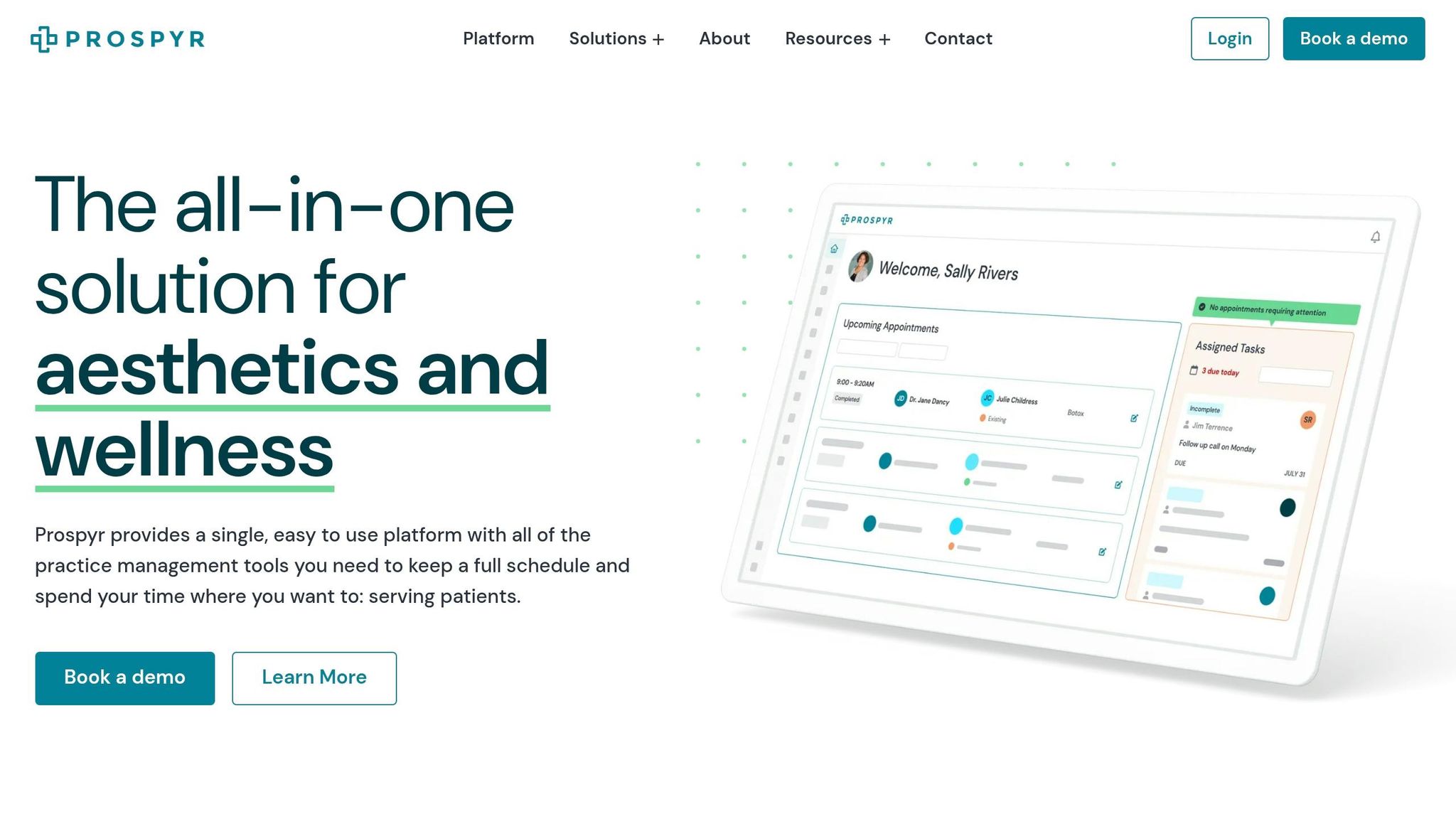
Operational inefficiencies can increase liability risks and insurance costs. Prospyr’s HIPAA-compliant practice management platform helps mitigate these risks by automating key workflows, securely managing patient data, and offering real-time analytics to pinpoint and address bottlenecks before they lead to costly problems. These tools not only protect your practice but also help manage insurance expenses more effectively.
Conclusion
Med spa insurance costs involve much more than just the monthly premiums. Hidden expenses - like those tied to cyber liability or facility buildouts - can quickly cut into your profits. Considering that med spas typically operate with net profit margins between 15% and 25%, failing to account for these risks could lead to devastating financial consequences, such as data breaches or unexpected equipment failures.
As discussed earlier, taking a proactive approach is essential. Combining bundled insurance policies with effective risk management practices can help you avoid coverage gaps and ensure all procedures are properly insured. But insurance alone isn’t enough to protect your bottom line. Administrative inefficiencies - like manual scheduling, payroll, and bookkeeping - can eat up an extra 10–15 hours of your time every week. On top of that, poor inventory tracking can increase liability risks.
This is where tools like Prospyr’s HIPAA-compliant platform come into play. By automating workflows, safeguarding patient data, and delivering real-time analytics, Prospyr helps you pinpoint and resolve operational inefficiencies before they lead to costly claims or compliance issues. When you pair smart insurance planning with streamlined operations, you create a practice that’s not only profitable but also resilient against unexpected challenges - all while continuing to deliver exceptional care.
FAQs
What insurance policies does a med spa actually need?
A med spa usually requires several types of insurance to ensure proper protection. General liability insurance covers accidents that might happen on-site, while professional liability insurance (malpractice) handles claims related to treatments. To safeguard equipment and facilities, property insurance is essential. Additionally, cyber liability insurance helps protect sensitive patient data from breaches, and if you have employees, workers' compensation insurance is a must. Since state regulations can vary, it's crucial to review local laws to ensure your practice has the right coverage to avoid financial risks.
How do I avoid coverage gaps when adding new services or contractors?
To avoid gaps in coverage when bringing on new services or contractors, it’s important to stay on top of your insurance policies. Make sure your professional liability, general liability, and cyber insurance policies cover any new additions.
Start by conducting a thorough risk assessment and consulting with your insurer to identify potential vulnerabilities. Adjust your policies accordingly to address these changes. Use tools like detailed documentation and digital consent forms to reduce risks, and ensure your team is properly trained to handle new responsibilities.
Don’t forget to regularly review your coverage to ensure it aligns with your business needs and complies with state regulations. Staying proactive can help you maintain the protection your business requires.
What’s the cheapest way to reduce HIPAA and cyber breach risk?
The most budget-friendly approach to lowering HIPAA and cyber breach risks is by using HIPAA-compliant software equipped with robust security features such as encryption and secure data management. Pairing this with regular risk assessments and policy updates can further reduce potential vulnerabilities. These strategies usually cost between $1,000 and $5,000 per year, offering an economical way to safeguard sensitive information.