

Insurance claims in aesthetic clinics have risen sharply, with non-surgical procedures like dermal fillers, Botox, and laser treatments driving most cases. From 2020 to 2024, 1,096 malpractice claims were filed, with an average resolution cost of $20,000 - legal fees consuming up to 82% of payouts. Clinics face increasing denials, documentation challenges, and high administrative burdens, leading to financial strain.
Key insights:
- Claims for fat-dissolving treatments surged 500% between 2019 and 2021.
- Legal fees often exceed damages awarded by more than 50%.
- Denial rates for aesthetic clinics are nearly 14%, compared to the healthcare average of 5%.
- Common issues include incomplete documentation, missing timestamps, and inadequate consent forms.
To address these challenges, clinics are turning to AI-powered tools for claims management, improving accuracy, reducing denials, and automating administrative tasks. Platforms like Prospyr centralize records, streamline documentation, and ensure compliance, helping clinics maintain steady cash flow and reduce disputes.

Insurance Claim Statistics for Aesthetic Clinics 2020-2024
Current Trends in Aesthetic Clinic Insurance Claims
The growing popularity of aesthetic treatments has led to a noticeable rise in insurance claims. Between January 2020 and July 2021, online searches for terms like "aesthetic treatments" and "tweakments" surged by 50%. With more procedures being performed, the volume of claims naturally increases, regardless of the outcomes. This shift highlights the pressing need for technological solutions, which will be discussed later in the article.
In one notable 2024 case, a $79,000 claim resulted in just $15,800 being awarded in damages - only 20% of the total claim - while 82% of the payout was consumed by legal fees. Priya Chander, a Cosmetics Claims Handler at Hamilton Fraser, shared her perspective:
"While overall there were slightly fewer claims in 2024 than 2023, my observation from our daily encounters with our clients is that there is an increasing trend in patients being unhappy with the treatment results".
Adding to these financial challenges is the ongoing shift toward non-surgical procedures, which are becoming more prominent in the claims landscape.
More Insurance Claims for Non-Surgical Procedures
Non-surgical treatments now account for the majority of claims, with dermal fillers, laser treatments, and botulinum toxin leading the pack. Social media has played a significant role in amplifying interest in specific procedures. For instance, claims related to fat-dissolving treatments spiked by 500% in 2021 compared to 2019, while PDO threads and hair transplants saw increases of 33% and 18%, respectively.
Payment plans have also expanded access to higher-cost procedures, bringing in a broader range of patients. Emma Bracchi, Senior Client Services Technician at Hamilton Fraser, noted:
"Many clinics now offer payment plans for more expensive procedures, such as fat dissolving and hair transplants, which makes them more affordable to more people. The more treatments that are carried out, the greater the chances of claims".
The COVID-19 pandemic further fueled this trend. With the rise of video conferencing, many individuals turned to facial enhancements, often driven by unrealistic expectations shaped by filtered social media images.
Complex Claims from Combined Treatment Plans
Aesthetic clinics are increasingly branching out into areas like regenerative aesthetics, menopause treatments, and longevity services. While non-surgical claims dominate, the growing complexity of combined treatment plans is creating new challenges. These multi-step plans, which often blend surgical and non-surgical procedures, require meticulous documentation. For example, timestamped before-and-after photos are now a standard requirement for all injectable treatments under many insurance policies.
Another key issue is distinguishing between "dissatisfactions" and "reportable claims." Dissatisfactions occur when a patient is unhappy with the results but does not allege bodily injury, negligence, or financial loss, nor involve a solicitor. These cases can often be resolved internally without escalating to formal claims. However, once a solicitor is involved or allegations of injury arise, the situation becomes a reportable claim. In such cases, legal costs often exceed the damages awarded by more than 50%.
sbb-itb-02f5876
Common Challenges in Processing Insurance Claims
Handling insurance claims for aesthetic clinics involves navigating strict legal frameworks and meticulous documentation standards. On average, resolved claims cost about $19,500, factoring in both indemnity and legal expenses. Alarmingly, legal fees alone often account for more than half of the claim's total value.
Legal and Compliance Requirements
The legal environment surrounding aesthetic claims has grown increasingly intricate. Clinics are required to maintain HIPAA-compliant records, which include encrypted medical histories, detailed photos, and prescribing notes, all protected by robust access controls. One of the most avoidable causes of claims stems from inadequate informed consent. Disputes often arise when risks are not clearly communicated or when consent forms fail to address the specific risks associated with individual procedures.
Insurance providers also impose stringent conditions that clinics must meet to retain coverage. These include precise documentation standards, such as specific photo guidelines and comprehensive treatment records. Falling short of these requirements can lead to insurers withdrawing coverage altogether.
Maja Muzhdeka from Pabau underscores the importance of maintaining thorough records:
"When a treatment or decision is called into question months later, the record has to speak for itself".
Another critical requirement is the retention of patient data and timestamped photos for a minimum of 10 years, ensuring evidence is available if claims arise long after the treatment. These legal and compliance demands add significant pressure to clinics, further complicating the administrative process.
Documentation and Consent Problems
Administrative errors are a major roadblock in the claim process, with about 77% of insurance denials linked to issues like incorrect patient information or missing authorizations, rather than the medical necessity of the service. Aesthetic and dermatology practices face an even steeper challenge, experiencing a 14% denial rate - nearly triple the healthcare industry’s average of 5%.
Timing and accuracy in documentation are critical. Errors such as missing timestamps, incomplete digital records, or inaccurate notes contribute significantly to the high denial rate for aesthetic clinics. Additionally, substituting pathology measurements for clinical ones frequently leads to coding mistakes and subsequent denials.
Dr. Laura Chen, an expert in revenue integrity, highlights the issue:
"The most overlooked aspect of denials is not the coding itself - it's documentation alignment. Payers now operate one slip away from denial. A missing detail in your narrative can trigger automated rejection even if the service was medically necessary".
For small to medium-sized clinics, these documentation gaps and inefficient billing processes translate to annual losses ranging from $150,000 to $300,000. Leveraging advanced digital tools to address these inefficiencies is essential for improving the claims process and minimizing financial setbacks. Utilizing practice analytics can help identify these patterns before they impact the bottom line.
How Technology Improves Claims Processing
To tackle the documentation errors and compliance challenges mentioned earlier, aesthetic clinics are increasingly turning to AI-powered Revenue Cycle Management (RCM) solutions. These tools don’t just react to claim denials - they prevent them. By identifying errors before claims are submitted, clinics can maintain a steady cash flow and avoid costly disputes. This shift represents a smarter, more proactive approach to managing claims.
AI and Automation in Claims Management
AI-driven platforms bring precision and efficiency to claims processing. They review clinical notes in real time, flagging any omissions and ensuring medical necessity is documented before submission. These systems also recommend accurate ICD and procedure codes, reducing errors from manual data entry. With predictive analytics, clinics can analyze past data to identify claims likely to be rejected, allowing staff to address issues early. Even when denials do occur, automated appeals streamline the process by generating payer-specific letters and attaching the necessary documentation, improving the likelihood of overturning denials.
David Metcalfe, Chief Technology Officer at Nextech, highlights the growing complexity of revenue cycle management:
"Managing a practice's revenue cycle has never been more complex, with evolving payer requirements and increasing claim denials creating significant challenges for providers".
In March 2025, Nextech showcased its Best in KLAS®-winning RCM professional billing services at the American Academy of Dermatology Annual Meeting. These services integrate intelligent solutions directly into specialty workflows, helping clinics optimize reimbursements.
Digital Integration for Better Operations
Technology goes beyond automation by offering full digital integration that unifies clinical documentation and billing. All-in-one platforms that combine EMR, CRM, and billing systems centralize essential information - such as medical histories, consultation notes, signed consent forms, and before-and-after photos - within each appointment. This ensures clinics have audit-ready records that can stand up to scrutiny, even years later.
Pre-designed templates and insurance codes simplify invoice generation and payment tracking, significantly reducing data entry errors. Digital consent forms with conditional fields further enhance accuracy by automatically matching risks to the selected treatment, ensuring uniformity across practitioners. Cloud-based, mobile-first solutions provide real-time access to records, enabling documentation at the point of care and improving operational efficiency.
How Prospyr Reduces Insurance Claim Risks
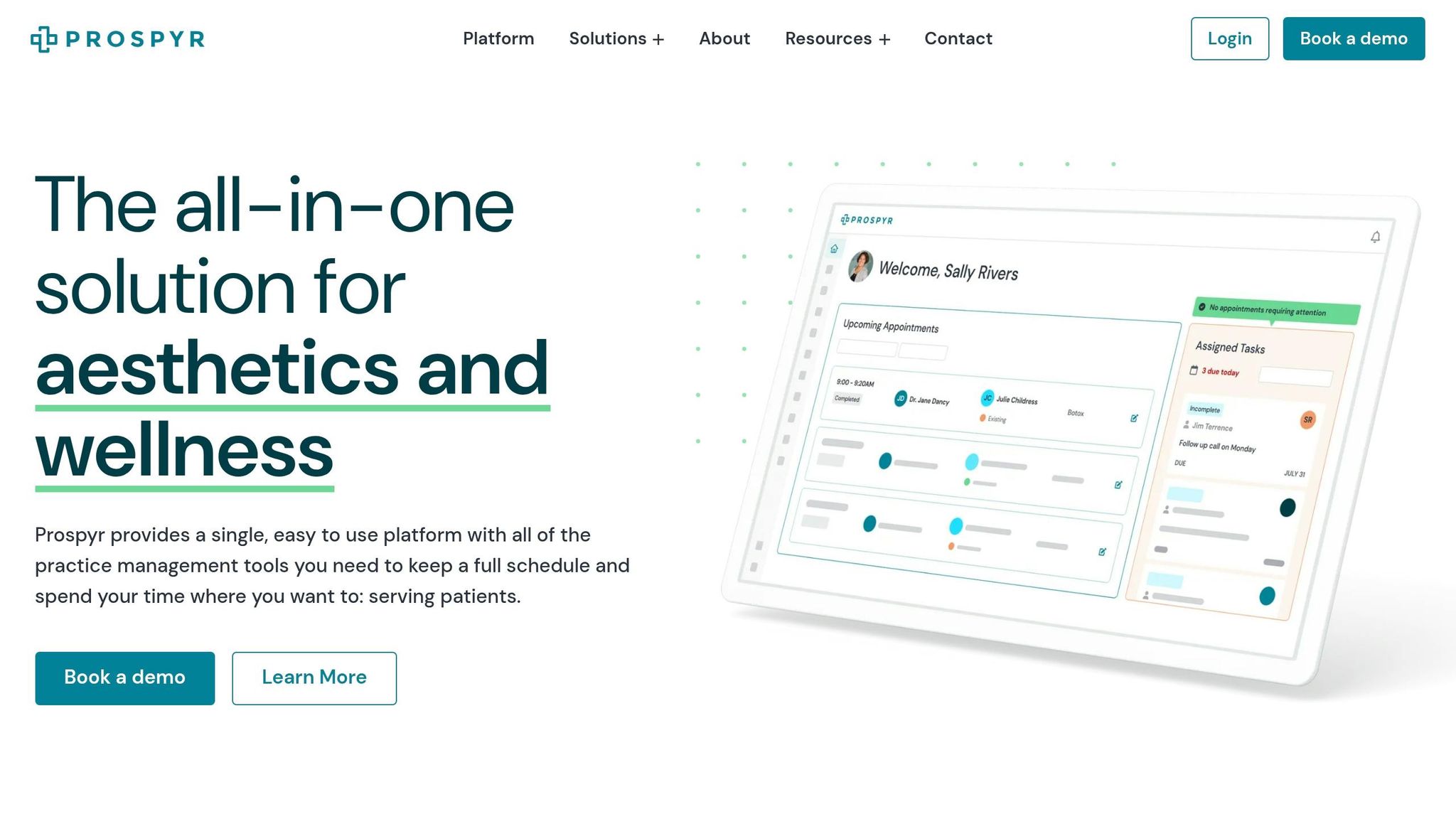
Prospyr simplifies the claims process by using digital tools to minimize errors and improve accuracy. By focusing on standardized documentation, smart analytics, and secure data management, the platform addresses key areas that often lead to claim disputes.
Digital Documentation and Consent Management
Prospyr's digital consent forms include conditional fields that automatically align risk explanations with the selected treatment. This ensures that practitioners provide consistent, clear information to patients, reducing the chances of misunderstandings or disputes. The system organizes medical history, signed consent forms, and treatment notes for each appointment, creating a centralized and time-stamped record. These records are readily accessible during insurance reviews. Additionally, the platform incorporates visual evidence of patient progress, offering another layer of proof to support claims.
AI-Powered Analytics and Insights
Prospyr's AI-driven tools take accuracy a step further by automating up to 80% of administrative tasks, including prior authorizations, which can secure insurance approvals up to a week before appointments. Real-time eligibility checks provide precise insurance details such as co-pay amounts, deductible statuses, and both primary and secondary coverage, confirming active insurance before treatment begins. The system also flags potential errors - like mismatched insurance IDs or typos in patient information - before claims are submitted, significantly reducing the risk of denials. This proactive approach has been shown to cut claim denials by 75%, with the average resolved claim amounting to nearly $20,000 .
HIPAA-Compliant Data Security
Prospyr prioritizes data protection with robust, HIPAA-compliant security measures. Role-based access controls ensure that only authorized staff can view sensitive information like medical histories, photos, and prescribing notes. All data is encrypted, both during storage and while being transmitted. Even in cases where a device is lost or a file intercepted, the encryption ensures that unauthorized individuals cannot access the information. These measures help clinics maintain audit-ready records while staying compliant with federal regulations throughout the claims process.
Conclusion
Managing insurance claims in aesthetic clinics has become increasingly challenging, especially as the popularity of non-surgical procedures grows. With legal fees accounting for over 50% of the nearly $20,000 average claim costs, traditional documentation methods simply can't keep up. Clinics relying on fragmented systems risk both financial strain and legal vulnerabilities.
Technology provides a practical way forward. Platforms like Prospyr streamline the process by standardizing consent forms, centralizing patient records, and automating administrative tasks. This creates audit-ready documentation that can support claims, even years after a procedure. By adopting integrated systems, clinics reduce errors and enhance overall efficiency.
"Digital records and signed consent help show that risks were clearly explained and understood at the time of treatment." - Cosmetic Insure
Beyond reducing financial risks, these improved processes boost patient satisfaction. Digital consent forms ensure patients fully understand the risks of procedures before proceeding, laying the groundwork for trust and long-term success in the clinic.
FAQs
What triggers an aesthetic clinic claim vs a simple complaint?
An aesthetic clinic claim occurs when a patient lodges a formal complaint, usually tied to treatment results, adverse reactions, or complications. These claims often carry the potential for legal or insurance-related consequences. On the other hand, a simple complaint generally reflects dissatisfaction or unmet expectations but doesn't progress into a formal claim process.
What documentation most often prevents claim denials?
To avoid claim denials, it's critical to have all necessary documentation in place. This includes:
- Detailed medical necessity records: Clearly outline why the treatment is required.
- Pre-treatment photos: Provide visual evidence to support the claim.
- Accurate CPT and ICD-10 codes: Ensure the codes precisely match the procedures and diagnoses.
- Prior authorizations: Secure approvals for treatments like biologics before proceeding.
By keeping these elements accurate and thorough, you can significantly lower the chances of claims being denied.
How can AI reduce denials and admin work in clinics?
AI helps aesthetic clinics cut down on denials and administrative burdens by boosting claim accuracy and automating tedious processes. It identifies issues like coding mistakes, documentation gaps, or eligibility errors early on, reducing the need for rework and appeals. Tasks such as data entry, verification, and follow-ups are also simplified through automation. Tools like Prospyr take this a step further by automating workflows, securely managing patient data, and ensuring HIPAA compliance. This allows clinics to dedicate more time to patient care and improving revenue recovery.