Treatment room inefficiencies are costing aesthetic and wellness clinics up to 30% of potential revenue annually. Common issues include overlapping appointments, poor patient flow, and wasted provider time due to setup delays. These bottlenecks not only hurt your bottom line but also damage patient trust and lead to staff burnout. Here's what you need to know:
- Scheduling Conflicts: Double-bookings, no buffer times, and equipment conflicts create delays and force rescheduling.
- Disorganized Patient Flow: Long wait times and chaotic transitions frustrate patients and providers alike, leading to missed appointments and revenue loss.
- Provider Downtime: Tasks like room prep, cleanup, and administrative duties eat into time that could be spent on treatments.
- Resource Mismanagement: Uneven room and equipment allocation leaves some providers idle while others are overwhelmed.
Fixing these problems involves smarter scheduling strategies, better layouts, and clear task protocols. Tools like Prospyr automate scheduling, track room usage, and streamline communication to reduce delays and improve efficiency. Start by analyzing your clinic's workflow, tracking metrics like room utilization (target: 80–89%), and observing real-time operations to identify problem areas. Addressing these bottlenecks can boost revenue, improve patient satisfaction, and create a smoother clinic experience.

Treatment Room Bottleneck Statistics and Impact on Clinic Revenue
Common Treatment Room Bottlenecks
Identifying where your clinic’s workflow falters is the first step to addressing inefficiencies. Treatment room bottlenecks tend to fall into a few common categories, each with its own impact on revenue and patient satisfaction. Let’s break them down.
Overlapping Appointments and Room Conflicts
Double-booking is a scheduling nightmare. When clinics rely on outdated tools like paper calendars or disconnected systems, they lose track of room and provider availability in real time. This often leads to canceled or rescheduled appointments - 68% of independent providers report doing this up to 10 times a month due to scheduling errors.
The problem worsens without built-in buffer times. Back-to-back appointments leave no room for sanitizing equipment, prepping supplies, or setting up rooms. This creates a chain reaction of delays. Even a single late appointment forces providers to rush through subsequent visits, compromising both efficiency and care.
"Overlapping or double-booked appointments may seem like minor administrative hiccups, but they have a cascading impact on clinical operations and patient experience." – Staffingly, Inc.
Equipment conflicts add to the chaos. When multiple providers need the same device - like a laser or RF machine - someone ends up waiting, which translates to lost revenue. Just one weekly no-show for a $500 treatment adds up to $26,000 in lost annual income.
Small factors like patient questions (85%), late arrivals (69%), or incomplete intake forms (53%) also contribute to scheduling issues. Without systems to flag conflicts or account for these variables, clinics are stuck in a cycle of reactive scheduling.
Inefficient Patient Flow
Disorganized check-in and treatment processes slow everything down. When patients wait too long or providers can’t transition smoothly between rooms, the entire operation suffers. In fact, 68% of patients think wait times are unreasonable, and 30% have left appointments because of excessive delays.
The financial impact is massive. Missed appointments and schedule gaps cost the U.S. healthcare system $150 billion annually. For individual practices, no-shows result in an average 14% daily revenue loss. Many patients skip appointments because they find the scheduling and intake process too complicated - 61% have admitted to doing this.
Poor patient flow doesn’t just hurt revenue - it affects care quality. Rushed providers, distracted by chaotic schedules, can’t give their best. Even small gaps of 15–20 minutes between appointments can add up to hours of wasted time each week. In some cases, poorly managed schedules can even lead to safety concerns, such as scheduling heat-based or invasive procedures too close together.
A better approach to room allocation can help. Providers typically need two to three rooms to work efficiently - while one room is being prepped, they can treat patients in another. Operating from a single room forces providers to wait for staff to finish pre- and post-visit tasks, creating unnecessary downtime.
Practitioner Downtime Due to Setup Delays
Inconsistent room prep and cleanup create gaps that ripple through the day. Tasks like sanitizing equipment, preparing supplies, and allowing machines to cool down must be scheduled properly, or the clinic risks falling behind.
Administrative tasks also eat into practitioners’ time. When providers have to verify insurance, update medication lists, or gather patient histories during appointments, they have less time for actual treatments. Procedures involving numbing creams or other wait times can leave providers idle if the schedule doesn’t account for these intervals.
Each inefficient time slot can cost a clinic $196 in lost revenue. Multiply that across several rooms and providers, and the financial impact becomes significant. While the average physician visit lasts about 17 minutes, poor scheduling wastes valuable time on tasks that should happen before or after the provider enters the room.
One success story highlights the potential for improvement. In 2023, Grand River Health in Rifle, Colorado, adopted "showtime" scheduling for 22 clinicians. This system staggered schedules so that physicians entered exam rooms 15 minutes after the patient’s official start time, giving staff time to handle administrative tasks first. The result? Each clinician saw an average of two more patients per day, and professional fulfillment scores improved for 20 out of 22 providers.
Streamlining room setup and scheduling buffers can transform treatment room efficiency, but resource allocation is just as critical.
Poor Resource Allocation Across Providers
Uneven distribution of rooms and equipment can bottleneck some providers while leaving others underutilized. Without clear insight into which rooms are equipped for specific treatments - like portable X-rays or specialized lasers - providers waste time searching for the right space.
Inventory issues only add to the delays. Manually tracking supplies like injectables, lot numbers, and expiration dates can lead to treatment interruptions if items aren’t ready or are found to be expired during a procedure. These disruptions frustrate both staff and patients.
"The key to effective utilization is to place patients into rooms provisioned with the right equipment to care for them, just when their providers are available to see them." – Rich Miller, Chief Strategy Officer, QGenda
As clinics expand, these allocation challenges grow. Adding more rooms alone won’t solve the problem - it may even complicate coordination. The solution lies in aligning room capabilities with patient needs in real time to eliminate bottlenecks and optimize efficiency.
sbb-itb-02f5876
How to Identify Bottlenecks in Your Clinic
Before jumping into solutions, it's critical to figure out where your clinic's treatment rooms are falling short. By focusing on specific metrics and observations, you can uncover inefficiencies that may be slowing down your operations.
Analyze Occupancy and Idle Time Patterns
Start by calculating your fill rate, which is the ratio of booked appointment slots (including double-booked ones) to the total available slots. For primary care practices, the ideal range is between 90% and 95%. If your fill rate exceeds 95%, it might be a red flag for staff burnout or limited patient access.
Next, measure your room utilization ratio - this is the total time patients spend in a room divided by the total room time allocated to a provider. The sweet spot is 80% to 89%. However, many clinics fall short; 72% of healthcare leaders report utilization rates of just 60–69% - a significant gap. Improving utilization by even 1% can translate to $140,000 in annual savings by increasing patient throughput without expanding your physical space.
Watch out for "dark rooms", which are scheduled but remain unused due to no-shows or last-minute schedule changes. Surprisingly, 66% of health systems lack proper visibility into how exam rooms are used. To dig deeper, analyze utilization by individual providers and specific days of the week. Broad data often hides trends, like delays that occur only on certain days.
"To truly optimize clinical capacity, it's not enough to know that all exam rooms are assigned to providers. You need to know that providers are actually using those exam rooms to see patients during the time allocated to them." – QGenda
Once you've reviewed the numbers, observe your clinic in action. Data can reveal a lot, but watching workflows in real-time often highlights delays and inefficiencies that numbers alone can't capture.
Map Patient and Staff Movement
Conduct timed walkthroughs of your clinic, tracking the patient journey from check-in to check-out at different times of the day. Record how long each step takes - arrival, waiting, rooming, provider time, and check-out. This process helps pinpoint where delays are actually happening, rather than relying on assumptions.
Virginia Mason Medical Center in Bainbridge Island, Washington, used this method to great effect. By observing movement patterns, they uncovered layout issues that caused unnecessary walking and patient bottlenecks. They reorganized their clinic into team-based pods and introduced patient self-rooming. The results? Room utilization jumped from 40% to 60% over two years, visit lengths dropped by 24%, room stay durations were cut by 22%, and the time patients spent alone in rooms fell by 39%.
"The information you get from watching what happens in your own space is fascinating." – Somer Shields, MBA, CMPE, Director, Virginia Mason Medical Center
Pay attention to whether staff frequently leave exam rooms to retrieve supplies or equipment - this could indicate poor room stocking. Examine your clinic’s layout for design flaws like dead-end corridors or inefficient loops that force staff to backtrack. And don’t forget to ask your team directly where they feel they lose the most time each day; their insights can uncover bottlenecks that data might overlook.
Track Utilization Rates by Room and Provider
Breaking down utilization by specific rooms and providers can highlight inefficiencies and ensure resources are being used effectively. In primary care, providers typically see 4–6 patients per hour. Use heat maps to visualize this data - red for lower patient volumes and green for higher ones - to quickly spot problem areas.
Make sure each room is tagged with its specific equipment and capabilities, such as X-ray machines, phlebotomy chairs, or ultrasound machines. This ensures specialized setups are used appropriately. Additionally, track cycle time - the total time from check-in to check-out. For most outpatient specialties, the goal is to stay under 60 minutes. Break down waiting times separately, distinguishing between time spent in the waiting room and time waiting in the exam room for the provider.
| Metric | How to Calculate | Target Benchmark |
|---|---|---|
| Fill Rate | (Slots Booked + Double-booked) / Slots Available | 90% – 95% |
| Utilization Rate | Total Patient Time / Total Room Time | 80% – 89% |
| Cycle Time | Total time from check-in to check-out | < 60 minutes |
Track these metrics on a monthly basis to identify trends. Pay close attention to peak hours when patient volume is highest, and adjust staffing or room allocations to match demand.
Solutions to Treatment Room Bottlenecks
Fixing inefficiencies in treatment rooms takes a mix of smarter scheduling, better layouts, and streamlined task management. Here's how you can address these challenges and keep your clinic running smoothly.
Use Smart Scheduling with Prospyr
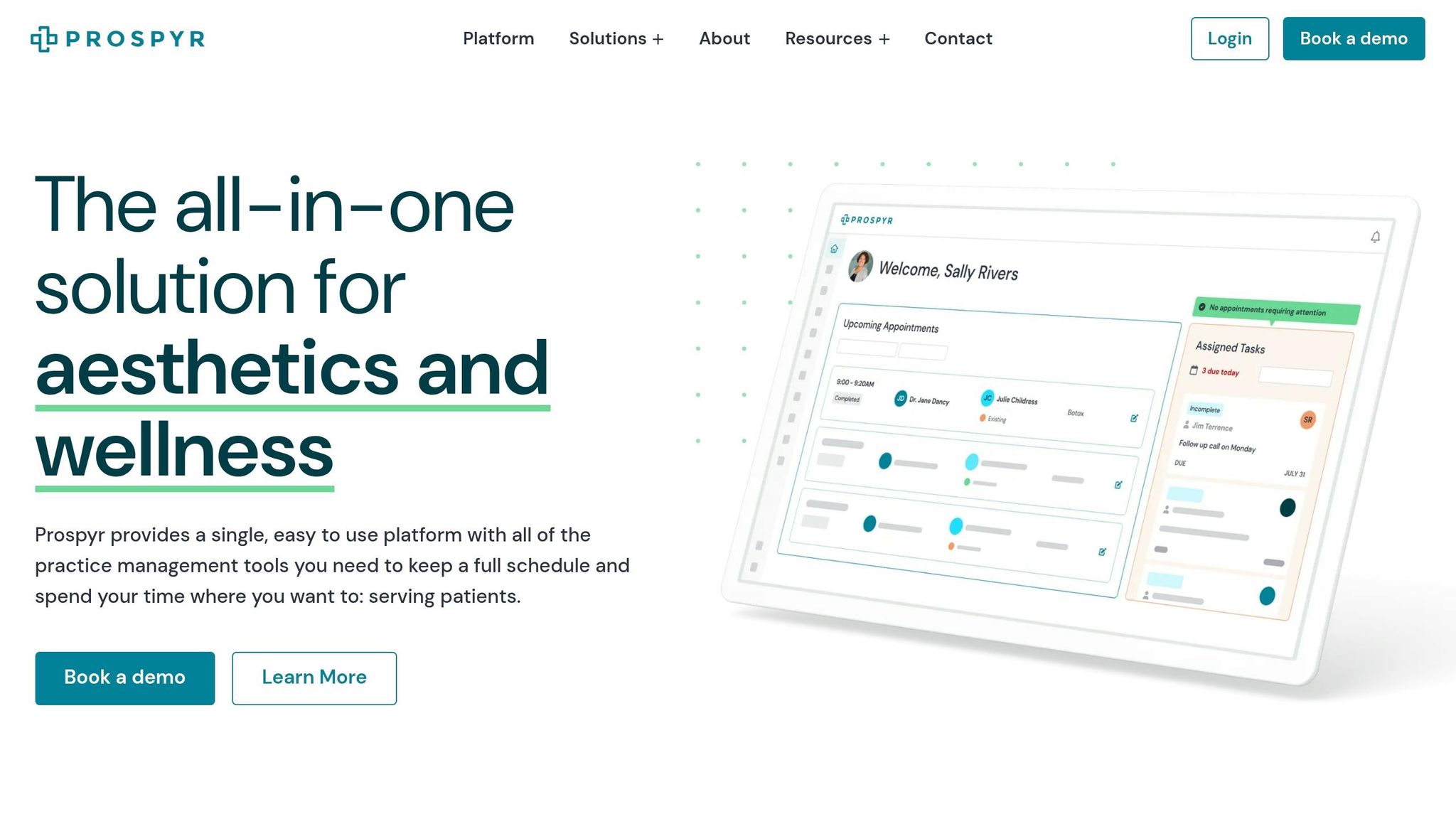
Manual scheduling often leads to double bookings or wasted time. Prospyr's scheduling tools solve this by offering real-time visibility into room availability and provider schedules. Its AI-powered booking system considers treatment duration, room setup needs, and provider availability to suggest the best appointment slots.
For clinics offering a range of services - like Botox or body contouring - Prospyr ensures rooms with specialized equipment are assigned to the right procedures. It also identifies idle time for quick rebooking and sends automated email and SMS reminders to reduce no-shows and fill last-minute cancellations.
Improve Patient Flow and Clinic Layout
A well-thought-out clinic layout can prevent backtracking and congestion. For example, try a one-way patient flow to keep things moving smoothly. Separate areas for consultations and treatments can also reduce bottlenecks when patients need different types of care at the same time.
Keep each treatment room stocked with commonly used supplies to avoid delays caused by staff leaving to grab items. Use standardized supply checklists and conduct weekly audits to ensure everything is in place.
Take a closer look at your clinic's traffic flow. Are there bottlenecks like dead-end hallways or poorly placed supply closets? Even small changes, like moving a reception desk or reorganizing storage, can make a big difference in daily operations.
Standardize Protocols and Task Management
Inconsistencies in room setup and cleanup can cause unnecessary delays. Create clear, written protocols for tasks like cleaning, restocking, and preparing rooms between patients. Time each step and set clear expectations to keep things on track.
Prospyr's task management tools can simplify this process by assigning tasks, setting deadlines, and tracking completion in real time. This ensures nothing gets overlooked, even during busy periods.
Digital intake forms also speed up patient rooming. When patients fill out forms online or on a tablet in the waiting room, staff can review the information ahead of time, reducing errors and updating electronic medical records instantly.
These standardized processes, combined with real-time task tracking, make it easier to plan for future capacity needs.
Use Practice Analytics for Capacity Planning
Stop relying on guesswork. Prospyr's practice analytics provide dashboards that show room usage, provider productivity, and scheduling trends at a glance. This data helps you identify underutilized times and adjust schedules or staffing accordingly.
For example, analytics can reveal patterns like providers running late or procedures that consistently take longer than expected. With this information, you can adjust appointment durations, add buffer times, or tweak schedules to improve efficiency.
Monitor fill rates and utilization metrics monthly to catch emerging issues early. If you notice a drop in Friday afternoon bookings, you could adjust provider hours or offer promotions to fill those slots. Real-time data lets you stay ahead of potential problems.
Improve Communication and Automation
Administrative delays can ripple into treatment room inefficiencies. When your front desk is swamped with calls and follow-ups, patient flow slows down. Prospyr's automated tools handle routine tasks like appointment reminders, confirmations, and follow-up messages, freeing staff to focus on in-person patient care.
Its AI-powered conversation agent can answer common questions - like pre-appointment instructions or rescheduling requests - any time of day. This reduces the burden on your team while keeping patients informed.
Automation also helps fill gaps in your schedule. The system can identify patients due for follow-ups or those who haven’t booked recently and send targeted messages to encourage appointments. For clinics with multiple providers, internal communication tools keep everyone updated on schedule changes and room availability, ensuring quick adjustments when cancellations occur.
Measuring Success and Continuous Improvement
After implementing changes, it's essential to track key metrics to evaluate their impact. Focus on indicators like room utilization rate, average visit time, and revenue per room. For example, the utilization rate measures how often patient rooms are occupied relative to their availability. Experts suggest aiming for around 70%, striking a balance between efficiency and avoiding overcrowding.
A before-and-after comparison can help you clearly see the results of your efforts. One real-world example comes from Virginia Mason Medical Center, where switching to a shared exam room model led to noticeable gains in room utilization, shorter patient visits, and overall efficiency.
"There shouldn't be any redundant steps, waiting during handoffs or delays during the visit" – Dr. Catherine Edwards, Physician Section Head, Virginia Mason Medical Center
To maintain these improvements, monitor these metrics on a monthly basis. Tools like Prospyr's practice analytics dashboards make this easier by providing real-time data on room usage, provider productivity, and scheduling trends. For instance, you can calculate room utilization with the formula:
(Total visits × average occupancy time) ÷ (Total available minutes). Regular monitoring ensures that earlier workflow improvements continue to deliver results.
While data offers valuable insights, field observations can reveal inefficiencies that numbers might miss. Somer Shields, Director at Virginia Mason Medical Center, advocates spending time on the clinic floor:
"It's amazing what you can see in even half a day of sitting on the floor … the information you get from watching what happens in your own space is fascinating" – Somer Shields, MBA, CMPE, Director, Virginia Mason Medical Center
Observing daily operations firsthand can uncover bottlenecks or unnecessary steps that aren't immediately obvious in analytics.
Set clear goals, such as reducing no-show rates, improving patient satisfaction scores, or increasing revenue per room. Share these targets during team huddles to keep everyone aligned on efficiency goals. By combining regular measurement, field observations, and team collaboration, you can create a continuous improvement cycle that prevents bottlenecks and maximizes the use of treatment rooms.
Conclusion
Treatment room bottlenecks can disrupt your clinic’s productivity and leave patients feeling frustrated. But these challenges are manageable with strategies like smart scheduling, streamlined patient flow, standardized protocols, and data-driven capacity planning. Instead of defaulting to solutions like hiring more staff or expanding space, focus on fixing root issues - overlapping appointments, setup delays, and inefficient resource use - through process improvements.
Technology plays a big role in making these optimizations work. Tools like Prospyr simplify operations with automated scheduling, digital intake forms, and real-time practice analytics. These features allow you to monitor room utilization, identify bottlenecks, and adjust workflows before they affect patient satisfaction or clinic revenue.
Start by auditing your operations: look at occupancy trends, track how patients and staff move through the clinic, and gather feedback from your team. Set clear, measurable goals - such as cutting wait times or improving patient satisfaction - and review your progress monthly to ensure changes are effective.
The most successful clinics treat efficiency as a continuous effort. By combining the right tools with regular evaluations and team collaboration, you can create a treatment room workflow that consistently delivers better care and higher productivity. Address bottlenecks head-on, implement these strategies, and watch your clinic thrive. Improved room utilization not only strengthens your bottom line but also builds trust and enhances the quality of care you provide.
FAQs
What’s the fastest way to spot bottlenecks in my treatment rooms?
To spot bottlenecks in your treatment rooms, start by mapping out the entire patient journey - from check-in to treatment and departure. Pay close attention to areas where delays or inefficiencies might occur. Track important metrics such as wait times, treatment durations, and room usage. By analyzing this data, you can identify problem areas, reduce delays, and optimize how both staff and rooms are utilized, creating a more efficient clinic workflow.
How many rooms does each provider need to avoid downtime?
Each provider needs access to a dedicated treatment room to deliver consistent care and make the best use of their time. Having this setup reduces downtime and ensures treatment rooms are used efficiently, keeping operations running smoothly.
Which metrics should I track monthly to prove improvements?
Track important metrics such as utilization rate, no-show rate, rebooking percentage, average appointment length, and provider capacity utilization. These metrics offer valuable insights into how efficiently treatment rooms are being used and highlight opportunities for making further improvements.