Strong leadership is the backbone of a thriving aesthetic clinic. Team leads play a critical role in ensuring smooth operations, managing patient expectations, and supporting staff to avoid burnout. With the aesthetics injectable market projected to grow 12% annually through 2031, clinics need skilled leaders to meet increasing demands and maintain stability.
Here’s a step-by-step guide to training team leads effectively:
- Evaluate Current Skills: Conduct skills audits and performance reviews to identify leadership gaps. Focus on soft skills like empathy, decision-making, and delegation, as well as clinic-specific needs like emergency response and regulatory knowledge.
- Create Tailored Training Programs: Design programs that address clinical expertise, communication, and business skills. Use scenario-based training to prepare leaders for challenges like managing patient flow or addressing treatment concerns.
- Leverage Tools Like Prospyr: Use practice management tools to teach task delegation, monitor performance metrics, and improve patient flow.
- Hands-On Training: Implement workshops, role-playing, and mentorship programs to give team leads practical experience in leadership and clinic management.
- Track Progress and Refine: Use KPIs like patient satisfaction, employee retention, and task completion rates to measure training success. Regular feedback loops ensure continuous improvement.

5-Step Process for Training Team Leads in Aesthetic Clinics
Step 1: Evaluate Current Skills and Determine Training Gaps
Start by assessing the skills your team leads already have. This helps you identify their strengths and areas where they need improvement, ensuring your training program focuses on what your clinic actually requires, rather than relying on generic leadership theories.
Conduct Skills Audits and Performance Reviews
Take a close look at your team leads' leadership styles. According to Aesthetic Medicine, leadership styles generally fall into five categories: democratic, visionary, coaching, task-focused, or commanding. Knowing which style each leader leans toward can highlight their natural strengths and areas where they might struggle.
It’s also important to assess soft skills that directly impact your clinic's performance. Key areas to evaluate include their ability to:
- Build empathy with both staff and patients.
- Set clear boundaries and expectations.
- Provide constructive feedback to improve performance.
Incorporating self-assessments can help uncover areas they feel need improvement. For example, in June 2024, Dr. Gretchen Frieling enhanced her clinic's leadership by introducing monthly metrics and transparent bonus systems. These tools helped evaluate team leads beyond their technical skills, focusing on their ability to mentor others and organize events.
Additionally, assess how well they make decisions and delegate tasks. Poor delegation or micromanagement can seriously hinder leadership effectiveness. By identifying gaps in these areas, you can better address them in training programs.
Once you’ve mapped out their current skills, the next step is to determine the specific leadership capabilities your clinic requires.
Identify Clinic-Specific Leadership Requirements
Your evaluation should reflect the unique challenges your clinic faces. For example, aesthetic clinics require leaders who can handle clinical emergencies and navigate complex regulatory environments. Emergency response skills are especially critical. A 2024 systematic review found that about 33% of patients undergoing nonsurgical facial procedures experienced at least one treatment-related complication. Alarmingly, 70% of complications in the U.K. involved practitioners with minimal or unaccredited training.
To address this, ensure your team leads have completed hands-on, in-person training for managing complications like vascular occlusion or infections. Online modules alone aren’t enough. As Pyn Lim, Founder and Chief Director of ECAMS, emphasizes:
"The most effective safety net is not regulation alone, but a doctor who is both educated and present - ready to act the moment something goes wrong".
Your review should confirm that supervising leads are either physically present or can be reached immediately in emergencies. They should also have essential reversal agents readily available on-site. Lastly, make sure they are knowledgeable about state-specific regulations, such as who is legally permitted to inject and what level of supervision is required. These rules can vary widely across the United States.
sbb-itb-02f5876
Step 2: Create a Custom Leadership Training Program
After evaluating your team's current skills and identifying leadership needs, the next step is to design a training program tailored to your clinic's specific challenges. Use the gaps you've identified to develop a program that emphasizes clinical expertise, effective communication, and business knowledge. This combination creates a solid foundation for leaders who excel both in patient care and team management.
Core Topics to Cover
Using insights from your skills assessment, focus the training on key areas that blend clinical leadership with interpersonal and operational skills. Start with managing patient expectations. As Venessia Norvil, Owner of Pretty Perfect You, highlights:
"One of the biggest challenges as an aesthetic NP is managing patient expectations. It is crucial to ensure they understand the realistic outcomes and potential risks of their chosen treatments."
Train your team leads to conduct thorough consultations that help uncover patient goals and concerns. Alongside this, ensure they gain a strong understanding of regulatory and business requirements, such as state-specific laws, safety standards, and compliance protocols. Organizations like the American Med Spa Association offer valuable resources to help leaders stay informed.
Communication skills are another critical focus. Leaders need to clearly explain treatment options and protocols, not only to patients but also to junior staff. To keep up with industry changes, consider hybrid learning approaches - combining online lessons with hands-on workshops - to deliver a dynamic and up-to-date training experience.
Use Aesthetic Clinic Scenarios
Incorporate practical, scenario-based training to prepare leaders for the challenges they'll face. Role-playing exercises can simulate situations like managing patient flow during busy hours, resolving scheduling conflicts, or addressing concerns when treatment results fall short of expectations.
Case studies based on real incidents are another effective tool. For example, you might create scenarios involving delays in scheduling, guiding staff on newly introduced techniques, or handling inappropriate treatment requests. These exercises not only strengthen clinical decision-making under pressure but also reinforce the importance of balancing patient safety with business objectives. Above all, ethical practice and safety should remain at the core of every decision leaders make.
Step 3: Use Prospyr Tools for Leadership Training
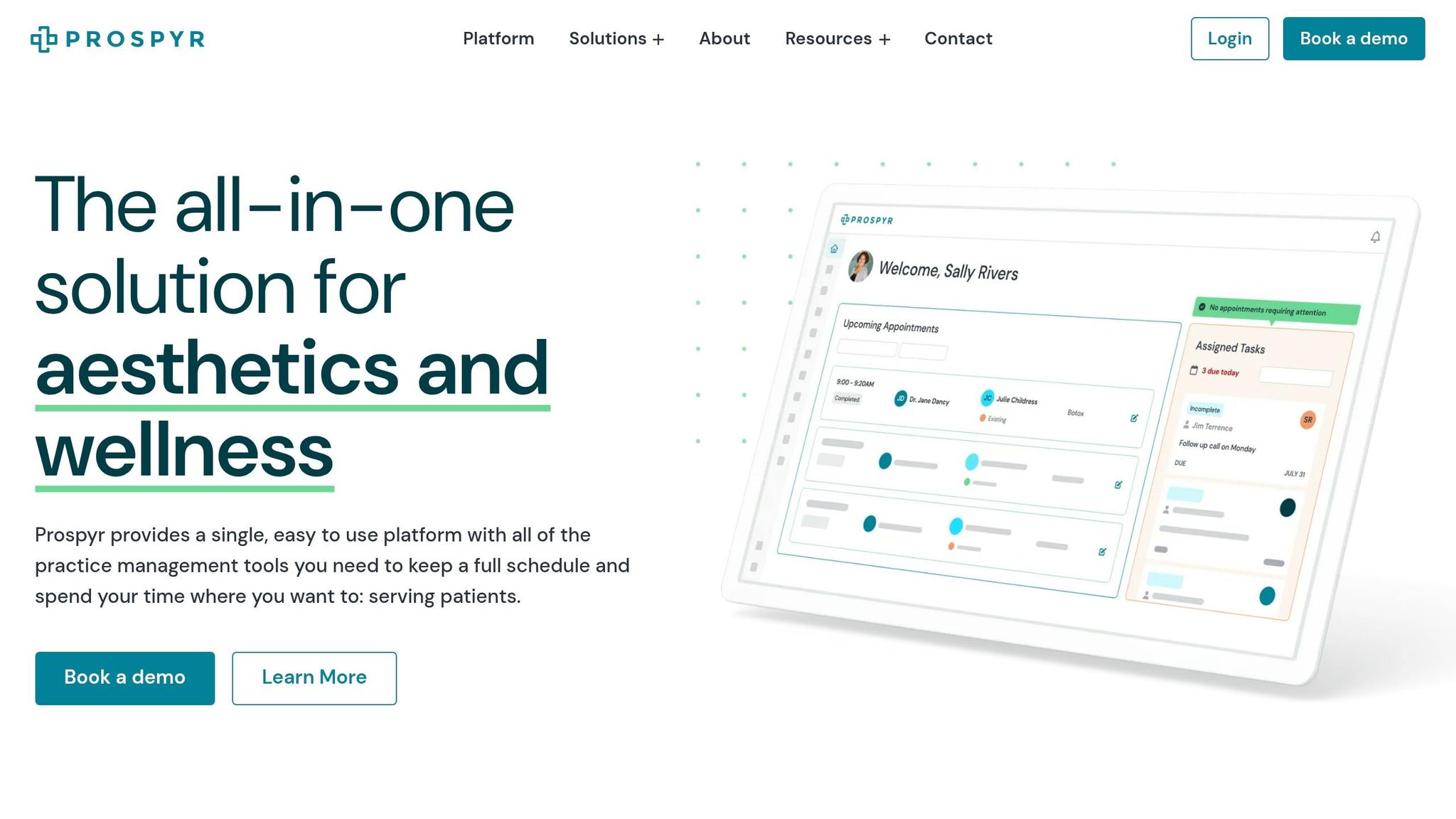
Once you've designed your custom leadership training program, it's time to take it a step further by integrating tools that provide real-world operational insights. Prospyr's platform is built to equip team leads with the ability to monitor operations, track performance, and make informed, data-backed decisions. By incorporating these tools into the training process, team leads gain practical experience in balancing clinical excellence with business efficiency.
Task Management and Practice Analytics
Prospyr's task management system is a game-changer for organizing workflows and assigning responsibilities. For example, a team lead could create a workflow where new hires complete specific training modules, schedule shadowing sessions with experienced staff, and document competency assessments. With clear assignments and visible deadlines, this system minimizes bottlenecks and ensures everyone knows their role.
The platform’s practice analytics provide leaders with the data they need to measure training success and spot performance gaps. Key metrics to monitor include:
- Patient conversion rates
- Efficiency in appointment scheduling
- Staff productivity
- Patient satisfaction scores
By establishing baseline metrics before training begins and reviewing them quarterly, team leads can pinpoint which aspects of the training are improving operations. For aesthetic clinics, tracking metrics like consultation-to-procedure conversion rates and staff utilization rates can offer insight into scheduling efficiency and the impact of training on business outcomes.
Analytics also shed light on operational inefficiencies tied to knowledge gaps. For instance, if new staff consistently take longer appointment times, this could signal the need for additional training in consultation techniques. Similarly, high rescheduling rates might indicate a need to focus on patient communication or confirmation protocols. With this data-driven approach, training efforts can directly address the challenges that impact operations the most.
Armed with these insights, team leads can refine strategies to improve patient flow and overall efficiency.
CRM/EMR and Patient Flow Management
Prospyr's CRM/EMR integration is an essential tool for training team leads in managing patient flow effectively. During training, they can practice handling real-world scenarios, such as resolving double-booked appointments, managing last-minute cancellations, and coordinating multi-step treatment plans that require follow-ups. The platform's integrated system allows team leads to access complete patient histories, check real-time availability, and make informed scheduling decisions.
Features like 2-way SMS and 1-click appointment booking streamline communication and scheduling, helping team leads train staff to reduce response times and move patients from inquiry to scheduled treatment more efficiently. The CRM's lead attribution data is another valuable feature, enabling team leads to identify which marketing efforts are driving appointments. This insight helps guide staff on prioritizing follow-ups and focusing on high-value patients who may benefit from personalized communication.
Step 4: Deliver Training Through Hands-On Methods
The best leadership training happens when team leads get to practice real-world scenarios. Hands-on methods not only build confidence but also help leaders develop decision-making skills they can rely on during high-pressure situations in the clinic.
Workshops and Role-Playing Exercises
Workshops give team leads the chance to tackle business challenges and create their own SOPs (Standard Operating Procedures). These sessions often include designing customer workflows and practicing difficult conversations, making them highly practical.
Role-playing exercises are especially useful for scenarios like managing performance discussions, explaining compensation plans, or addressing patient objections during consultations. This often involves mastering lead management to convert inquiries into appointments. For example, between 2025 and 2026, Dr. Rachel Day, who owns a practice in Chambersburg, PA, participated in the POP Aesthetic Leadership Academy. Over six months, she developed comprehensive SOPs and strengthened her leadership dynamic with her office manager by engaging in guided critical thinking and strategic advisory sessions with KLC Consulting.
Workshops in 2026 focus on emerging trends, such as managing aesthetic challenges in the GLP-1 era, including the effects of rapid weight loss on skin, hair, and facial structure. This ensures training remains relevant and immediately applicable to what team leads encounter in their patient base.
To complement these exercises, mentorship programs offer an additional layer of leadership development.
Mentorship and Shadowing Programs
Pairing new team leads with experienced managers provides invaluable on-the-job learning. A structured mentorship plan with a clear timeline - such as a three-month cycle with weekly shadowing and 30-minute check-ins - helps ensure consistency. In fact, 76% of participants in global mentorship programs report they would volunteer as mentors in the future.
"A structured mentorship program... signals to your team that you are invested in their long-term success, not just their next appointment." - Pure Spa Direct
Consider a rotational approach where mentees work with various mentors. This allows them to experience different leadership styles without overburdening a single high-performing lead. It’s a practical solution for busy aesthetic clinics where pulling one senior injector or practitioner away from revenue-generating activities could disrupt workflow.
The mentorship curriculum should cover technical skills, business strategies (like analyzing P&L reports and pre-booking techniques), and operational excellence. For instance, in 2026, Lauren Timpe-Castellanos, Co-Founder and Lead Injector at OmniaPiel Facial Aesthetics, collaborated with KLC Consulting to refine her clinic's management systems. By focusing on memberships and bundles, her clinic achieved significant growth and better results from promotional campaigns. This kind of structured guidance helps team leads apply their training directly to clinic operations, improving both patient care and business efficiency.
To motivate mentors, consider offering rewards such as monthly bonuses, commission increases, or education stipends. This investment pays off - companies with mentorship programs see employee retention rates improve by 50%, which is especially critical in an industry where 8 out of 10 estheticians leave within their first year.
Step 5: Track Progress and Refine Training
Leadership training doesn’t stop once the initial program ends. Ongoing monitoring and fine-tuning are what set sustainable programs apart from quick fixes. The secret lies in tracking post-training KPIs instead of guessing what needs improvement. These metrics should directly reflect both team performance and patient care outcomes.
Use KPIs to Measure Results
Focus on specific metrics that reveal how well team leads are performing. For instance:
- Employee retention rates can indicate whether the training has improved the work environment.
- Patient satisfaction scores highlight how effectively team leads manage interactions and clinic operations.
- Task completion rates, tracked through tools like Prospyr’s analytics, show how well team leads handle delegation and operational responsibilities.
Revenue-related metrics are equally important. Keep an eye on pre-booking percentages, membership sign-ups, and conversion rates from consultations to treatments. These figures can help identify whether there’s a disconnect between training content and its practical application. To stay proactive, set review checkpoints at 30, 60, and 90 days after training. This approach helps catch and address issues early. When KPIs point to areas needing improvement, tweak the training program accordingly.
Create Feedback Loops for Ongoing Improvement
Start by reviewing daily operations to identify performance gaps. Regular one-on-one check-ins with team leads are key. Use these sessions to discuss their successes, challenges, and which training topics they rely on most. Ask about areas where they still feel unsure or any real-world situations that weren’t covered in the training.
Don’t stop with team leads - gather insights from the entire clinic staff. Front desk coordinators, estheticians, and injectors can provide valuable feedback on how effective team leads are in their roles. Anonymous surveys work well for encouraging honest input. Use this feedback to adjust the training program based on what’s working and what’s not.
For example, if multiple team leads struggle with managing tough patient conversations, consider adding targeted workshops or role-playing sessions. Tools like Prospyr’s practice analytics can help you connect training updates to measurable operational improvements, giving you clear evidence of what changes are driving success.
Conclusion
Training team leads in aesthetic clinics isn’t just a one-and-done task - it’s an ongoing effort that directly shapes your clinic’s success, from patient satisfaction to financial performance. Strong leadership doesn’t just happen; it’s built through careful planning, skill development, and consistent follow-up. By evaluating current skills, tailoring training to real clinic scenarios, utilizing platforms like Prospyr for hands-on learning, and tracking progress, you can create leaders who deliver steady, reliable results.
Effective leadership training does more than improve day-to-day operations - it creates trust. In the field of medical aesthetics, where patient decisions often hinge on online reviews and verified credentials, trust is everything. Team leads who understand how to analyze practice data and delegate effectively bring clarity to operations, which in turn drives better performance and higher revenue.
This approach works hand-in-hand with your practice management tools. With Prospyr’s platform, you gain real-time insights into task management, patient communication, and performance metrics, giving you the tools to build a practice that grows steadily and predictably. By combining leadership training with the right technology, you set the stage for consistent, measurable growth.
Start today - small steps add up over time. Build a culture that attracts top-tier talent, keeps patients loyal, and ensures your clinic thrives for years to come.
FAQs
How do I choose the right KPIs for team lead training?
To choose the right KPIs for team lead training, focus on metrics that directly connect to your clinic’s objectives, such as client retention, revenue growth, and operational efficiency. Metrics like treatment room utilization, lead conversion rates, and client satisfaction scores can give you a clear picture of how well your team is performing. Prioritize KPIs that align with your strategic goals, can be tracked in real time, and help guide continuous improvement for your team leads.
What should a team lead do first during an injectable complication?
The first priority is to secure the patient’s safety by evaluating the situation and delivering any required emergency care. Here’s what you should focus on:
- Evaluate the patient’s condition: Look for signs like swelling or potential vascular problems to gauge the severity of the situation.
- Administer emergency care: This might involve applying ice to the affected area or contacting emergency services (like calling 911) if the situation is critical.
- Help the patient stay calm: Keep them as comfortable as possible while closely observing their condition.
These steps are essential for stabilizing the patient and preventing further complications.
How can Prospyr help team leads improve patient flow?
Prospyr improves how patients move through their care journey by simplifying scheduling, communication, and data management with workflow automation. Features such as automated reminders and online booking help cut down on no-shows, ensuring smoother operations. Additionally, its secure, HIPAA-compliant EMR/CRM systems provide quick and reliable access to patient information. These tools empower team leads to better manage appointments, reduce delays, and enhance overall efficiency - resulting in a better experience for both patients and staff.