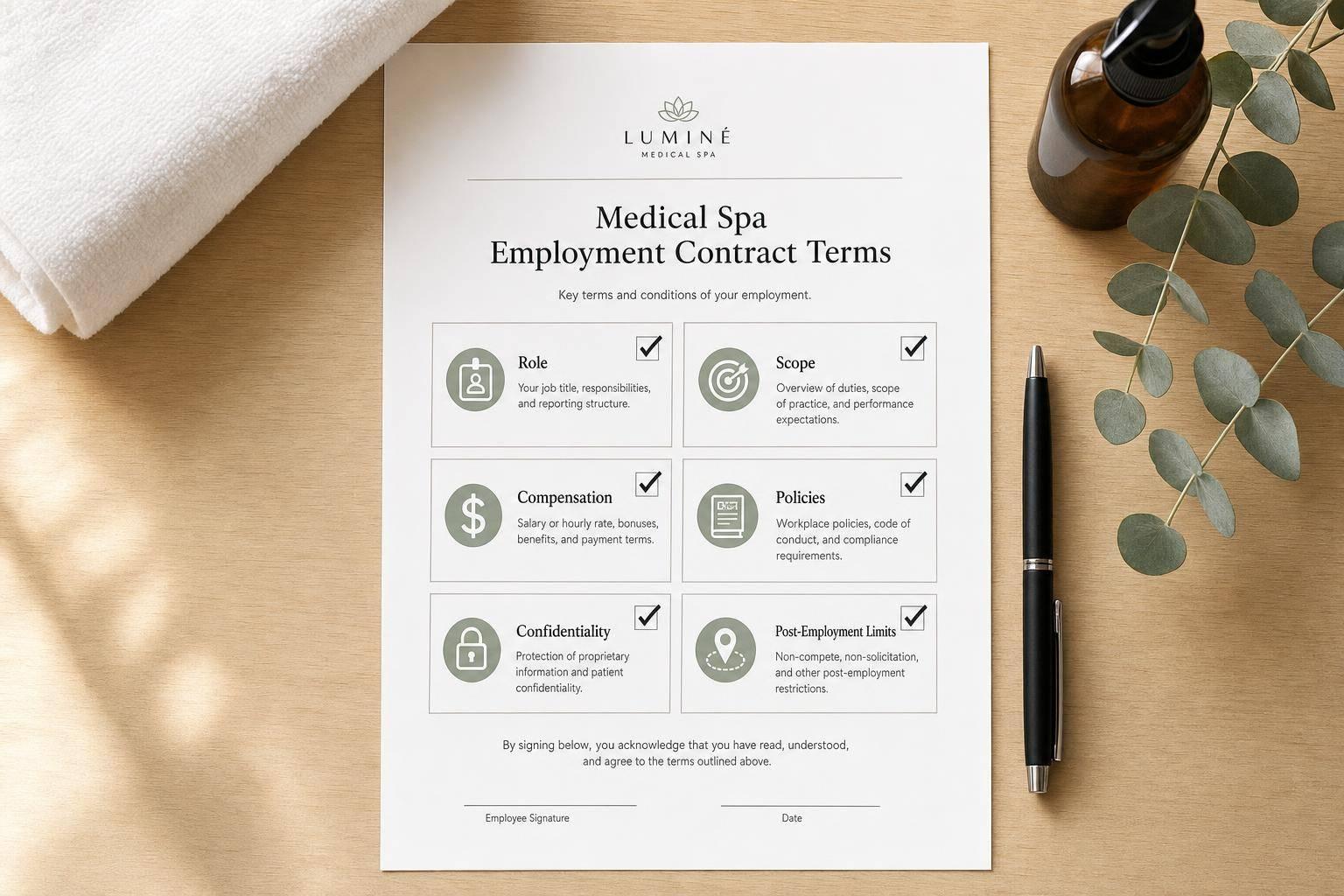
Navigating Florida's employment laws can be tricky, especially for small businesses like aesthetic clinics. From minimum wage updates to anti-discrimination rules, staying compliant protects your business from hefty fines, lawsuits, and reputational damage. Here’s a quick rundown of key compliance points:
- Minimum Wage: $14/hour as of September 30, 2025, rising to $15/hour by September 30, 2026.
- Employee Thresholds:
- Equal Pay Law: Applies with just 2 employees.
- Workers' Compensation: Mandatory with 4 employees or more.
- E-Verify: Required for employers with 25+ employees.
- Discrimination Claims: Florida allows 365 days to file, compared to 180 days federally.
- Hiring Practices:
- Use Form I-9 for all hires.
- Report new hires to the Florida Department of Revenue within 20 days.
- Avoid discriminatory language in job postings.
- Wage and Hour Rules:
- Federal overtime rules apply (1.5x pay for 40+ hours/week).
- Maintain payroll records for at least 3 years.
- Employee Handbook: Include policies on sexual harassment, minimum wage, and workplace safety. Clearly define at-will employment.
- Leave Policies:
- Domestic Violence Leave: 3 days for clinics with 50+ employees.
- FMLA: Applies to businesses with 50+ employees.
- Workers' Compensation: Mandatory for 4+ employees.
- Record-Keeping: Retain payroll, I-9s, and other employment records for specific durations.
- Posters: Display state and federal employment posters in visible areas.
Regular audits of hiring, payroll, and workplace policies are essential to avoid penalties. Stay informed about local ordinances in cities like Miami or Orlando, which may have stricter anti-discrimination rules. Compliance isn’t optional - it’s a necessity for protecting your clinic and employees.

Florida Employment Law Compliance Requirements by Business Size
Hiring Practices Compliance
For aesthetic clinics in Florida, following proper hiring protocols isn't just smart - it's the law. Florida has specific requirements for employers that go beyond standard interviews. Skipping any of these steps could lead to penalties or legal trouble later on.
Verify Employment Eligibility
Every new hire must complete Form I-9 to confirm they’re authorized to work in the U.S. Timing is crucial here: employees must fill out Section 1 by their first day, and employers need to finish Section 2 by the end of the third business day after the employee starts. Starting July 1, 2023, private employers in Florida with 25 or more employees are required to use the E-Verify system for all new hires. Smaller clinics with fewer than 25 employees can stick to verifying eligibility through Form I-9 documentation.
Additionally, you must report all new hires to the Florida Department of Revenue within 20 days. This applies to every employer, regardless of size, and helps with child support enforcement. Keep your I-9 forms and E-Verify confirmations organized and readily available, as the Florida Department of Law Enforcement may request them at any time. Remember to retain these forms for three years after the hire date or one year after the employee leaves, whichever is later, in line with both federal and state rules.
Proper worker classification is the next step to ensure you're meeting tax and legal obligations.
Classify Workers Correctly
Misclassifying employees as independent contractors can lead to hefty fines and legal issues. Florida uses the "right to control" test to determine classification. Essentially, if your clinic controls when, where, and how a worker performs their tasks, they are likely an employee, not a contractor.
Florida aligns with federal standards for defining independent contractors, so the IRS Common Law Rules are your go-to guide. These rules evaluate behavioral control, financial control, and the nature of your relationship with the worker. For instance, if you provide equipment, set schedules, and expect exclusivity, the worker is probably an employee. Worker classification also impacts your tax responsibilities. Employers in Florida must pay Reemployment Tax at an initial rate of 2.7% on the first $7,000 of an employee’s annual wages. However, this tax doesn’t apply to independent contractors. If you pay an independent contractor more than $600 in a calendar year, you’re required to report them to the Florida New Hire Reporting Center.
Create Compliant Job Postings
Job postings must adhere to the Florida Civil Rights Act, which prohibits discrimination based on race, color, religion, sex, pregnancy, national origin, age, disability, or marital status. Avoid including questions about these protected characteristics on job applications, as they violate both state and federal laws and infringe on applicant privacy.
Be sure to include clear Equal Employment Opportunity (EEO) language in every job posting. If your clinic employs 25 or more people, you’re also required to disclose that E-Verify is part of your hiring process. While you can make drug testing a condition of employment, Florida law prohibits requiring applicants to take a drug test before a job offer is extended. Make sure to clearly state these conditions in your job postings to maintain transparency.
Wage and Hour Compliance
Managing wages accurately is a must for clinics in Florida. The state has specific rules covering minimum wage, overtime, and payroll records, and following them is crucial to avoid hefty penalties.
Florida Minimum Wage Updates
Starting January 26, 2026, the minimum wage in Florida is set at $14.00 per hour, with an increase to $15.00 per hour on September 30, 2026. After that, the rate will adjust annually every September 30 based on inflation. For tipped employees, the current minimum cash wage is $10.98 per hour, which will rise to $11.98 per hour in September 2026. Employers can apply a tip credit of up to $3.02, but the total of tips and cash wages must meet or exceed the full minimum wage. Local governments are prohibited from setting their own minimum wage rates. To stay compliant, make sure to display the official minimum wage poster prominently in your workplace.
Overtime and Payroll Practices
Florida does not have its own overtime laws, so clinics must adhere to the federal Fair Labor Standards Act (FLSA). Under FLSA, non-exempt employees are entitled to 1.5 times their regular pay rate for hours worked over 40 in a single 168-hour workweek. It's important to note that paying an employee a salary does not automatically exempt them from overtime; their job duties must meet federal standards for executive, administrative, or professional exemptions. As of early 2025, the minimum salary threshold for these exemptions is $684 per week, and highly compensated employees must earn at least $107,432 annually. Mishandling overtime can lead to substantial back pay liabilities and legal penalties.
"In Florida, employers must comply with both state and federal wage laws. When the two conflict, the rule that is most favorable to employees applies." – Black Rock Trial Lawyers
Audit Payroll Policies
Conducting regular payroll audits is a smart way to avoid disputes over back pay and liquidated damages, which can double the amount owed. The FLSA requires employers to maintain detailed payroll records for at least three years. These records should include employee names, Social Security Numbers, addresses, occupations, daily and weekly hours worked, regular pay rates, and wages paid. Florida's workers' compensation laws also require keeping records like time cards, work schedules, IRS Forms 1099 and W-2, and employment contracts for the current calendar year plus the two preceding years.
Ensure your payroll system calculates the "regular rate" accurately by including non-discretionary bonuses and commissions. Additionally, display the FLSA poster in your workplace and update payroll systems to reflect the annual wage adjustments that take effect each September 30.
Employee Handbook and Workplace Policies
Having a clear and well-structured employee handbook can help reduce compliance risks and potential disputes. Make sure to include a disclaimer stating that employment is "at-will" and that the handbook does not constitute a contract. This protects your clinic from wrongful termination claims while setting clear expectations from the start.
Required Policies to Include
Florida law requires specific workplace protections that must be outlined in your handbook. For example, the Florida Civil Rights Act (FCRA) applies to businesses with 15 or more employees and prohibits discrimination based on factors like race, religion, sex, pregnancy, disability, age, and marital status. Additionally, Florida law extends protections for individuals with health conditions not covered under federal law.
Your handbook must also include a sexual harassment policy with clear procedures for addressing complaints, as mandated by Florida law. In the wage and hour section, reference the current minimum wage of $14.00 per hour, which will increase to $15.00 by September 30, 2026. Clarify that overtime pay follows the federal Fair Labor Standards Act (FLSA).
For leave policies, address jury duty, witness service, military leave, and Civil Air Patrol leave if your clinic has 15 or more employees. Clinics with 50 or more employees must also provide details on domestic violence leave.
Workplace-specific rules, like those under the Florida Clean Indoor Air Act, should be included, which prohibits smoking and vaping in most indoor workplaces. When it comes to weapons, Florida law allows employees to keep legal firearms in their locked vehicles in the parking lot, but you can prohibit weapons inside your clinic buildings. If your clinic has 25 or more employees, include a statement about verifying employment eligibility through E-Verify within three business days of the start date. For employees under 18, specify that they are entitled to a 30-minute meal break for every four hours of continuous work.
Non-Compete Agreements
Florida enforces restrictive covenants under Fla. Stat. Ann. § 542.335, but they must be "reasonable" and serve to protect legitimate business interests. For aesthetic clinics, this could involve safeguarding client relationships, proprietary treatment methods, and confidential business data. To preserve their enforceability, keep non-compete, non-solicitation, and non-disclosure agreements separate from the employee handbook, as integrating them into the handbook could make them unenforceable after employment ends.
"Florida is one of several states that limit the use of non-compete agreements. Fla. Sta. Ann. § 542.335 contains a comprehensive framework for analyzing, evaluating, and enforcing restrictive covenants." – Paylocity
It’s crucial to review your non-compete clauses regularly to ensure they are narrowly defined in terms of scope, duration, and geography. Overly broad agreements are unlikely to hold up in court and could lead to unnecessary legal costs. If your clinic operates in cities like Orlando, Tampa, or Miami, be aware of municipal-level protections that may extend anti-discrimination categories to include sexual orientation and gender identity.
Employee Acknowledgment of Policies
Every employee should sign an acknowledgment confirming they have received and understood the handbook. Keep the signed acknowledgment - whether electronic or physical - in their personnel file as proof of receipt. This step is essential for compliance and can support you in audits or disputes.
If your workforce includes a large number of Spanish-speaking employees, consider translating the handbook and acknowledgment forms to ensure accessibility. The acknowledgment process also helps meet Florida's requirement to notify employees of an "introductory period" within their first seven days of employment. This can safeguard your reemployment assistance account if you need to terminate an employee for poor performance during their first 90 days.
Lastly, include clear contact details for employees to report concerns about hours, pay, or harassment. This proactive measure can reduce your liability in future disputes. The acknowledgment form is a critical tool for maintaining compliance and supporting your clinic’s legal responsibilities.
Leave and Benefits Compliance
Florida enforces specific rules around leave and benefits compliance, particularly for clinics. Employers need to follow both state and federal leave regulations, which vary depending on the size of their workforce.
Family and Medical Leave Act (FMLA)
The FMLA applies to clinics with 50 or more employees. This federal law allows eligible employees to take up to 12 weeks of unpaid, job-protected leave annually for reasons like serious health conditions, bonding with a newborn or adopted child, or military-related needs. For military caregiver leave, this extends to 26 weeks within a 12-month period.
To be eligible, employees must have worked for your clinic for at least 12 months and logged 1,250 hours in the prior year. It’s crucial to track leave usage and maintain detailed records, including hours worked, certifications, and return-to-work dates. Accurate documentation helps prevent disputes. After reviewing FMLA compliance, ensure you’re also meeting the requirements for Domestic Violence Leave.
Domestic Violence Leave
Clinics with 50 or more employees must provide up to 3 days of leave within a 12-month period for employees dealing with domestic or sexual violence. Employees are eligible after 3 months of employment. This leave can be paid or unpaid, based on the employer’s discretion. However, employees must first use any accrued leave unless this requirement is waived.
This leave can be used for specific purposes, including:
- Seeking a restraining order or other protective injunction
- Obtaining medical or mental health care
- Accessing victim services
- Securing housing or relocating
- Seeking legal counsel
Employees must generally provide advance notice unless there’s an immediate danger. It’s essential to maintain confidentiality for all related information and to prohibit retaliation against employees who use this leave. Securely store any records related to this leave to protect privacy. Additionally, check that your clinic complies with Florida’s Workers’ Compensation laws.
Workers' Compensation Requirements
Florida requires clinics with 4 or more employees, including part-time staff, to carry workers’ compensation insurance. This insurance provides coverage for work-related injuries and helps shield your clinic from liability. Be sure to display the "Broken Arm" poster in both English and Spanish in a visible location.
If you want to reduce your workers’ compensation premiums, consider implementing a certified drug-free workplace program. This requires notifying job applicants in writing about testing procedures and giving them the chance to explain positive results before testing. Also, verify that any subcontractors or workers are covered or exempt by using the Florida Division of Workers’ Compensation’s online databases.
| Leave Type | Employer Size Threshold | Duration | Paid/Unpaid |
|---|---|---|---|
| FMLA | 50+ employees | 12 weeks (26 for military care) | Unpaid |
| Domestic Violence Leave | 50+ employees | 3 days per 12-month period | Unpaid (employer may choose to pay) |
| Workers' Compensation | 4+ employees | N/A | Insurance coverage required |
| Jury Duty Leave | All employers | Duration of service | Unpaid (mandatory time off) |
| Civil Air Patrol Leave | 15+ employees | Not specified | Unpaid |
For clinics with fewer than 20 employees, Florida’s Mini-COBRA law ensures employees can continue health insurance coverage for up to 18 months (or 29 months if disabled). Employers may charge up to 115% of the group rate for this coverage, increasing to 150% during a disability extension.
sbb-itb-02f5876
Record-Keeping and Termination Compliance
Keeping accurate and consistent records is a cornerstone of compliance, spanning every stage from hiring to termination. Good documentation not only safeguards your clinic against legal disputes but also ensures you meet both state and federal regulations.
Retention of Employment Records
Employment records must be kept for varying durations, depending on the type of document:
- Payroll records: Keep for at least 3 years under the Fair Labor Standards Act (FLSA). These include details like names, Social Security numbers, addresses, birth dates (for employees under 19), sex, occupation, daily/weekly hours, wage basis, and wages. Wage computation records, such as time cards and work schedules, should be kept for 2 years.
- I-9 forms: Retain for 3 years after the hire date or 1 year after separation, whichever comes later.
- W-4 tax forms: Hold for at least 4 years.
- Workers' compensation records: Florida law requires these to be kept for the current calendar year plus the previous two years.
- Personnel records: Maintain for 1 year from the record's date or the date of involuntary termination. If an employee files a discrimination charge, keep all related records until the case is resolved.
- Employee benefit plans and seniority/merit systems: Retain for the duration of the plan's existence, plus at least 1 year after termination.
All records should be stored securely at your corporate registered office, principal place of business, or the specific job site within Florida.
Employment Posters
Federal and state employment posters must be displayed prominently in areas where employees frequently gather, such as break rooms, communal spaces, or near time clocks.
Florida state posters to display:
- Florida Minimum Wage poster (updated annually on September 30)
- Florida Law Prohibits Discrimination notice (Florida Civil Rights Act)
- Florida Reemployment Assistance Program Law poster (Form RT-83)
- Workers' Comp Works for You poster (commonly called the "Broken Arm" poster)
Federal posters to display:
- FLSA Minimum Wage notice
- EEOC "Know Your Rights: Workplace Discrimination is Illegal" poster
- OSHA "Job Safety and Health: It's the Law" poster
- Family and Medical Leave Act (FMLA) notice
- Uniformed Services Employment and Reemployment Rights Act (USERRA) notice
- Employee Polygraph Protection Act (EPPA) notice
Once your records and notices are organized, the next step is handling employee terminations in a compliant manner.
Separation Agreements and NDAs
Terminations in Florida are governed by the state’s at-will employment policy, meaning employees can generally be let go for any reason - or no reason at all - as long as it’s not unlawful. However, it’s crucial to ensure compliance with laws like the Florida Civil Rights Act, whistleblower protections, and federal statutes like the ADA and ADEA.
"In Florida, where employment is generally at-will, employers are allowed to terminate an employee for any reason - or no reason at all - so long as it is not an unlawful reason." – Sarah Bachich and Bruce E. Loren, Attorneys, Loren & Kean Law
When drafting separation agreements, make sure they are voluntary, clearly written, and offer consideration - such as severance pay or additional benefits - that exceeds what the employee is legally entitled to receive. For employees aged 40 or older, follow the Older Workers Benefit Protection Act (OWBPA) guidelines to ensure valid age-discrimination waivers. Non-compete agreements and NDAs must comply with Florida Statute § 542.335 and should be narrowly focused.
To minimize legal risks, always document clear, non-discriminatory reasons for termination. Conduct termination meetings privately with an HR witness present, and use a checklist to manage tasks like recovering company property and revoking digital access. While Florida doesn’t have a specific final paycheck law, ensure that all final wages are paid by the next scheduled payday.
Workplace Safety and Training Requirements
Creating a safe workplace isn’t just good practice - it’s the law. In Florida, aesthetic clinics must follow federal OSHA standards since the state adheres to federal Occupational Safety and Health Administration regulations for private employers. This includes essentials like maintaining emergency action plans and keeping medical and first aid supplies on-site. These foundational safety measures are just the beginning for aesthetic clinics, which face additional, specialized requirements.
Florida’s aesthetic clinics are also subject to strict safety and hygiene regulations enforced by the Florida Board of Cosmetology. For example, clinics performing manual exfoliation must properly dispose of sharps in biohazard containers. Medical spas that offer services like Botox, lasers, or microneedling need to ensure their staff are trained in bloodborne pathogen protocols and laser safety procedures. If hazardous chemicals are used, employers must implement a written hazard communication program and provide related employee training.
Anti-Harassment Training
Safety isn’t just physical - it’s about fostering a respectful and inclusive workplace, too. While Florida doesn’t require private employers to provide anti-harassment training, it’s highly recommended to minimize legal risks and promote a zero-tolerance environment. Florida law does mandate that employers create and communicate policies prohibiting sexual harassment and establish clear procedures for handling complaints.
"The best anti-harassment policy in the world won't completely eliminate harassment... HR should look at anti-harassment policies as conversation starters." – Paycor
To build a respectful workplace, incorporate anti-harassment training into your onboarding process for all new employees. Include the policy in your employee handbook, require signed acknowledgment forms, and provide separate training for managers on how to handle complaints and enforce the rules. Licensed cosmetologists and specialists in Florida must also complete 10 hours of continuing education every two years to renew their licenses. This includes mandatory topics like OSHA regulations, workers’ compensation, HIV/AIDS, and sanitation practices.
Retaliation Protections
Protecting employees from retaliation is another key piece of compliance. Florida law prohibits employers from retaliating against workers who report discriminatory practices, file complaints with the Florida Commission on Human Relations (FCHR) or the EEOC, or submit workers’ compensation claims. The FCHR enforces the Whistle-blower’s Act, investigating claims of employment discrimination and retaliation. Employees should never face termination, demotion, or penalties for reporting safety hazards, discrimination, or filing claims.
To stay compliant, document all safety training sessions and secure signed acknowledgments from employees. Keep these records, along with signed policies and sterilization logs, in a well-organized “compliance binder” to prepare for potential audits. Violations of Cosmetology Board rules or practicing without a license can result in a $500 fine for the first offense, with a second offense leading to license revocation and an additional $500 fine.
Managing Compliance with Prospyr
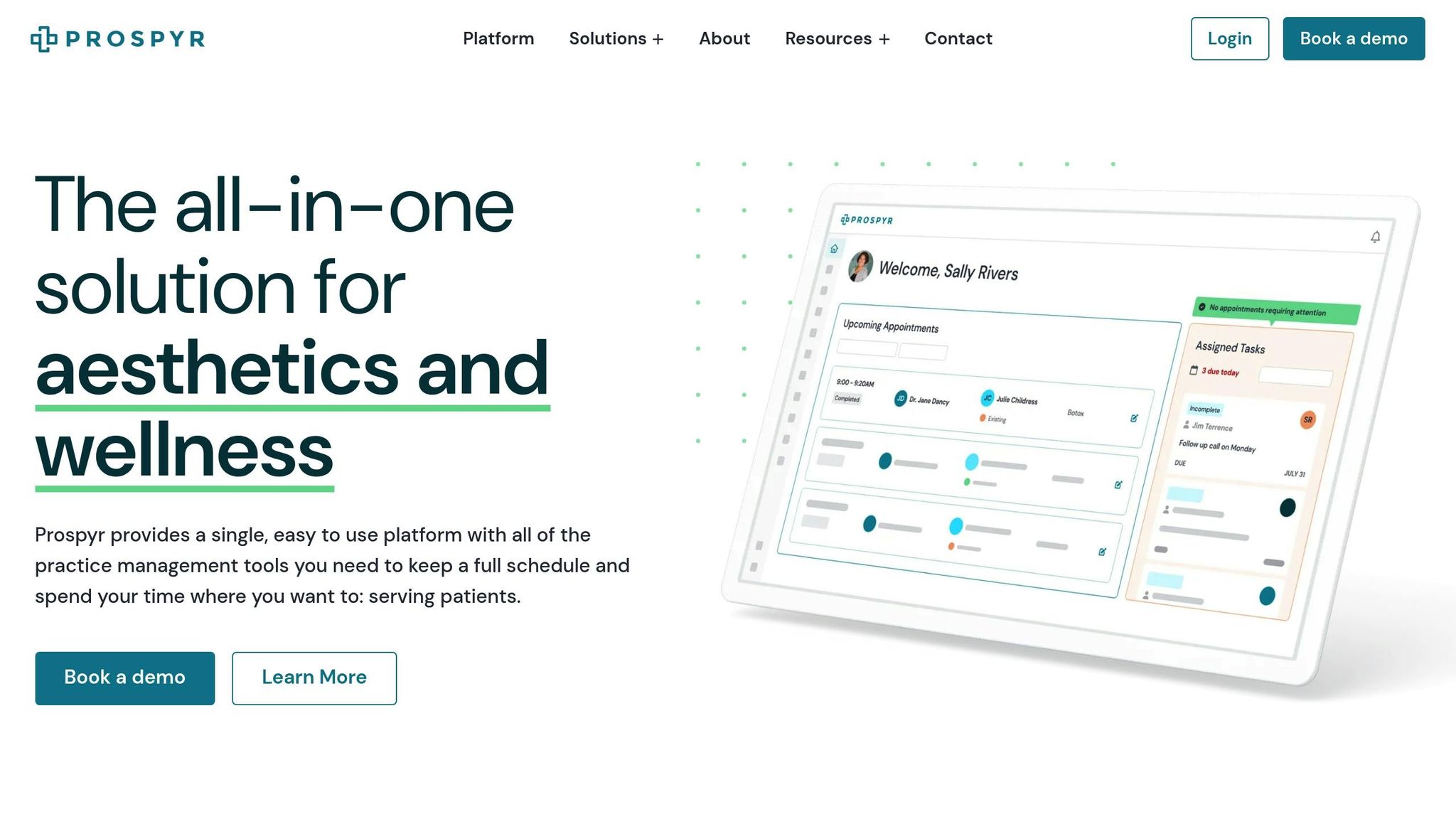
Navigating Florida's employment laws can be tricky, especially for aesthetic clinics. That’s where Prospyr comes in. This platform simplifies compliance management by combining task reminders with secure document storage. From handling payroll updates to ensuring timely license renewals, Prospyr keeps all your compliance needs organized in one place. It’s designed to make managing these responsibilities more efficient and less stressful.
Task Management for Compliance
Prospyr lets you set recurring reminders for essential deadlines, such as payroll adjustments and E-Verify confirmations (required for employers with 25 or more employees). You can also schedule protocol renewals for APRNs and PAs, ensuring you're always on top of annual requirements.
The platform makes it easy to assign and track key responsibilities for your medical director, like monthly QA meetings, chart reviews, and license verifications - tasks that are critical for meeting statutory requirements. If your clinic is adding new services, like RF microneedling or GLP-1 programs, Prospyr helps you create tasks to update protocols and document staff competency ahead of the launch. This proactive approach helps avoid the common regulatory issue of having a “Medical Director in Title Only,” which has come under increased scrutiny.
Secure Documentation and Analytics
Florida law requires you to keep employment and workers' compensation records for the current and previous two years. Prospyr provides a HIPAA-compliant platform where you can securely store essential documents like Social Security numbers, pay records, employment contracts, IRS Form 575A, and workers' compensation policies, ensuring they’re always accessible when needed.
Beyond task management, Prospyr helps you analyze compliance records to identify potential issues before they escalate. Use the platform to monitor payroll data against Florida’s wage schedule, track physician-to-staff ratios (Florida limits supervising physicians to 10 PAs), and ensure supervision agreements are current. You can also keep digital copies of QA meeting agendas, sterilization logs, and staff competency checklists, creating a comprehensive, audit-ready compliance binder that’s accessible anytime, anywhere.
Conclusion
Following Florida's employment laws not only shields your clinic from legal troubles but also helps create a reliable and trustworthy workplace. Ignoring these regulations can result in lawsuits, investigations by agencies, and hefty fines. For example, under the Florida Civil Rights Act, employees can pursue compensatory damages for "intangible injuries" like mental anguish, with punitive damages capped at $100,000 for private-sector employers.
"Failure to comply with these laws can result in costly legal consequences, reputational damage, and loss of employee trust." - Paycor
The risks are real, but having straightforward compliance protocols in place can make all the difference. Regularly reviewing a compliance checklist ensures you cover all critical areas. This includes auditing payroll practices, using E-Verify for businesses with 25 or more employees, and displaying mandatory workplace posters. Keep employment records accurate and up to date, and revise your employee handbook to include Florida-specific policies. These steps are essential for maintaining smooth operations over the long term.
Creating a workplace that is fair, inclusive, and safe fosters trust among employees and patients alike. It also supports your clinic's stability. With Florida's workers' compensation rates dropping by 15.1% in 2024, employers who focus on workplace safety are already reaping financial rewards.
While the checklist provides a solid foundation - from hiring to termination procedures - compliance is an ongoing responsibility. Stay informed about local ordinances, as cities like Miami, Orlando, and Tampa have more expansive anti-discrimination protections than state law. Regular updates to your policies will help you keep pace with changing regulations. By treating compliance as an integral part of your business, rather than a one-time task, you can reduce legal risks and set your clinic up for lasting success.
FAQs
What employment laws should small clinics in Florida follow?
Small clinics in Florida have to navigate several important state and federal employment laws to maintain fair and lawful workplace practices. For starters, the Florida Civil Rights Act (FCRA) applies to employers with 15 or more employees, prohibiting discrimination based on factors like race, color, religion, gender, pregnancy, national origin, age, disability, or marital status. This ensures that workplaces remain free from discriminatory practices.
Florida's status as an at-will employment state means employers can terminate employees at any time for legal reasons, as long as the decision doesn’t involve unlawful or discriminatory actions. This flexibility, however, comes with the responsibility of adhering to anti-discrimination laws.
Clinics must also meet wage requirements, including paying the Florida minimum wage, which is currently $14.00 per hour. Beyond wages, employers are responsible for maintaining workplace safety and implementing proper leave and benefit policies. Additionally, businesses with 25 or more employees must use E-Verify to confirm that their workers are legally eligible for employment.
By staying aligned with these regulations, clinics not only avoid potential legal troubles but also foster a workplace that is professional and welcoming for everyone.
What steps can Florida businesses take to properly classify their workers?
To ensure workers are classified correctly, Florida businesses must adhere to both federal and state regulations. The first step is determining whether a worker qualifies as an employee or an independent contractor under Florida law. This decision hinges on factors like how much control the business has over the worker’s tasks and schedule, as well as the overall nature of their working relationship.
Businesses can also use tools like E-Verify to confirm that workers are eligible for employment, ensuring compliance with federal requirements. Regularly reviewing these classification rules is crucial to avoid potential misclassification, which could result in penalties or legal challenges.
What are the consequences of not following Florida's employment laws?
Failing to follow Florida's employment laws can bring about serious repercussions. These might include fines, legal actions, or penalties from state agencies like the Florida Commission on Human Relations. Employers could also find themselves dealing with lawsuits over issues like wage disputes or discrimination, often leading to costly financial settlements and damage to the clinic's reputation.
To steer clear of these problems, businesses need to stay up-to-date on employment regulations and establish clear policies and procedures. Regularly reviewing and updating compliance practices is a smart way to protect your clinic from legal and financial troubles.