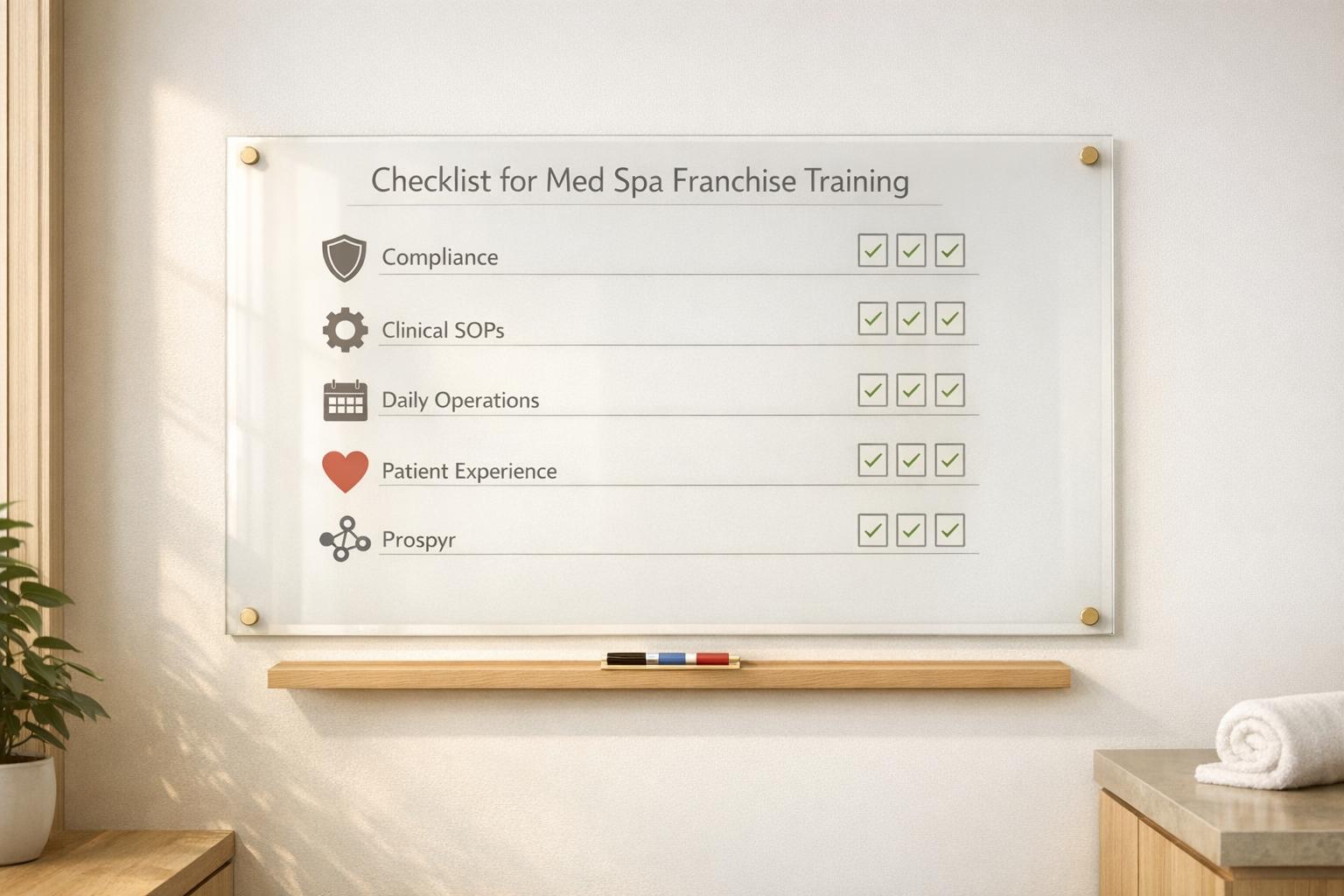

Thinking about starting a med spa franchise? Here’s what you need to know: proper training is non-negotiable. Without it, you risk legal issues, safety concerns, and operational chaos. This checklist ensures your franchise runs smoothly, stays compliant, and delivers consistent client satisfaction.
Key Points:
- Compliance Matters: Medical aesthetics is a highly regulated industry. Training must cover licensing, legal requirements, and safety protocols.
- Client Safety: Poor training can lead to serious medical issues like infections or adverse reactions.
- Profitability: Structured training improves margins (20%-40%) and boosts client retention (83% return monthly).
- Pre-Training Prep: Verify licenses, insurance, and legal structures before training starts.
- Daily Operations: Standardize intake, inventory checks, and safety protocols.
- Customer Experience: Focus on personalized care and quick responses to inquiries.
- Marketing Tools: Use platforms like Prospyr for automation, analytics, and lead management.
This checklist isn’t just about compliance - it’s about creating a med spa that thrives.

Med Spa Franchise Training Checklist: 4-Phase Implementation Guide
Pre-Training Preparation
Getting everything in place before training begins is crucial to avoid delays, compliance issues, or operational hiccups.
Verify Franchisee Prerequisites
Make sure all legal and financial requirements are completed. This includes finalized background checks, financial evaluations, a thorough review of the FDD, and a signed franchise agreement.
Confirm the business entity is properly structured (PLLC, PC, or MSO) and that an EIN has been obtained. Attorney Kathryn Hickner from BMD LLC highlights an important point:
In corporate practice of medicine states, generally only licensed physicians, have the authority to own a medical spa.
Check that all professional licenses are valid for team members like physicians, nurse practitioners, registered nurses, and estheticians. Ensure they are working within the scope of practice defined by their state. Additionally, secure the necessary insurance policies, such as professional liability, workers' compensation, and commercial general liability, before training kicks off. If controlled substances will be prescribed, verify DEA registrations and compliance with state-specific prescription monitoring systems.
Once these steps are completed, you can focus on preparing customized training materials.
Prepare Training Materials
Divide training materials into three main areas: Legal/Compliance, Clinical/Treatment Protocols, and Business Operations. A typical med spa training package includes:
- 24 Treatment SOPs
- 19 Consent Forms
- 16 Policies
- 11 Intake Forms
- 11 OSHA Forms
Tailor these materials to meet state-specific rules, such as those covering the Good Faith Exam, physician supervision, and professional practice guidelines. Customization ensures compliance and smooth operations.
With materials ready, the next step is to finalize a training schedule.
Schedule Training Timeline
Plan a detailed training schedule, coordinating with franchisees to align it with site selection and layout planning. Ryan Rao of VIO Med Spa emphasizes this:
Owning a VIO Med Spa doesn't happen overnight, but the process can be straightforward if you follow our franchise ownership steps.
Set Up Access to Prospyr
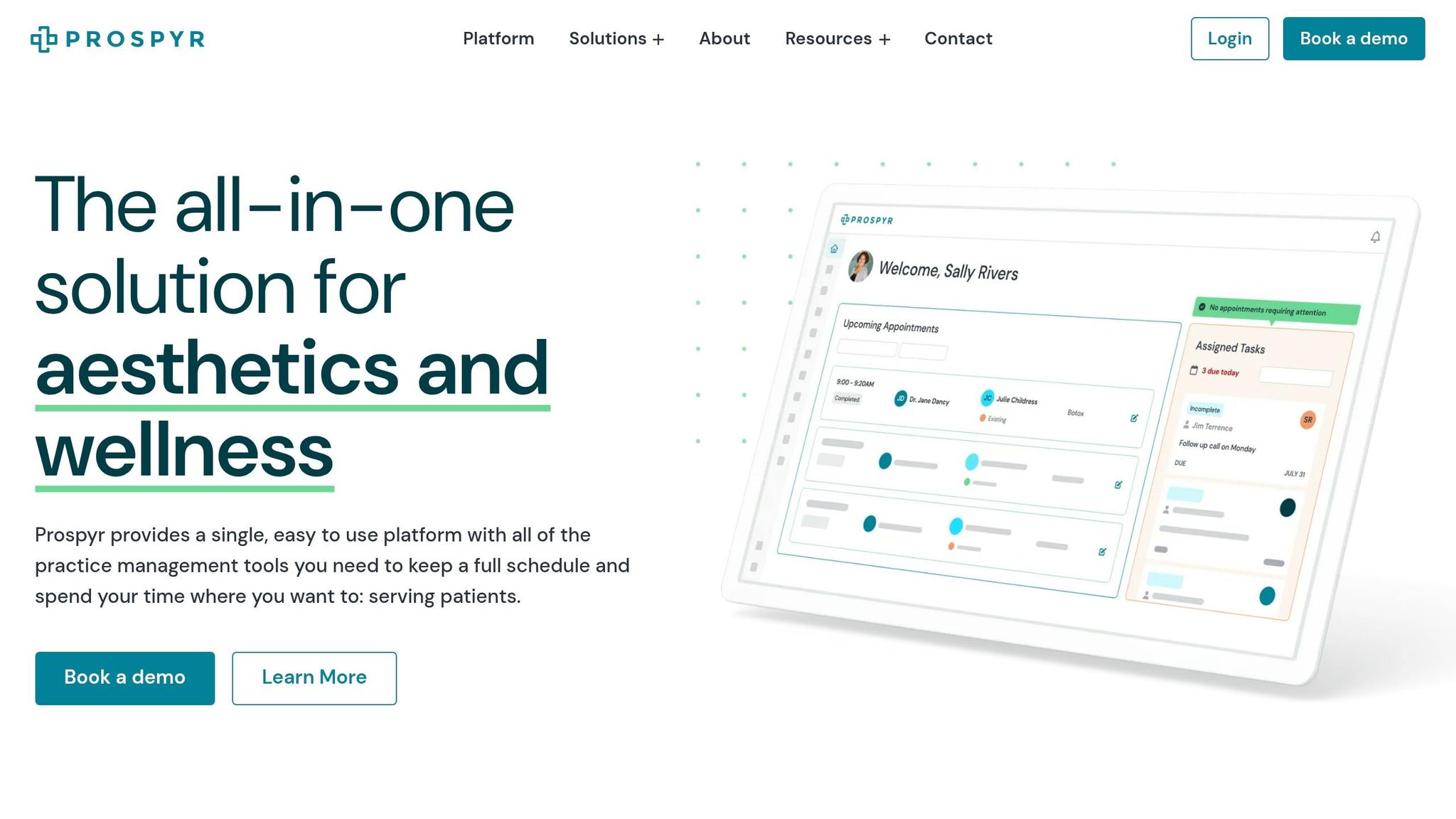
Grant franchisees early access to Prospyr (https://prospyrmed.com) so they can familiarize themselves with its features before training begins. Set up their accounts with tools like CRM/EMR integration, digital intake forms, scheduling software, and HIPAA-compliant training modules. Early access helps reduce the learning curve, ensuring they are ready to manage patient records, process payments, and utilize marketing automation effectively.
sbb-itb-02f5876
Initial Franchisee Onboarding
Onboarding kicks off after pre-training, laying the groundwork for franchisees to effectively represent your brand and run their med spa operations.
Brand Standards and Mission Overview
Start by defining your brand's voice with clear tone guidelines. Whether your brand feels warm and nurturing, confident and clinical, or approachable and expert, every team member should know how to communicate in line with this identity. Provide a list of "phrases to use" and "phrases to avoid" to maintain consistency. For instance, encourage staff to say, "I completely understand your concern", instead of generic responses.
Guide franchisees through the Five-Stage Patient Journey to ensure they deliver exceptional service at every step. These stages include:
- First Contact: Respond to patient inquiries within five minutes. (Fun fact: Businesses that respond within five minutes are 100 times more likely to convert leads than those that wait 30 minutes.)
- Intake/Check-in: Personalize the experience by greeting patients by name.
- Consultation/Treatment: Focus on patient dignity and emotional connection.
- Post-Treatment/Checkout: Go over aftercare instructions before the patient leaves.
- Follow-up: Check in systematically at 48 hours and again two weeks post-procedure.
"In aesthetic medicine, patient experience is your product. Not just the Botox, the filler, or the laser treatment - the entire arc from first inquiry to follow-up call." – Monsoft Solutions
Incorporate 15-minute role-playing exercises during onboarding to help staff handle common concerns like "Will I look natural?" or "Is it safe?" Additionally, train them to use the LARA Framework (Listen, Acknowledge, Respond, and Act) for managing complaints. A well-handled complaint can actually build stronger patient trust.
This alignment with brand values sets the stage for tackling legal, operational, and facility-specific requirements.
Legal and Licensing Requirements
Once the brand foundation is clear, dive into state-specific legal and licensing rules. For states with Corporate Practice of Medicine (CPOM) restrictions, explain the Management Services Organization (MSO) model, where a licensed physician owns the medical entity, and the franchisee manages the business side. To avoid fee-splitting issues, ensure management fees are tied to fair market value, not medical revenue percentages.
Clarify that only licensed professionals like MDs, DOs, NPs, or PAs can conduct the Good Faith Exam. RNs cannot perform this exam without risking legal consequences for unauthorized medical practice. Additionally, confirm that the Medical Director customizes and signs off on all clinical SOPs to meet care standards.
Prepare franchisees with emergency protocols for situations like vascular occlusion, anaphylaxis, and laser burns. A 2023 survey found that 34% of med spas lacked written emergency procedures, and those without documented SOPs were three times more likely to face regulatory action after adverse events. Highlight the importance of compliance, as HIPAA violations can cost med spas anywhere from $100 to $50,000 per violation category annually.
Facility and Equipment Orientation
Introduce franchisees to facility layouts and patient flow strategies to ensure smooth operations. Provide hands-on training for handling lasers, injectables, and other medical devices, emphasizing sterile practices and safety as top priorities. Proper knowledge of your facility's layout and equipment protocols is essential for maintaining compliance and delivering high-quality care.
Prospyr Account Setup
Once operational protocols are in place, simplify daily tasks by setting up your Prospyr account. This platform integrates key functions like online booking, POS transactions, and automated appointment reminders. Configure it to send follow-up messages 48–72 hours post-treatment and again at the two-week mark to reduce no-shows. Automating administrative tasks, such as scheduling and marketing, can save med spa owners 10–15 hours each week.
Daily Operations Training
Once the groundwork is established, franchisees need practical training to handle the day-to-day tasks that keep a med spa running efficiently and safely. These daily routines also ensure the consistent, high-quality service that drives franchise success.
Daily Operations and SOPs
Start every day with standardized opening and closing checklists to ensure the facility is ready, equipment is functioning properly, and security measures are in place.
Conduct daily inventory checks for controlled substances and injectables. Controlled substances must be logged daily, and products should be rotated using the FIFO (First-In, First-Out) method to track expiration dates. For injectables and biologics, maintain strict "cold chain" storage to preserve their effectiveness.
Standardize patient intake procedures to include verifying photo IDs, collecting medical histories, reviewing allergies, and obtaining informed consent specific to the treatment. Schedule follow-ups - 48–72 hours after treatment and a two-week review - to improve patient retention. Even a 5% increase in patient retention can raise revenue by 25% to 95%.
These daily practices form the backbone of safety and compliance, which are explored further below.
Compliance and Safety Protocols
Daily routines are just the beginning - safety protocols are critical for protecting both patients and the franchise. A 2023 survey revealed that 34% of med spas lack written emergency protocols, and those without documented SOPs are three times more likely to face regulatory action after an adverse event. Defending a malpractice claim can cost anywhere from $75,000 to $200,000.
Emergency protocols should include clear, step-by-step instructions for handling situations such as vascular occlusion (filler-related emergencies), anaphylaxis, syncope (fainting), and laser burns. These steps ensure staff can act quickly and effectively in critical moments.
Daily safety tasks should cover:
- Equipment sterilization and infection control to prevent contamination.
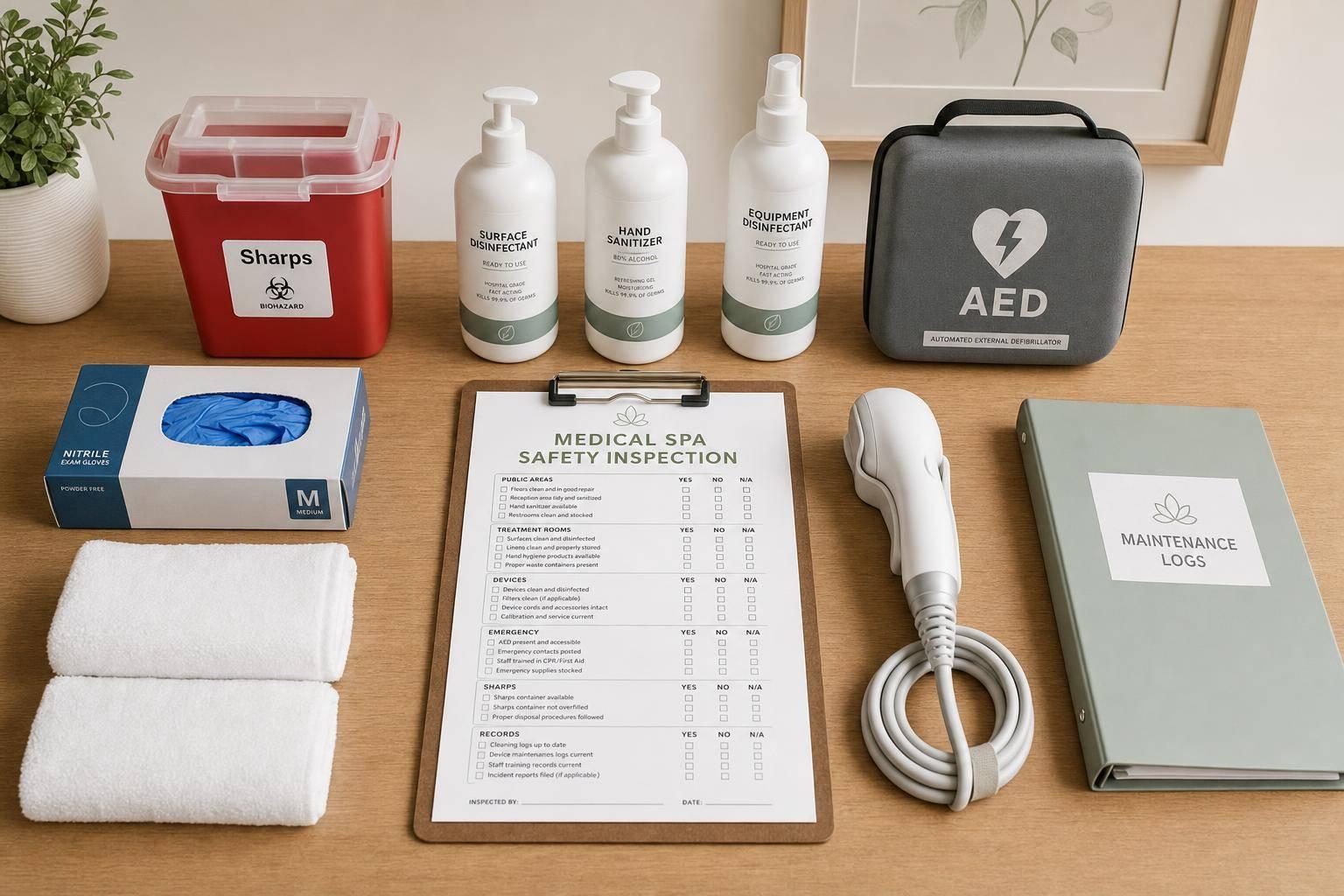
- Proper disposal of biohazard waste and sharps.
- OSHA-compliant procedures for handling needle sticks and exposure to bloodborne pathogens.
Protecting patient privacy is equally important. HIPAA violations can cost between $100 and $50,000 per incident, depending on the severity and category. Patient records must be secured, and discussions about patient details should never occur in shared areas.
Franchisees should schedule an annual review of all SOPs and update them immediately following any adverse event or regulatory change. Keep written documentation of staff training and competency for every treatment they’re authorized to perform - state board inspections will require these records.
Prospyr Operations Tools
Prospyr's task management tools make it easier for franchisees to stay on top of daily operations. From opening checklists to inventory tracking, the platform ensures that no detail is overlooked.
The real-time analytics feature offers instant insights into appointment volumes, revenue trends, and patient retention rates, helping franchisees make smarter decisions quickly. Prospyr also includes HIPAA-compliant automation tools for scheduling 48-hour and two-week follow-ups, reducing administrative burdens. By combining analytics with task management, Prospyr simplifies operations while improving both efficiency and accountability.
Customer Service and Marketing Training
Franchise training goes beyond daily operations - it’s also about excelling in client interactions and marketing. These areas are crucial for driving patient satisfaction and business growth. The goal here is to ensure franchisees can create meaningful patient experiences while also implementing strategies to grow their practices.
Patient engagement is key to loyalty. Reinforce the patient journey stages introduced during onboarding. As Monsoft Solutions explains:
In aesthetic medicine, patient experience is your product. Not just the Botox, the filler, or the laser treatment - the entire arc from first inquiry to follow-up call.
Client Interaction Standards
Quick responses are critical. Aim to reply to inquiries within five minutes to improve conversion rates. Train staff to greet patients by name and provide personalized comfort. During consultations, providers should practice active listening by repeating patient concerns (e.g., "So you're interested in addressing volume loss in your cheeks - is that right?") to make patients feel heard.
The "Checkout Connection" is another key moment. Before a patient leaves, verbally review aftercare instructions and try to schedule their next touch-up appointment. A return patient rate below 40% often signals gaps in the client experience. Use the LARA framework introduced earlier to handle complaints effectively.
Once client interactions are solid, the focus shifts to impactful marketing strategies.
Prospyr Marketing Tools
Prospyr's lead capture integration simplifies the process by funneling all online inquiries directly into the CRM. Its automated email and SMS tools nurture leads, encourage repeat visits, and maintain HIPAA compliance. For instance, in 2024, Dr. Saami Khalifian’s SOM Aesthetics used Prospyr to hit its sales goals 21 times faster than expected, earning $40,000 in revenue within the first two days and surpassing $100,000 per month within two months. Dr. Khalifian shared:
Prospyr has helped us launch SOM Aesthetics like a rocketship. The platform's features have driven rapid sales growth and outstanding patient experiences.
Train franchisees to schedule social media posts for consistent online engagement. Use the review management dashboard to track feedback trends - fewer reviews often point to issues with the patient experience. Automate follow-ups to check on results 48–72 hours after treatment and again at the two-week mark.
Membership Management Strategies
Membership programs are a proven way to secure recurring revenue. Patients in these programs typically have three times the lifetime value of walk-in patients, and med spas with memberships generate 20–40% of their revenue from recurring sources. For example, a program with 100 members paying $199/month brings in $238,800 annually.
Prospyr's membership management tools make renewals easy and track client benefits, reducing administrative work while ensuring steady income. Train staff to promote memberships during checkout, emphasizing their potential to boost revenue.
Ongoing Support and Evaluation
After the initial training phase, maintaining high standards and ensuring compliance requires consistent support. This involves quarterly refresher sessions informed by feedback and updates on new services, as well as annual in-depth reviews to align with evolving standards. Training should also be updated promptly whenever new treatments or equipment are introduced, reducing the risk of inconsistencies or safety concerns. Assigning a Treatment Lead for each service area is essential - they can stay on top of industry trends, vendor recommendations, and regulatory changes.
Continuing Education and Updates
Encourage staff to develop advanced technical expertise, which helps them excel in specific protocols or niche treatments. Regular training sessions should also cover updates to HIPAA, state medical board regulations, and OSHA standards. Any changes to clinical protocols must be reviewed and approved by your Medical Director to ensure they align with the standard of care. To build confidence in handling patient objections, include 15-minute mock consultations during team meetings.
Performance Monitoring
Using tools like Prospyr's practice analytics, you can track essential KPIs such as Net Promoter Score (NPS), return patient rates, and consultation conversion rates to maintain the quality benchmarks established during onboarding. For example, a return patient rate falling below 40% may indicate gaps in patient experience. Aim for 20–30% of new patients to come through referrals and keep an eye on your review velocity - declining numbers of new Google reviews could signal underlying issues. Additionally, quarterly protocol audits are crucial to ensure your procedures remain aligned with best practices and equipment guidelines.
Feedback and Improvement Plans
To sustain operational excellence, set feedback checkpoints at Week 4, Month 2, and Month 3 after launch. These milestones help resolve lingering questions and establish clear goals. Use challenging patient interactions as opportunities to refine scripts and processes. Digital feedback systems allow franchisees to flag outdated steps or suggest updates in real time, keeping protocols relevant. Consider tying staff bonuses or recognition to measurable results like Google review scores or patient survey feedback. With only 12% of employees strongly agreeing that their organization excels at onboarding, structured ongoing support is clearly vital.
Conclusion
A structured training checklist is the backbone of any successful med spa franchise. Without one, locations face risks like regulatory penalties and operational inefficiencies, which can lead to malpractice claims costing anywhere from $75,000 to $200,000. With 83% of clients returning monthly, even small inconsistencies can jeopardize customer loyalty.
This checklist isn’t just a box to tick - it’s essential for smooth operations.
"If you're running a med spa without standard operating procedures, you're running on borrowed time." – MedSpa Standards
By implementing a thorough checklist that covers everything from pre-training preparation to ongoing support, franchisees can ensure compliance with protocols, maintain clinical standards, and deliver consistent customer service. This level of uniformity not only protects your brand but also boosts profitability. Consistency in training translates into better operations and financial growth.
Prospyr simplifies this process by centralizing training resources, automating onboarding, and keeping protocols updated in real time. Instead of wasting hours each week searching for information, your team can access everything they need instantly. Its practice analytics also allow you to track key metrics - like conversion rates, patient satisfaction, and referral percentages - so you can identify areas that need extra training support.
Structured training brings quick results. Efficient operations can lead to profit margins of 30%–40%, and practices that respond to inquiries within five minutes see conversion rates soar - up to 100 times faster. In the end, a well-designed checklist serves as your guide to scalable and profitable growth.
FAQs
What training items are most important for med spa compliance?
Running a med spa means juggling patient care, safety, and legal compliance. To stay on track, there are a few key areas where training is absolutely essential:
- Emergency Protocols: Your staff needs to be ready to handle emergencies swiftly and effectively. This includes training on first aid, CPR, and knowing how to respond to specific medical situations that could arise during treatments.
- HIPAA Privacy and Security Policies: Protecting patient information is non-negotiable. Make sure your team understands how to handle, store, and share protected health information (PHI) securely to comply with HIPAA regulations.
- Staff Training on PHI: Beyond just knowing HIPAA rules, employees should be trained to manage PHI responsibly in daily operations, from intake forms to electronic medical records.
- Informed Consent Procedures: Properly explaining treatments, risks, and benefits to patients - and ensuring they sign informed consent forms - is a must. This protects both the patient and your business.
- Accurate Documentation Practices: Good record-keeping is more than just a best practice - it's a legal safeguard. Train your team to document treatments, patient interactions, and any incidents clearly and accurately.
These training areas are not just about meeting regulations - they’re about ensuring patients feel safe and cared for while protecting your med spa from potential legal issues. Compliance is the backbone of a well-run, trustworthy practice.
What SOPs should every med spa franchise standardize daily?
Every med spa franchise needs to establish clear daily Standard Operating Procedures (SOPs). This ensures services are consistent, compliant with regulations, and focused on delivering quality care. Here are some key areas to address:
- Patient Intake and Documentation: Make sure all intake forms, treatment records, and consent forms are completed accurately and stored securely. These should align with state-specific legal requirements to avoid compliance issues.
- Treatment Protocols: Develop clear guidelines for both pre-treatment and post-treatment procedures. This helps maintain uniformity and ensures patients receive the same level of care across all locations.
- Staff Training: Conduct daily onboarding sessions to ensure team members understand their roles and responsibilities. This also reinforces compliance with operational standards.
- Compliance Management: Regularly review patient records and use electronic medical record (EMR) systems to stay aligned with legal obligations and maintain proper documentation.
By sticking to these SOPs, med spa franchises can create a reliable and professional experience for both staff and clients.
Which KPIs should I track after launch to spot training gaps fast?
After opening a med spa, keeping an eye on key performance indicators (KPIs) is crucial to ensure smooth operations and high-quality care. Some of the most important metrics include patient safety data, rates of treatment complications, customer satisfaction scores, and how efficiently your business is running.
Monitoring adverse events and patient outcomes can help uncover areas where clinical practices or customer service training might need improvement. Additionally, tracking metrics like treatment accuracy, how well appointments are scheduled, and whether staff is following standard operating procedures (SOPs) can reveal where more support or training may be necessary. These insights are vital for maintaining both patient trust and operational success.