Running a med spa without tracking lead conversion metrics is like driving blindfolded - you’ll waste money and miss opportunities. This article breaks down 9 essential metrics to help you measure, improve, and grow your practice. From understanding your conversion rate to calculating patient lifetime value, these metrics reveal where your efforts are paying off and where adjustments are needed.
Key Metrics to Track:
- Conversion Rate: Measures how effectively leads turn into consultations or treatments.
- Cost Per Lead (CPL): Tracks how much you’re spending to generate each inquiry.
- Cost Per Acquisition (CPA): Shows the cost of turning a lead into a paying patient.
- Lead Quality Score: Evaluates the likelihood of a lead becoming a loyal patient.
- Lead Response Time: Highlights how quickly you respond to inquiries (aim for under 5 minutes).
- Lead-to-Consultation Rate: Tracks how many leads schedule consultations.
- Booking Conversion Rate: Measures how many consultations result in treatments.
- Patient Lifetime Value (LTV): Calculates the total revenue a patient generates over time.
- Return on Ad Spend (ROAS): Reveals how much revenue your ads generate per dollar spent.
Why These Matter:
- Boost Revenue: Metrics like ROAS and LTV help you allocate your budget effectively.
- Optimize Operations: Conversion and response rates pinpoint where processes can improve.
- Improve Follow-ups: Faster responses and better communication lead to higher bookings.
By focusing on these metrics and using tools like CRMs and automated follow-ups, embedded marketing solutions, med spas can fine-tune their marketing strategies, improve patient retention, and maximize profitability. Tracking isn’t just about numbers - it’s about making smarter decisions to grow your practice.

9 Essential Metrics to Track Lead Conversion Success for Med Spas
1. Conversion Rate
Conversion rate is the percentage of leads who take a desired action - whether that's booking a consultation, scheduling a treatment, or becoming a patient. It’s a direct reflection of how effectively your med spa turns interest into revenue.
Relevance to Lead Conversion Success
By analyzing conversion rates, you can identify which marketing channels bring in the highest-quality leads. For example, comparing conversion rates from social media campaigns to those from search engine ads can help you decide where to focus your budget. But conversion rates don’t just highlight marketing performance - they also uncover potential issues in patient engagement. If leads consistently stop short of booking after consultations, the problem could stem from unclear pricing, a lack of trust, or an ineffective consultation process. Post-consultation surveys can provide valuable feedback on why prospects might hesitate to commit.
Ability to Measure Business Growth
Conversion rates are also a key tool for predicting revenue. Let’s say your goal is to generate $100,000 in monthly revenue. With an average patient value of $2,500 and a 50% consultation-to-treatment conversion rate, you’d need 80 qualified leads to hit that target. This kind of backward planning helps you set realistic goals for lead generation and fine-tune your budget.
Actionable Insights for Med Spas and Aesthetic Clinics
Pay attention to how often new patients rebook within 6–12 months, as most patients typically return for 3–4 appointments in that timeframe. If rebooking rates are lower, it could signal issues with follow-up efforts or the overall patient experience. To address this, consider using a CRM to automate personalized follow-ups via text and email. These reminders, timed around treatment cycles, keep patients engaged while reducing the workload on your staff. Additionally, flag inactive patient accounts for outreach campaigns to re-engage them.
Another strategy is to introduce tiered membership programs offering perks like priority booking or exclusive events. Such programs can turn occasional visitors into loyal clients and potentially contribute 20–30% of your total revenue.
Understanding your conversion rate not only drives immediate improvements but also sets the stage for evaluating ad performance, which is covered in the next metric.
sbb-itb-02f5876
2. Cost Per Lead (CPL)
Cost Per Lead (CPL) shows exactly how much you're spending to generate each prospective patient inquiry. Think of it as your marketing performance gauge - it tells you whether your advertising dollars are being put to good use or wasted.
Relevance to Lead Conversion Success
By comparing CPL across different channels, you can uncover which ones are truly delivering value. For example, Google Ads for med spas typically cost between $35 and $90 per lead, while Facebook and Instagram range from $15 to $55. However, cheaper isn't always better. Leads from Google Ads tend to convert into booked consultations at a rate of 25%–40%, compared to just 10%–22% for social media leads. As the PatientNow Team explains, "Understanding which marketing channels bring in the most qualified leads is vital for optimizing your marketing budget". In practice, a $60 Google lead with a 35% booking rate offers far more value than a $20 Facebook lead with only a 12% booking rate.
The type of treatment you're advertising also impacts CPL. For example, Botox leads on Google Ads generally cost $25–$50, while leads for body contouring services like CoolSculpting range from $60 to $120. Your market size matters, too. In large metro areas with populations over 1 million, CPLs typically range from $60 to $140, whereas smaller markets with fewer than 250,000 people see CPLs between $20 and $50. These comparisons highlight how CPL can directly shape your advertising strategy.
Ability to Measure Business Growth
CPL is a key metric for reverse budget planning. Knowing your CPL allows you to calculate exactly how much ad spend is needed to hit your revenue goals. For instance, a landing page with a 12% conversion rate will generate leads at half the cost of one converting at just 6%. This makes it easy to tie optimization efforts directly to dollars saved.
Actionable Insights for Med Spas and Aesthetic Clinics
Here are a few practical ways to improve your CPL and overall marketing performance:
- Optimize your landing pages: Each treatment should have its own dedicated page with clear offers, social proof, and a simple form to capture leads.
- Use negative keywords: Filter out irrelevant clicks by excluding terms like "cheap", "jobs", or "DIY".
- Time your ads strategically: Avoid running ads during off-hours when calls can't be answered promptly.
- Segment campaigns by treatment: Keep campaigns for Botox separate from those for body contouring. This allows ad algorithms to focus on profitability rather than just finding the cheapest clicks.
- Track calls effectively: Platforms like CallRail can help you attribute phone leads to specific keywords, giving you a more complete picture of your CPL data.
3. Cost Per Acquisition (CPA)
Cost Per Acquisition (CPA) reveals how much you're spending to secure each paying patient. As Ricky Shockley from Med Spa Magic Marketing explains, "Acquisition cost at the end of the funnel is the true metric that matters".
Relevance to Lead Conversion Success
CPA helps determine if your leads are worth the investment. For example, a $20 Facebook lead with just a 10% consultation rate results in an effective CPA of $200. On the other hand, a $60 Google lead with a 35% booking rate ends up costing $171 per acquisition. Generally, Google Ads deliver an effective CPA for booked consultations between $100 and $300, while Facebook and Instagram range from $80 to $350. If your CPA is under $100, you're in a strong position for most med spa services. This metric ties your marketing spend directly to revenue, offering a clear picture of your return on investment.
Ability to Measure Business Growth
Understanding CPA alongside patient value enables accurate revenue forecasting. For instance, a CPA of $250 for high-ticket treatments like body contouring might seem high, but a single $4,000 package sale can justify months of ad spend. Growth99 highlights that "a higher CPA may be justified if the lifetime value of customers gained is also higher". Many successful med spas focus on encouraging new patients to book 3–4 appointments within their first 6–12 months. By aligning CPA with lead quality and conversion rates, med spas can refine their marketing strategies and maximize patient acquisition efforts.
Actionable Insights for Med Spas and Aesthetic Clinics
To calculate CPA for each channel, track conversions from lead-to-consultation and consultation-to-treatment. Even small improvements can make a big difference - boosting your close rate from 5% to 15% can triple your revenue without increasing ad spend. Madilyn Moeller from the American Med Spa Association advises aiming for inquiry-to-consultation and consultation-to-close rates of at least 70%. Timing is critical too - Facebook often shows competitor ads to your leads within 48–72 hours, so fast follow-up is crucial. Additionally, invest in front desk lead management training and ensure your website is mobile-friendly, as most med spa traffic comes from mobile users.
4. Lead Quality Score
Relevance to Lead Conversion Success
A lead quality score is your compass for gauging marketing success. It doesn’t just show how many leads you’re getting - it reveals how many of those leads are actually interested in your services. For example, channels like Google Ads, referrals, or social media might bring in a lot of inquiries, but are they the right kind of inquiries? Referral programs often stand out in the aesthetic industry because they bring in patients who already trust your clinic, thanks to word-of-mouth recommendations. This kind of trust sets the stage for smarter revenue planning and better use of your resources.
Ability to Measure Business Growth
When you understand lead quality, you can set more accurate revenue goals. Let’s say your clinic aims for $100,000 in monthly revenue. If your average patient value is $2,500 and you have a 50% conversion rate, you’ll need at least 80 qualified leads to hit that goal. But what happens if your leads are high-quality, yet revenue falls short? That’s often a sign of issues with your consultation process or follow-up efforts, rather than your marketing channels. These insights help you pinpoint what’s working - and what’s not - so you can adjust your strategy effectively.
Actionable Insights for Med Spas and Aesthetic Clinics
Start by analyzing each marketing channel to see which ones bring in the best leads. Your CRM can help you track metrics like consultation-to-booking ratios. For example, if leads from Google Ads show stronger intent to book treatments than those from social media, it’s time to shift your budget accordingly. Beyond that, look at engagement data - clicks, email open rates, and social media interactions - to figure out which treatments, like Botox or skin rejuvenation, are sparking the most interest. Don’t overlook your brand advocates either; leads they generate often come with built-in trust, making them more likely to convert. By combining lead quality tracking with metrics like CPL and conversion rates, you’ll create a well-rounded strategy for attracting and converting patients.
5. Lead Response Time
Relevance to Lead Conversion Success
Speed is everything when it comes to converting leads. Around 50% of buyers go with the first business to respond to their inquiry. Every minute you delay gives your competition a chance to win over that potential patient. When someone fills out a form, they’re most interested right at that moment. Responding within 5 minutes makes you 100 times more likely to close the deal compared to waiting just 30 minutes. And if you can respond within a single minute, your conversion chances can jump by an incredible 391%.
Here’s another eye-opener: 82% of consumers expect a response within 10 minutes. Yet, the average medical practice takes about 9 hours to reply. That’s a huge gap - and a golden opportunity for clinics that prioritize quick responses. As Tuesday Wilson from MyMedLeads explains:
"The longer the time gap between when a lead comes in and when that lead is called, the lower the likelihood of that lead being converted into a patient".
Responding quickly not only helps you secure the lead but also builds trust early on. This is especially crucial for aesthetic treatments, where patients often feel unsure or nervous about their decisions.
Ability to Measure Business Growth
Lead response time doesn’t just impact conversions - it also protects your marketing investment. Slow responses can lead to a 15% increase in customer churn, essentially wasting your advertising budget. On the flip side, sales teams that reach leads within an hour are 60 times more likely to qualify and close the lead compared to those who wait 24 hours. And if you’re too slow, about 30% of prospects will simply go to a competitor.
To stay on top of this, use performance tracking tools that start a "virtual stopwatch" as soon as a lead comes in. These tools can generate reports showing the average response times for each staff member. This kind of data helps you pinpoint delays, set realistic goals, and track improvements over time.
Actionable Insights for Med Spas and Aesthetic Clinics
Here’s how you can make fast response times a reality:
- Commit to the 5-minute rule: Make it a priority to contact every new lead - whether by phone, text, or email - within five minutes of their inquiry. Since 74% of sales teams fail to meet this goal, hitting it can give you a major edge.
- Leverage automation tools: Use CRM notifications to alert your front desk the moment a lead submits a form.
- Handle after-hours inquiries smartly: Deploy chatbots to answer common questions and collect lead information. Alternatively, enable online booking so patients can schedule consultations anytime, even when your staff isn’t available.
- Schedule "power hours": Set aside specific times for your team to focus solely on following up with leads. This ensures no inquiries slip through the cracks.
- Track and refine: Regularly review response time data to see where you stand and identify areas for improvement.
6. Lead-to-Consultation Rate
Tracking how many leads turn into consultations is a crucial step in understanding where prospects might be dropping off in your funnel. This metric, much like conversion and response rates, acts as a checkpoint for your entire marketing process.
Relevance to Lead Conversion Success
The lead-to-consultation rate measures how many of your inbound leads actually schedule a consultation. It’s a key indicator of where potential patients might be disengaging. High-performing aesthetic practices often aim for a rate between 35% and 50%, with some benchmarks suggesting rates as high as 70% are achievable.
If your leads aren’t converting into consultations, marketing may not be the issue. Instead, the problem often lies in what happens after a lead is captured. As Zach Laughlin and Dean Garland put it:
"If you're getting plenty of leads but few bookings, your problem likely lies in your follow-up speed, call scripts, or CRM automation".
This metric highlights how well your promotions are turning interest into action, which can help you drive sales without increasing your ad spend.
Ability to Measure Business Growth
Monitoring this rate gives you insight into how efficiently your business operates and pinpoints where your funnel might be leaking. This is especially critical when opening a med spa and establishing your first sales processes. For example, med spas in the U.S. averaged a lead-to-booking conversion rate of 8% to 12% in 2024. However, practices that actively refine their processes can achieve rates well above 20%.
A low rate combined with high lead volume typically signals issues like slow response times, ineffective call scripts, or underperforming CRM systems. It also helps determine whether your marketing efforts are attracting the right audience or simply generating unqualified traffic. By using CRM tools to track this metric, you gain a detailed view of client interactions and operational effectiveness, enabling smarter decisions to improve your funnel.
Actionable Insights for Med Spas and Aesthetic Clinics
To improve your lead-to-consultation rate, consider these strategies:
- Review and refine your sales scripts, and train your team to better qualify and educate prospects.
- Simplify your landing page forms to just 3–5 fields.
- Ensure your website is fast and features clear calls to action that make booking consultations easy.
Segment your lead sources to pinpoint problem areas. For instance, analyze whether web form leads or phone inquiries are falling short. Check geographic data to confirm your marketing dollars are reaching potential clients who can visit your clinic. Additionally, use automated drip email campaigns to nurture leads who don’t book right away, keeping them engaged for future opportunities.
7. Booking Conversion Rate
Relevance to Lead Conversion Success
The booking conversion rate tracks how many consultations turn into confirmed treatments. Unlike the lead-to-consultation metric, this focuses on the final step: commitment to treatment. It works hand-in-hand with other conversion metrics but zeroes in on the ultimate decision-making stage. Industry benchmarks show that 50% to 70% of consultations typically lead to paid treatments. If your rate is below this range, the problem likely lies in how consultations are conducted, not in your marketing efforts. This highlights how operational missteps can directly impact revenue.
Ability to Measure Business Growth
This metric does more than measure interest - it pinpoints operational hurdles that can block revenue growth. A practice may generate plenty of leads and consultations, but if only a small percentage convert into treatments, long-term growth becomes a struggle. The booking conversion rate reflects whether your team is effectively qualifying leads, building trust, and presenting options in a way that motivates prospects to book. When paired with lead source data, it can also identify which marketing channels bring in prospects more likely to commit. For instance, if certain channels consistently produce higher booking rates, you can adjust your marketing spend accordingly.
Actionable Insights for Med Spas and Aesthetic Clinics
To boost booking conversions, focus on clear and engaging communication. Share transparent pricing, showcase before-and-after photos, and highlight patient testimonials to build trust. Train your consultation team to handle objections skillfully, such as discussing payment plans to address cost concerns. Additionally, use automated follow-up workflows - like sending a personalized SMS or email within 24 hours of the consultation. Include a strong call to action and perhaps a limited-time incentive to nudge hesitant prospects. These strategies not only increase bookings but also strengthen your overall approach to lead conversion.
8. Patient Lifetime Value (LTV)
Relevance to Lead Conversion Success
While metrics like conversion rates and cost per acquisition focus on immediate results, Patient Lifetime Value (LTV) shifts the conversation toward long-term growth and sustainability.
LTV measures the total revenue a single patient generates over their relationship with your practice. This approach encourages you to think beyond one-time transactions, emphasizing the importance of turning first-time visitors into loyal, repeat clients. A successful lead conversion isn’t just about securing an initial appointment - it’s about building a lasting relationship.
By tracking LTV, you can determine if your marketing efforts are attracting high-value, loyal patients or those seeking one-off discounts. The calculation is straightforward: Average Purchase Value × Purchase Frequency × Client Lifespan. For example, if a patient spends $500 per visit, visits 4 times a year, and stays with your practice for 3 years, their LTV would be $6,000.
Ability to Measure Business Growth
LTV offers a broader perspective on your marketing’s long-term impact. It helps you assess whether your acquisition costs align with the revenue generated over time, enabling you to justify higher investments when the potential returns are worth it.
"Increasing your client's lifetime value is the secret to steady, sustainable growth in the medical aesthetics industry." - The Aesthetics Junkie
Data supports this mindset: successful med spas often see new patients booking 3–4 appointments within their first 6–12 months. On average, Botox and filler clients spend $2,000–$5,000 annually. However, with effective upselling - such as introducing treatments like laser resurfacing or exosomes - that figure can rise to $5,000–$10,000. Membership programs alone can contribute 20–30% of total revenue when structured well.
Actionable Insights for Med Spas and Aesthetic Clinics
To boost LTV, start by identifying "one-time" leads in your CRM system. Analyze why these patients didn’t return - issues like poor follow-up or dissatisfaction with results could be the culprits. Address these with strategies like automated follow-ups. For instance, schedule a check-in two weeks after treatment, offering a free touch-up or consultation to build trust and encourage repeat visits.
Another effective tactic is implementing upsell sequences. After a patient’s initial treatment, send personalized recommendations via SMS or email. For example, if someone books Botox, suggest microneedling with exosomes as a complementary service. Bundling treatments is another powerful strategy: create packages like “Summer Rejuvenation” or “Holiday Glow” that combine high-margin services such as Morpheus skin tightening with PRP.
Lastly, consider launching tiered membership programs (e.g., Bronze, Silver, Gold). These programs encourage recurring visits and create a steady revenue stream, making them a win-win for both patients and your practice.
9. Return on Ad Spend (ROAS)
Relevance to Lead Conversion Success
ROAS plays a crucial role in connecting your advertising budget to actual revenue, offering insights that go beyond basic click metrics. Instead of just tracking clicks, it reveals the revenue generated by your leads, giving a clearer picture of the financial impact of your campaigns.
"Standard lead generation metrics don't account for treatment values... every marketing dollar [should be] tracked, measured, and optimized for maximum ROI." - MedSpa Max
Simply put, ROAS measures how much revenue is earned for every dollar spent on advertising. For med spas, the benchmarks vary depending on the type of treatment. For instance, body contouring campaigns often deliver returns of 10-20X, while medical-grade skincare typically falls in the 4-8X range. A good rule of thumb is aiming for a ROAS of 300% or higher.
Ability to Measure Business Growth
ROAS doesn't just validate your current marketing efforts - it helps you make smarter decisions for the future. By analyzing ROAS, you can identify which marketing channels and treatments are worth further investment. For example, email campaigns targeting existing patients can yield impressive returns of 25-45X. Meanwhile, paid social media campaigns on platforms like Facebook and Instagram typically deliver 12-18X, and Google Ads often range from 8-15X. Comparing these channels can guide you in allocating your budget more effectively.
Take the case of Invigorate Advanced Aesthetics, which achieved a 12X ROAS in a single 30-day campaign in 2026. This campaign brought in $18,285 in new client sales for Morpheus8 treatments, with a cost per acquisition of $111. Their results were meticulously tracked using a custom dashboard that monitored ROI by treatment type. Similarly, Rejuv Aesthetics, under Dr. Reid Renner, recorded a 15.2X return on their initial marketing spend. Their targeted Botox campaign generated over 30 leads at just $7 per lead, converting six of those into paying clients, with full revenue attribution documented.
Actionable Insights for Med Spas and Aesthetic Clinics
To make the most of ROAS, start by tracking it for each treatment type and marketing channel individually. This allows you to identify which campaigns are delivering the best returns. For example, if your body contouring ads are achieving a 15X return while skincare retail campaigns are only hitting 5X, it makes sense to shift more of your budget toward the higher-performing ads.
Fine-tune your Google Ads by using negative keywords to avoid irrelevant searches, reducing wasted clicks and improving ROAS. Regularly run A/B tests on your ad copy and landing pages to see which versions drive better results. Finally, integrate your CRM with your billing system to track the entire customer journey - from the first ad click to the final payment. This ensures that every dollar you spend is accounted for and helps you make data-driven decisions.
How Prospyr Tracks These Metrics
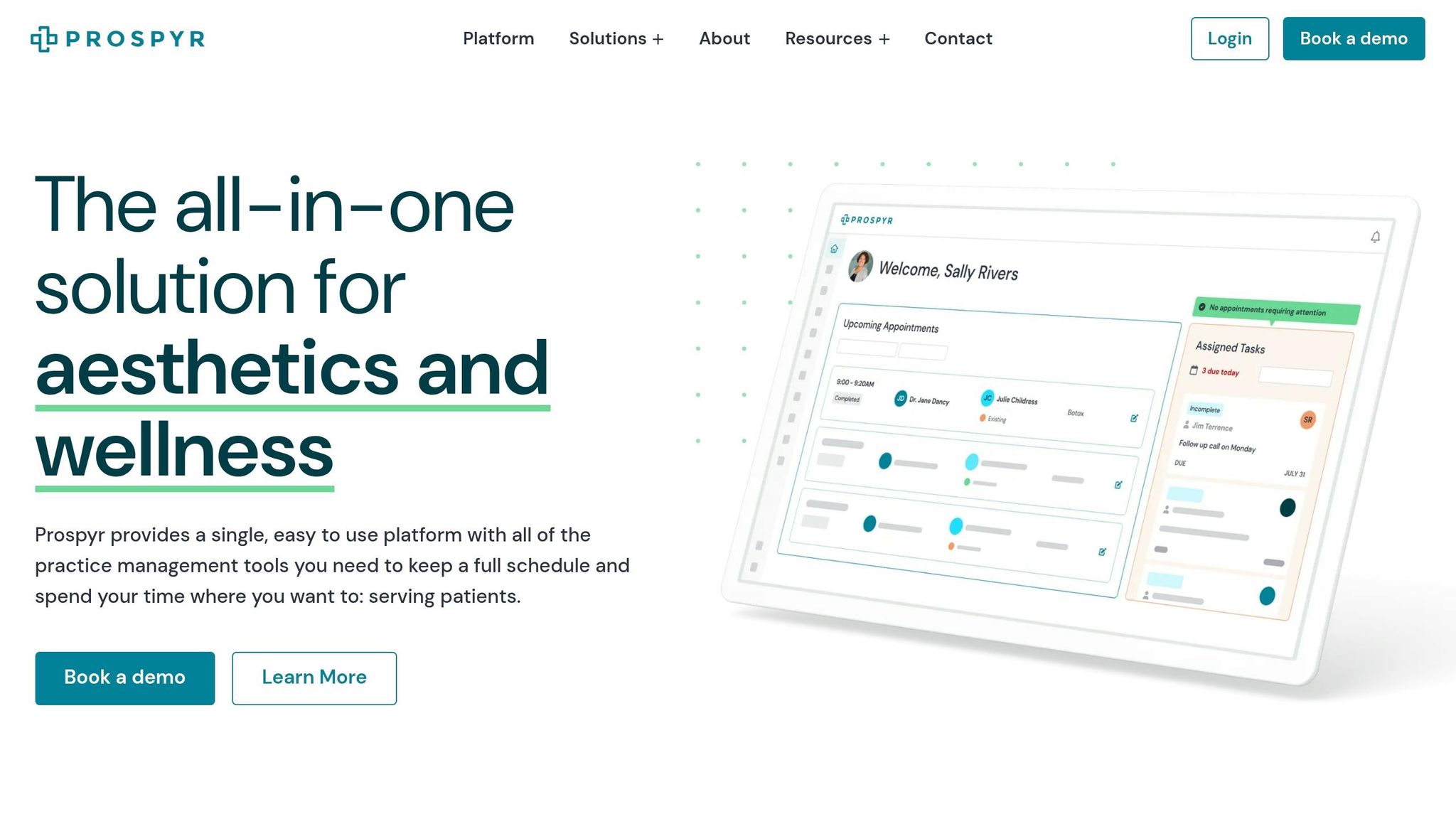
Prospyr's practice management platform brings together nine key metrics, offering a complete picture of your lead conversion process. By integrating lead capture, payment processing, and more into a single HIPAA-compliant system, it connects the dots between generating leads and turning them into revenue. This streamlined setup allows for in-depth analysis of every metric.
With multi-channel lead capture, inquiries from websites, social media platforms, and marketing landing pages are automatically added to your CRM. The practice analytics dashboards then display real-time metrics like conversion rates and cost per lead (CPL). Prospyr's marketing automation tools take it a step further by linking ad spend from platforms like Facebook and Google directly to individual leads, making it easier to monitor the return on ad spend (ROAS) for each channel.
Prospyr also enhances lead response time using AI booking tools and task management features. These tools timestamp every inquiry and notify staff to follow up immediately. Features like two-way SMS and one-click booking ensure practices can connect with prospects in minutes. This matters because industry research shows that responding within 5 minutes can triple conversion rates. For example, New Life Cosmetic Surgery Center, led by Dr. Lee, achieved a 40% boost in appointment bookings and a 50% revenue increase after consolidating their point-of-sale (POS), CRM, and electronic health records (EHR) into Prospyr’s platform.
To measure Patient Lifetime Value (LTV), the platform uses membership management and payment processing tools to track repeat visits and total revenue per patient. This helps estimate LTV by analyzing the revenue generated throughout a patient’s relationship with your practice. SOM Aesthetics, founded by Dr. Saami Khalifian and Dr. Jess Shisler, used Prospyr for pre-launch efforts, generating $40,000 in revenue within two days and exceeding their six-week target by 21 times.
Beyond capturing leads and booking appointments, Prospyr refines your ongoing marketing strategy. The practice analytics dashboard offers custom views filtered by treatment type, marketing channel, or time frame, helping you pinpoint which campaigns to scale. It also identifies bottlenecks in your conversion funnel - like low lead-to-consultation rates - so you can tweak your approach. Prospyr’s Direct Marketing module automates lead nurturing with tailored email and SMS sequences, ensuring no lead slips through the cracks. Plus, it provides data on which automated campaigns deliver the best results.
Conclusion
Keeping a close eye on lead conversion metrics can be the difference between an aesthetic practice that thrives and one that struggles in today’s competitive market. As the PatientNow Team puts it, "Success in this competitive landscape requires more than just providing excellent treatments – it demands a data-driven approach to business management". Without tracking these nine key metrics, you’re essentially running your clinic without the tools needed to predict revenue or evaluate how well your marketing channels are performing.
These metrics provide a clear roadmap for improvement. They don’t just highlight where you currently stand - they help shape strategies for the future. By focusing on what truly drives results and making adjustments as needed, practices can fine-tune their marketing budgets and boost operational efficiency.
Start by calculating your current conversion rate and aligning it with your monthly revenue goals. From there, establish baseline values for each KPI and schedule monthly team reviews to identify trends and make informed decisions early on.
Having the right tools makes this process much smoother. Prospyr's practice analytics dashboard is designed to bring all nine metrics together in one HIPAA-compliant platform. By linking lead capture, booking, and payment data, it gives you a full view of your conversion funnel. With real-time tracking and automated follow-ups, you can act on critical insights immediately - before opportunities slip through the cracks.
As the PatientNow Team emphasizes, "The most successful medspas will be those that not only track these metrics but use them to create actionable plans for improvement". The real question isn’t whether you can afford to invest in proper tracking - it’s whether you can afford not to.
FAQs
What’s a good CPA for my med spa?
A good cost per acquisition (CPA) for med spas typically ranges from $50 to $100 when dealing with high-performing campaigns. For average campaigns, the CPA often falls between $75 and $200, influenced by factors such as the specific treatments being promoted and the size of your target audience.
How do I calculate patient lifetime value (LTV)?
To figure out a patient's lifetime value (LTV), apply this formula: LTV = Average Spend per Visit × Average Visits per Year × Average Retention (Years). Here's an example: if a patient spends $300 per visit, visits 4 times annually, and remains a patient for 5 years, their LTV would be $300 × 4 × 5 = $6,000. This calculation is a handy way to predict total revenue per patient and refine your retention strategies.
Which 3 metrics should I track first?
To gauge the success and growth of your aesthetic clinic, focus on tracking these three critical metrics: Lead Conversion Rate, Client Retention Rate, and Average Treatment Revenue per Client. These indicators provide valuable insights into how efficiently you're turning potential clients into actual ones, how loyal your existing clients are, and the revenue each client contributes to your business.