
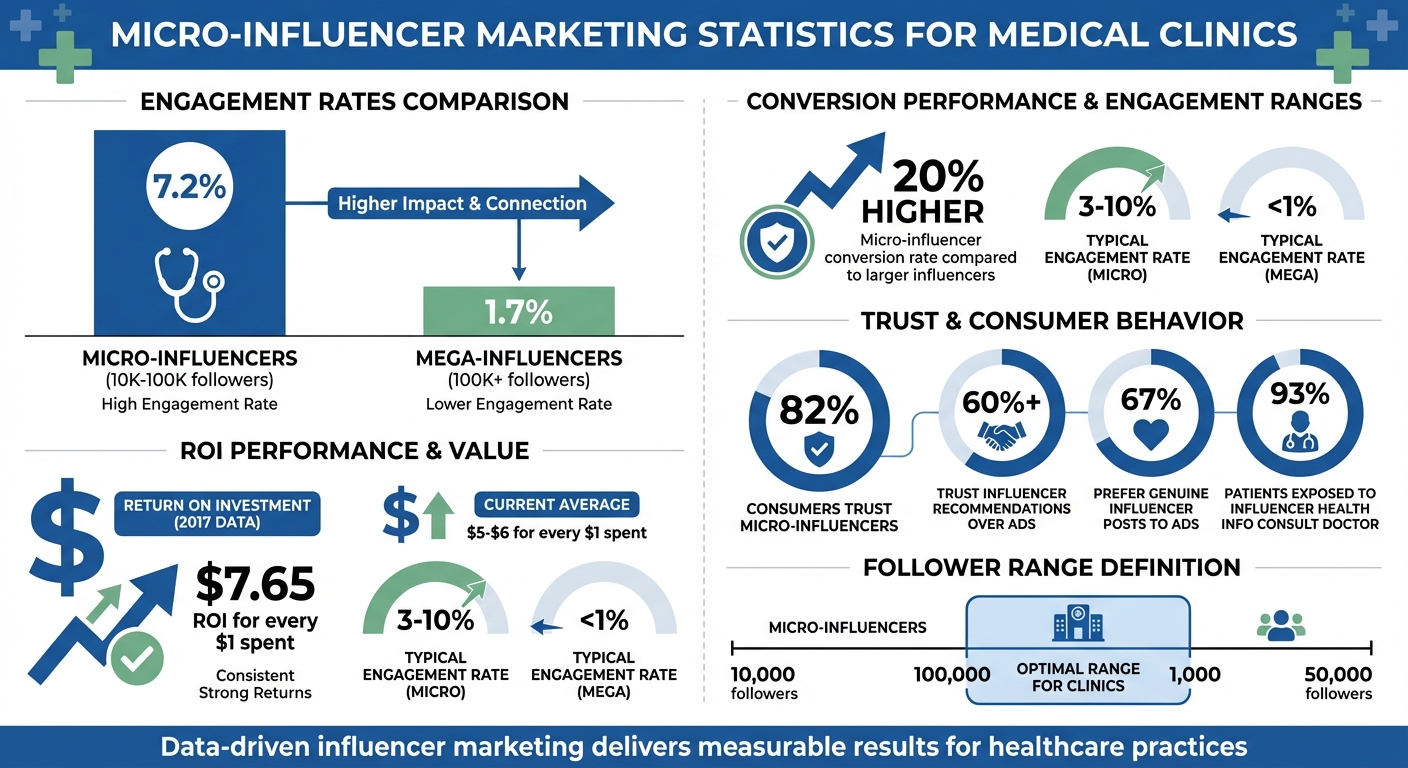
Struggling to reach new patients with traditional ads? Micro-influencers - social media creators with 10,000–100,000 niche followers - can help. They’re affordable, deliver high engagement (7.2% vs. 1.7% for mega-influencers), and drive real results, with up to $7.65 ROI for every $1 spent. By sharing personal treatment stories, they build trust and encourage local patients to visit your clinic.
Here’s how you can use micro-influencers to grow your clinic:
- Find the right influencers: Prioritize engagement, local followers, and alignment with your brand.
- Offer free treatments: Let influencers share their full experience to attract leads.
- Create co-branded campaigns: Collaborate on content that resonates with their audience.
- Show results: Use before-and-after visuals to demonstrate effectiveness.
- Focus on local reach: Partner with influencers near your clinic for better conversions.
- Track performance: Use promo codes and landing pages to measure ROI.
- Build lasting relationships: Work with top-performing influencers for seasonal campaigns.
Micro-influencers excel at turning social engagement into patient appointments, but tracking results is essential. Use tools like promo codes and practice management software to measure success and refine your campaigns.
Micro-Influencer Marketing Statistics for Medical Clinics
1. Find and Vet Influencers Who Match Your Brand
Choosing the right influencers is essential for generating leads and safeguarding your clinic’s reputation. Here’s how to identify the best fit for your brand.
Audience Engagement and Authenticity
When it comes to influencers, a large follower count doesn’t always translate to meaningful engagement. Micro-influencers, for instance, often see engagement rates of 3–10%, while mega-influencers typically fall below 1%. The quality of interaction matters more than the numbers - check comments to ensure followers are genuinely engaging.
Chris Zelig, Founder & CEO of Medstar Media, emphasizes this point:
"Relevance always beats reach. Prioritize microinfluencers with fewer than 50K followers, a 5–10% engagement rate, and local followers who ask real questions."
To verify an influencer’s audience and authenticity, request their media kit and analytics report. Look at key demographics and assess how often they post sponsored content - too many ads can feel inauthentic. Tools like Social Blade can help you spot suspicious follower spikes, which may suggest purchased followers.
Once you’ve confirmed solid engagement, the next step is ensuring the influencer’s audience is in the right location.
Geographic Proximity to Your Clinic
For local businesses like medical spas, an influencer’s audience must align geographically. If 80% or more of their followers aren’t local, their influence may not translate into results for your clinic. As Chris Zelig explains:
"If you're a medspa in Scottsdale, a microinfluencer from New York won't do much for your bottom line. This strategy only works when the influencer's audience overlaps with your geographic service area."
To find influencers with a local following, use city-specific hashtags and geotag searches. You can also ask your staff or patients which local influencers they follow for beauty or wellness advice. For medical spas, influencers like “mommy bloggers” with 3,000–5,000 followers often work well because their lifestyle and audience align closely with target patients.
Content Quality and Alignment with Branding
After confirming engagement and location, review the influencer’s content to ensure it fits your brand. Their aesthetic should match your clinic’s identity. For example, if your clinic emphasizes natural-looking results, partnering with someone known for dramatic transformations could confuse your audience. Be sure to check recent posts, including Reels and Stories, since video content tends to drive higher engagement.
Jenny Robinson, Owner of Skin Body Soul, advises:
"Seek out the Instagrammers who have audiences matching your desired patient base."
Avoid influencers whose style or messaging doesn’t align with your target audience.
Additionally, look at competitors’ social media to find influencers who already engage with similar brands. Search hashtags like #HydrafacialNYC or #BotoxAtlanta to discover creators discussing treatments you offer. You might even find micro-influencers among your loyal patients by reviewing your customer database.
2. Provide Free Treatments for Real Patient Stories
Offering free treatments to influencers is a powerful way to generate authentic content. These influencers often share their entire patient journey, addressing common concerns and answering questions along the way. This transparency resonates with audiences - over 60% of consumers trust influencer recommendations more than traditional ads.
Focus on collaborating with micro-influencers who have between 1,000 and 50,000 followers. Why? Because they tend to have stronger connections with their audience and are seen as relatable rather than overly polished or corporate. Their endorsements feel more like advice from a trusted friend. As Kate Smith, RN, BSN, explains:
"Healthcare influencers... can amplify your practice's message to a larger audience and help you gain exposure to potential patients who may not have been aware of your services".
This combination of relatability and authenticity not only strengthens your clinic's brand but also directly attracts new patient leads. It's a win-win strategy that delivers results.
Measurable ROI and Conversion Tracking
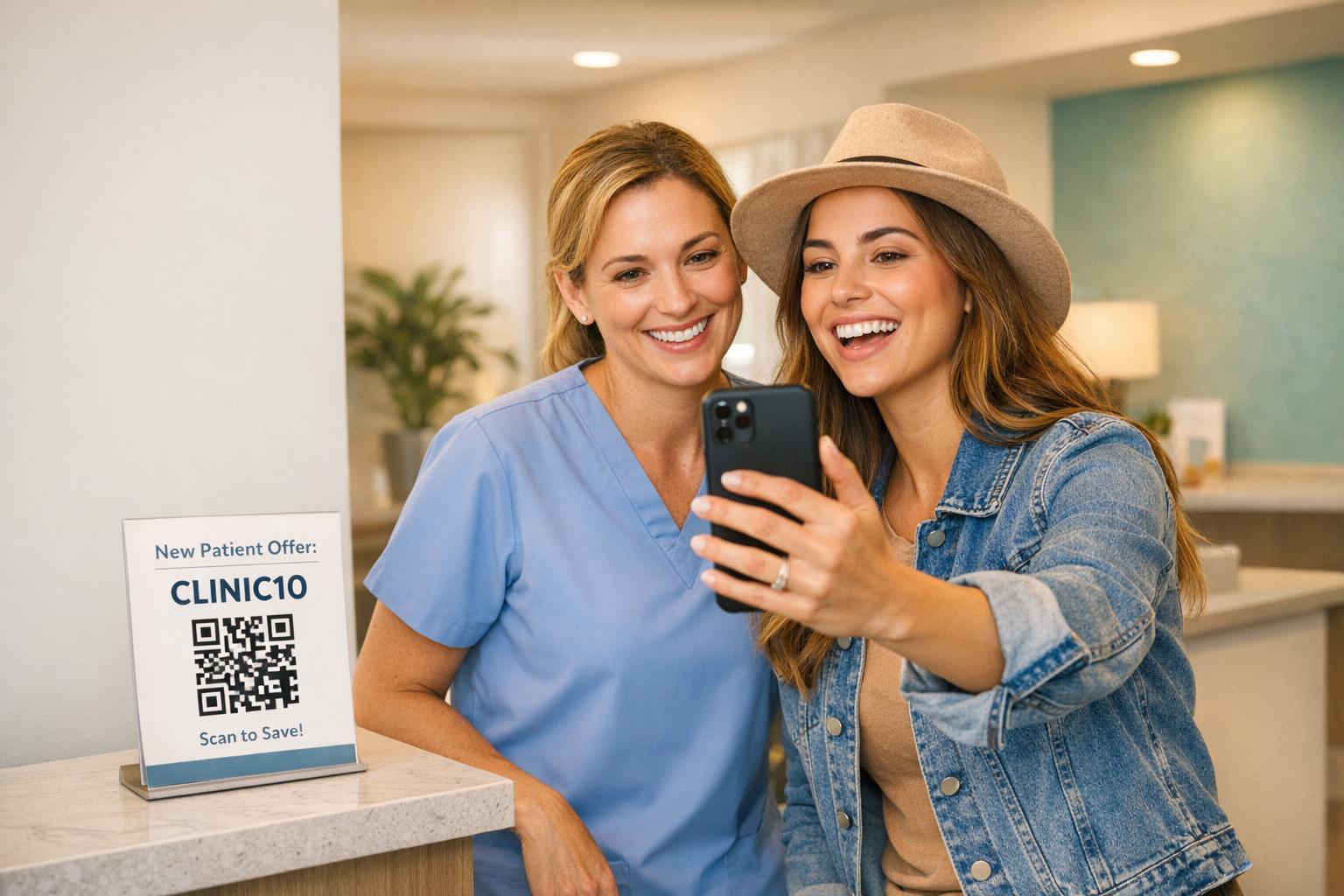
Free treatments aren't just a goodwill gesture - they're a smart investment. Influencer campaigns typically generate $5–$6 in revenue for every $1 spent. To measure success, you’ll need a clear tracking system. Assign unique promo codes or create custom landing pages for each influencer to monitor bookings tied to their content. Adding a "How did you hear about us?" question to patient intake forms can help capture referrals that don’t use a digital code.
For real-time insights, integrate conversion tracking tools into your practice management software, like Prospyr. As Chris Zelig, Founder & CEO of Medstar Media, puts it:
"If you can't track it, you can't scale it".
To stretch your budget further, repurpose influencer content for ads, email campaigns, or treatment pages. This approach not only boosts ROI but also provides instant social proof - 85% of businesses already use this tactic to cut production costs.
To ensure success, set clear expectations before offering complimentary treatments. Specify how many Stories, Reels, and before-and-after posts you’d like them to share. You might also consider incentivizing them with a commission for bookings made through their unique code. As Medstar Media emphasizes:
"When influencers have skin in the game, they work harder. They engage their audience, answer questions, and share multiple times, not just once".
3. Create Co-Branded Content and Joint Campaigns
Using influencer partnerships, clinics can create co-branded content to strengthen patient engagement and build trust in their brand.
Co-branded content succeeds because it combines your clinic's expertise with the influencer's genuine voice. The key is to let influencers craft the story while staying within your brand's guidelines. As Rave Health explains:
"Co-create, don't script. Give influencers creative freedom within clear boundaries. Their authentic voice is what makes this work".
Engaging Audiences Through Real-Time Interaction
One way to connect with your audience is by hosting a "Treatment Takeover." Allow an influencer to take control of your Instagram Stories for a day, documenting their visit to your clinic and answering questions as they go. Instagram Live sessions can also be a great tool for real-time interaction, where followers can ask questions and get answers on the spot as the influencer shares their experience.
Maintaining Brand Identity in Influencer Content
To ensure content reflects your clinic’s image, provide influencers with a simple one-page guideline. Include details about your brand’s aesthetic, tone, and core messaging - whether you're aiming for a luxurious, nurturing, or bold vibe. For instance, if your clinic focuses on natural enhancements, it’s important to collaborate with influencers who align with that vision and avoid promoting extreme transformations. Jenny Robinson, Owner of Skin Body Soul, highlights the importance of working with selective influencers:
"The Instagrammers who seldom make recommendations are taken more seriously by their following. Your campaign will receive more traction if you work with someone who is not frequently selling to their followers".
Once the content matches your branding, track its performance to ensure you're getting the most out of the campaign.
Tracking Results and Maximizing Campaign Value
To stretch the impact of co-branded content, repurpose it across various platforms like ads, email campaigns, and web pages. For example, a Southeast regional hospital saw impressive results from a weeklong Instagram Reels campaign. It boosted mammogram page traffic by 47% and generated 312 appointments. Use integrated tracking tools to monitor engagement and refine your approach for better ROI.
4. Use Before-and-After Visual Stories
Using real patient experiences paired with before-and-after visuals provides undeniable proof of your clinic’s results. These visuals resonate because they feature real people, not generic stock images. When a local influencer shares their treatment journey, it adds an extra layer of credibility and trust.
Audience Engagement and Authenticity
The best visual stories don’t stop at a simple photo comparison. Documenting the entire treatment process - from the initial consultation to the final recovery - helps potential patients understand what to expect. This kind of storytelling feels genuine and relatable, offering a clear picture of the journey.
Why does this work so well? Because people trust real experiences. Over 60% of consumers say they trust influencer recommendations more than traditional ads. When influencers share specifics - like how many sessions were required or how long recovery took - it adds credibility and builds trust in your clinic.
Content Quality and Branding Consistency
To maintain professionalism, ensure all visuals meet a consistent standard. Share a simple one-page guide with influencers covering essentials like lighting, camera angles, neutral backgrounds, and patient positioning. This ensures your clinic’s results are presented accurately and professionally.
Transparency is equally important. Every post should clearly detail the procedure performed, the number of sessions, and the time between the "before" and "after" shots. Influencers should also clarify whether the "after" image shows immediate results or the final healed outcome. This level of detail helps set realistic expectations for potential patients while reinforcing your clinic’s reliability.
Tracking Results and Maximizing ROI
Once your visuals align with your branding, it’s time to measure their impact. Assign unique promo codes (e.g., SARAH20) or create custom landing pages (e.g., yourclinic.com/sarah) for each influencer. This allows you to track bookings directly tied to their content. On average, brands earn $5–$6 for every $1 spent on influencer campaigns.
Don’t stop there - repurpose the best-performing visuals across other marketing channels. With the influencer’s permission, use these stories in ads, emails, and even on your treatment pages. Authentic, relatable content can boost trust and stretch your marketing dollars further.
5. Partner with Local Influencers for Geographic Reach
Geographic Proximity to Your Clinic
When it comes to connecting with your local audience, partnering with influencers from your area can make all the difference. The key here isn’t about finding influencers with the biggest follower count - it’s about finding those who are geographically close to your clinic. For example, a Scottsdale-based clinic won’t see much benefit from an influencer whose audience is largely in New York.
Local influencers, particularly those with smaller followings (500–5,000 followers), are often seen as trusted voices in their communities. They can effectively reach nearby residents and professionals, making your outreach more targeted. To locate these influencers, try searching for city-specific hashtags like #AtlantaInfluencer or #SacramentoBlogger. You can also confirm their location by checking their profile bios and recent posts. This hyper-local approach not only ensures your message reaches the right people but also encourages authentic engagement.
Audience Engagement and Authenticity
Smaller, local followings tend to deliver higher engagement. In fact, micro-influencers often achieve engagement rates that are 60% higher than those of larger influencers. Their recommendations feel more like genuine advice than a paid endorsement, which makes a huge difference when it comes to building trust.
Imagine a local influencer documenting their entire experience at your clinic - from walking through the doors to undergoing treatment and sharing their recovery updates. This type of storytelling provides authentic social proof, helping to ease any concerns potential patients might have.
Here’s a real-world example: In February 2020, Jenny Robinson, owner of Skin Body Soul, a multi-location medical spa, shared that her clinic regularly gained 5 to 10 new patients with each micro-influencer campaign. Her strategy involved offering free services to local lifestyle and "mommy" bloggers in Sacramento in exchange for Instagram posts and stories. Similarly, Chris Zelig at SKINNEY Medspa in New York City leveraged local influencers to share their treatment journeys, turning authentic experiences into a steady stream of new clients.
Measurable ROI and Conversion Tracking
To ensure your efforts pay off, track the results of each influencer partnership. Use unique promo codes (like JANE20) or custom landing pages to measure how well each campaign converts engagement into actual appointments.
Local influencers are often open to exchanging posts for free or discounted treatments, making this approach cost-effective. For even better results, consider using an integrated practice management platform like Prospyr. Tools like this help you seamlessly connect conversion tracking with patient management, ensuring that the buzz created by influencers translates directly into booked appointments.
sbb-itb-02f5876
6. Set Up Trackable Conversion Methods
Measurable ROI and Conversion Tracking
Once you've established genuine connections with patient leads, the next step is making sure your efforts are measurable. Effective conversion tracking is what separates a successful influencer campaign from wasted marketing dollars. As Chris Zelig, Founder & CEO of Medstar Media, puts it:
"If you can't track it, you can't scale it. When you know which influencers are generating real revenue, you can invest more in the right ones".
To make this happen, assign unique promo codes (like SARAH15) to each influencer and create custom landing pages (such as yourclinic.com/sarah) paired with UTM parameters. These parameters help track traffic and conversion data, giving you a clear picture of how each influencer is performing. For instance, adding UTM parameters to influencer links allows you to monitor visitor behavior through Google Analytics.
In 2017, businesses saw an average return of $7.65 for every dollar spent on influencer marketing. While current estimates hover around $5–$6 per dollar, micro-influencers continue to outperform their larger counterparts with a 20% higher conversion rate.
For offline tracking, include a simple "How did you hear about us?" question on intake forms. You can also align influencer incentives with your goals by offering performance-based compensation. For example, paying a $50 commission for every $250 gift card sold or consultation booked through their unique link ensures their success directly benefits your bottom line.
To streamline this process, integrate these tracking strategies into your practice management system. Tools like Prospyr make it easy by embedding conversion tracking into your patient management system. You’ll be able to tag new bookings to specific campaigns, calculate cost per lead (CPL), and identify which influencers are driving actual appointments - not just likes and comments.
7. Build Long-Term Influencer Relationships and Seasonal Campaigns
Audience Engagement and Trust
Long-term partnerships with influencers do more than just generate buzz - they help build trust over time, which is key for sustained results. A single post might grab attention, but consistent content creates a deeper connection with the audience. As Medstar Media puts it:
"The true power of microinfluencer marketing lies in repetition and relationship. A single post might spark curiosity, but consistent content builds trust".
By fostering these ongoing relationships, influencers naturally evolve into brand ambassadors. Their authentic engagement can turn casual interest into booked appointments.
Tracking Results and Driving Conversions
To make the most of influencer partnerships, identify top performers through detailed tracking. Once you know who’s delivering results, offer them long-term incentives, like commission-based rewards (e.g., $50 for every $250 gift card sold), and incorporate seasonal promotions to keep campaigns fresh.
Seasonal campaigns are a great way to create urgency. Pair an influencer’s personal story - like "I’m getting this done for the holidays" - with exclusive discounts for their followers. These timely offers work seamlessly with ongoing influencer efforts. Plus, established partners can jump into action quickly for holiday promos, new product launches, or VIP events, skipping the need for lengthy onboarding.
To maintain consistency across campaigns, provide your long-term influencers with a one-page brand guideline. This should cover your aesthetic preferences, HIPAA compliance requirements, and FTC disclosure rules. While these guidelines ensure professionalism, they also leave room for influencers to bring their authentic voice into the mix.
Tools like Prospyr simplify the process of evaluating which ambassadors deliver the best ROI. This allows you to focus your resources on proven partners instead of constantly searching for new influencers. It’s a smarter way to maximize your marketing efforts.
How to Measure and Optimize Your Influencer Campaigns
Once you've secured strong influencer partnerships, the next step is making sure your campaigns deliver measurable results. The real success of influencer marketing lies in patient visits - not just social media likes. As Chris Zelig, Founder & CEO of Medstar Media, explains:
"If you can't track it, you can't scale it. When you know which influencers are generating real revenue, you can invest more in the right ones".
With this revenue-driven focus, your metrics should capture every stage of the patient journey.
Track metrics that lead to conversions. Assigning each influencer a unique promo code (like "SARAH20") or a custom landing page (clinic.com/sarah) allows you to identify exactly who is driving bookings. Keep an eye on Cost Per Lead (CPL) and Cost Per Acquisition (CPA) to evaluate the return on investment (ROI) for each influencer compared to traditional advertising. These numbers help you determine which partnerships are truly driving results, not just engagement.
Once you've set up these tracking tools, integrate them with your practice management system for deeper insights.
Sync campaign data with your practice management system. Whenever a patient books through an influencer's link, tag that booking in Prospyr with the influencer’s name. This creates a seamless connection between the influencer’s post and the revenue it generates. You can also automate follow-up reminders for leads referred by influencers, calculate the Lifetime Value (LTV) of these patients, and see which influencers are making the biggest impact. Using secondary verification methods can further ensure your data's accuracy .
Consider the full patient journey. Influencer marketing doesn’t always lead to immediate bookings - followers might save your clinic’s profile and schedule weeks later. Tools like Google Analytics, combined with your practice management software, can help you track these delayed actions. For example, monitor clicks to your booking page or other small engagements that may eventually lead to conversions . While an engagement rate above 6% is excellent for micro-influencers, the ultimate goal is turning those engaged followers into paying patients.
Once you've collected meaningful performance data, you can amplify your campaign's success by reusing the most effective content.
Leverage top-performing content for ongoing results. If an influencer’s before-and-after story generates strong bookings, repurpose that content for your Facebook ads, email campaigns, or even treatment pages on your website. This strategy helps extend the value of a single post, creating lasting social proof that continues to drive results long after the campaign ends.
Conclusion
Micro-influencers have a unique ability to build trust, connect with the right patients, and drive tangible results. With engagement rates ranging from 4.5% to 8% and generating $5 to $6 in revenue for every $1 invested, they deliver outcomes that go far beyond vanity metrics like likes or comments. In fact, 82% of consumers trust micro-influencers, making them a powerful tool for turning casual followers into actual patients. These numbers highlight the potential for a strategic, data-focused approach to influencer marketing.
A well-thought-out strategy - spanning influencer selection to tracking ROI - sets the stage for scalable success. Start small with a pilot campaign, evaluate the results, and expand partnerships that prove profitable. Tools like unique codes and custom landing pages can help directly tie influencer posts to patient appointments. As Chris Zelig from Medstar Media aptly states:
"If you can't track it, you can't scale it. When you know which influencers are generating real revenue, you can invest more in the right ones - and part ways with those who aren't converting."
This kind of data-driven approach ensures you're focusing on influencers who genuinely impact your bottom line.
It’s also important to note that influencer marketing results often take time. Patients may interact with a post today but book their appointment weeks or even months later. By measuring both immediate bookings and long-term patient value, you can better understand the full impact of your campaigns. For instance, 93% of patients exposed to influencer health information consult their doctor about it, proving that these efforts create lasting awareness well beyond the initial interaction.
At the heart of successful campaigns is authenticity. Patients are drawn to real stories from real people rather than overly polished ads. In fact, 67% of consumers prefer genuine influencer posts to traditional advertisements. By prioritizing long-term relationships with influencers who share your clinic’s values, you’ll not only generate a steady flow of patient leads but also strengthen your reputation within the community.
FAQs
How can I find the best micro-influencer for my clinic?
To find the perfect micro-influencer for your clinic, start by defining your ideal patient profile. Think about factors like age, gender, location, and specific wellness or aesthetic interests. Next, focus on influencers with follower counts between 1,000 and 100,000 who frequently share content about beauty, health, or wellness - topics that resonate with your target audience. Micro-influencers often deliver higher engagement and more localized reach than their larger counterparts.
When narrowing down your options, pay close attention to their engagement rate - ideally between 3% and 6% - and make sure their followers are real and relevant to your market. Be cautious of influencers with sudden follower spikes, generic comments, or audiences that fall outside your clinic's geographic or demographic focus. Also, review their content to ensure their style, tone, and values align with your clinic's brand. Finally, verify that they adhere to FTC guidelines for disclosures and use HIPAA-compliant messaging to safeguard patient privacy.
Here’s a quick checklist to simplify your search:
- Audience fit: Ensure their followers are local and match your patient demographics.
- Engagement quality: Look for a 3-6% engagement rate with authentic interactions.
- Authenticity: Avoid influencers with fake followers or inconsistent posting habits.
- Brand alignment: Check that their content style and values reflect your clinic's image.
- Compliance: Confirm they follow FTC disclosure rules and use HIPAA-safe practices.
By following these steps, you’ll be able to collaborate with micro-influencers who not only complement your clinic’s brand but also help attract and engage new patients effectively.
How can I effectively measure the ROI of influencer campaigns?
To evaluate the ROI of influencer campaigns, start by giving each influencer their own UTM link or discount code. These tools let you monitor clicks, leads, bookings, and revenue tied directly to their contributions. Once you have this data, compare the revenue generated against your campaign expenses to gauge profitability. Analytics tools can also help by linking sales and appointment data to the traffic brought in by each influencer. This method offers a clear picture of how well your campaigns are performing and equips you with the insights needed to plan smarter collaborations in the future.
Why is it important to choose influencers who are local to your clinic?
Partnering with local influencers is a smart way to connect with people in your clinic's service area. Their audience is already nearby, which makes their recommendations feel more personal and relevant. This kind of local connection not only builds trust but also encourages more people to visit your clinic, increasing the chances of turning potential patients into actual ones. Plus, local influencers often have a good grasp of the community’s preferences, making it easier to form meaningful connections with future patients.