7 Time Slot Optimization Tips for Med Spas
Cut no-shows and boost revenue with tailored durations, buffers, provider matching, block scheduling, 24/7 booking and analytics.
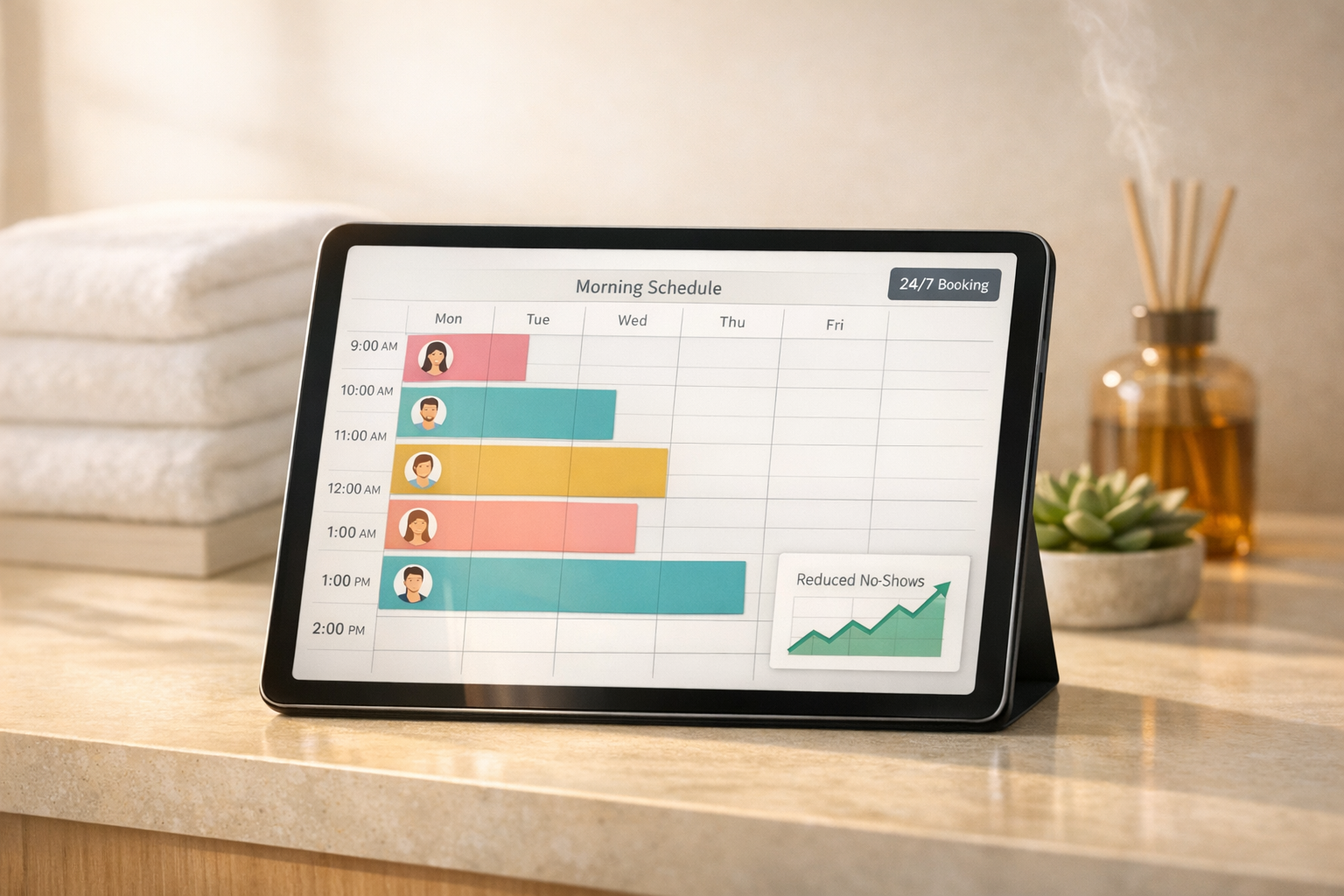

7 Time Slot Optimization Tips for Med Spas
Empty appointment slots are costing med spas up to $150,000 annually. Poor scheduling practices lead to no-shows, double bookings, and inefficiencies that frustrate clients and hurt your bottom line. But here's the good news: smarter scheduling strategies can increase revenue by 120% and reduce no-shows by 90%.
Here are 7 practical ways to optimize your med spa's schedule:
- Set custom service durations to avoid wasted time and overbookings.
- Add buffer times to prevent delays from snowballing.
- Match providers to services based on qualifications.
- Group similar treatments to streamline operations.
- Offer 24/7 online booking for client convenience.
- Reserve peak slots for VIPs to secure reliable revenue.
- Use analytics to identify trends and refine your approach.
Every empty slot equals lost revenue - up to $196 per hour. By fine-tuning your scheduling system and using tools like automated reminders or waitlists, you can eliminate inefficiencies, improve client satisfaction, and maximize profitability.
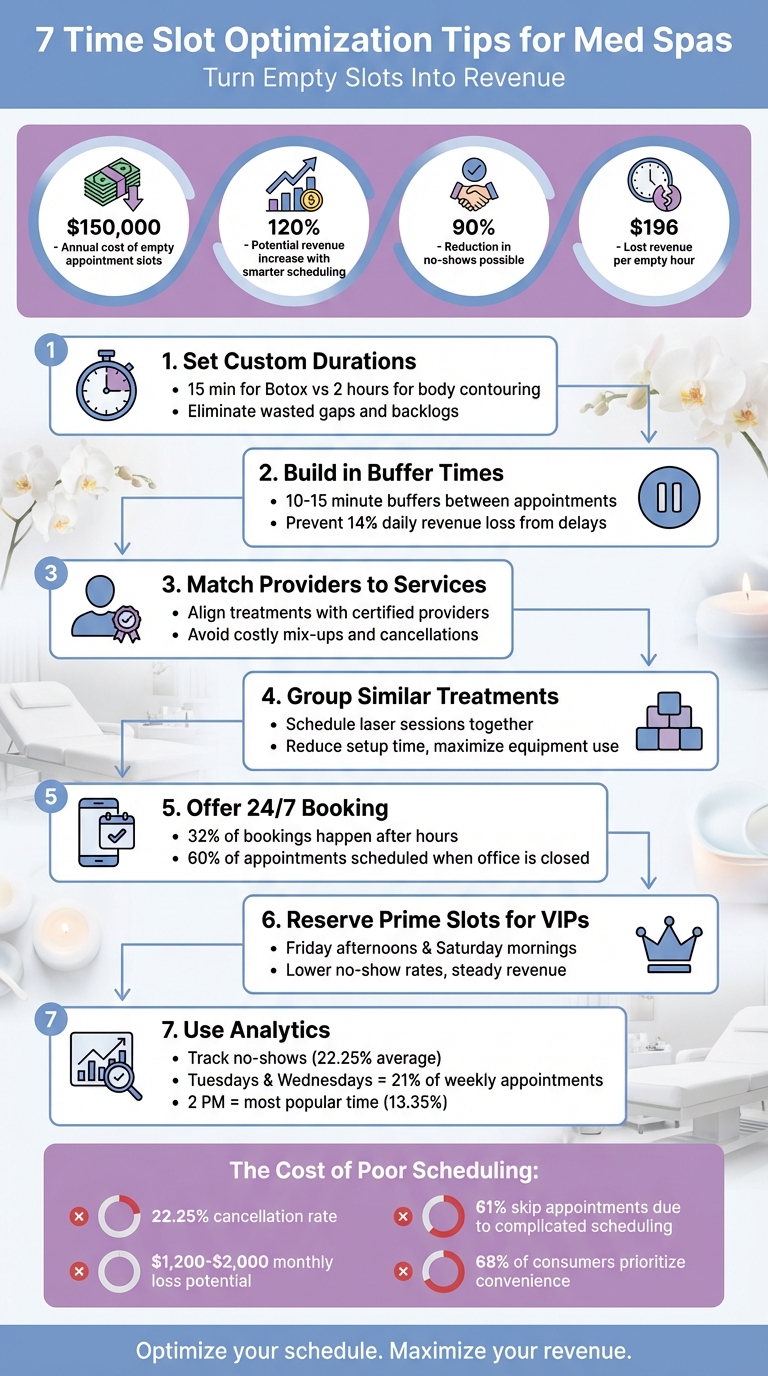
Med Spa Time Slot Optimization: 7 Tips to Increase Revenue and Reduce No-Shows
1. Set Custom Durations for Each Service
Not all treatments are created equal. A quick Botox touch-up might take just 15 minutes, but something like body contouring could stretch to 2 hours. Using a one-size-fits-all approach to scheduling can lead to wasted time slots or, worse, a backlog of appointments that throws your entire day off track.
"If you treat every appointment the same length, you'll quickly run into overtime or underutilized gaps." - Workee
To avoid these issues, tailor the duration of each service. Factor in not just the procedure itself but also the prep and cleanup time. For instance, laser treatments often involve setting up equipment, sanitizing the room, and sometimes waiting for machinery to cool down. Other procedures might include additional steps, like allowing numbing cream to take effect. This level of precision helps keep your schedule running smoothly and ensures no time is wasted.
Efficiency in Reducing Downtime
Customizing service durations takes the guesswork out of scheduling. When you know exactly how long each treatment takes, you can plan appointments back-to-back without creating unnecessary gaps or overwhelming your staff. It’s all about keeping things efficient.
Enhancing Client Experience
Nobody likes waiting, especially when it feels like the business is poorly managed. If your spa runs late consistently, clients may lose trust. By setting realistic time blocks, practitioners can work at a comfortable pace, and clients feel like they’re receiving personalized care - not being rushed through an assembly line.
Impact on Revenue Generation
Every empty time slot in your schedule represents potential revenue slipping away - sometimes as much as $196 or more per hour. By fine-tuning your scheduling system with accurate service durations, you can make the most of every provider’s time. Consider auditing your current service times, creating default durations, and adding a 10–15-minute buffer where necessary. This approach doesn’t just improve scheduling; it turns it into a strategy for boosting revenue.
sbb-itb-02f5876
2. Build in Automatic Buffer Times
Customizing service durations is a great way to maximize efficiency, but adding buffer times is what truly keeps your schedule running smoothly. Even with the best planning, unforeseen delays - like late clients or longer-than-expected treatments - can throw off your entire day. Without these built-in pauses, a single delay can snowball, disrupting every appointment that follows.
"Building in short buffer periods between appointments - ensuring that a 60-minute facial doesn't actually consume a 75-minute slot - is a simple tweak that prevents running late for the next client." - Ihor Bauman, Author, Workee
Buffers are short, intentional breaks - usually 10 to 15 minutes - between appointments. These gaps allow time for essential tasks like cleaning treatment rooms, preparing equipment, or updating client records. For treatments involving lasers or other high-tech devices, the buffer ensures proper cooldown periods. These small adjustments not only keep operations flowing but also contribute to a better experience for both clients and staff.
Efficiency in Reducing Downtime and Enhancing Client Experience
Buffer times act as a safety net for your schedule. If one appointment runs over, the buffer absorbs the extra time, preventing delays from cascading through the rest of the day. This keeps your team from feeling rushed and ensures that every client gets the attention they deserve. A well-timed schedule creates a calm, professional environment, which is exactly what clients expect when they visit a med spa. And when appointments start and end on time, clients notice - and they appreciate it.
Impact on Revenue Generation
Buffer times don’t just save your schedule - they protect your bottom line too. Missed appointments and poorly managed schedules can lead to an average 14% loss in daily revenue for medical practices. By adding realistic transition times, you can ensure that every appointment is completed without overworking your staff or frustrating your clients. These gaps also give you the flexibility to handle late arrivals or last-minute consultations without throwing off the rest of the day.
Using med spa software like Prospyr makes it easy to automate buffer times. This ensures your workflow stays efficient and stress-free, keeping both your clients and your team happy.
3. Match Provider Availability to Services
Fine-tuning your scheduling system by matching providers to their specific qualifications is a game-changer for precision and efficiency. Not every provider is equipped to handle every service - for instance, an RN certified in laser hair removal won't necessarily perform injectables like Botox or dermal fillers. Ignoring these distinctions in your booking system can lead to mix-ups, cancellations, and frustrated clients.
"A great system will automatically present only the valid time slots for each treatment (and each provider), avoiding those costly mix-ups." - Workee
By configuring your booking platform to align treatments with certified providers, you eliminate the risk of scheduling errors. For example, it ensures clients aren’t booked for a laser treatment when only your injector is available or double-booking laser appointments when you have just one machine. This proactive approach minimizes human error, keeps your schedule running smoothly, and creates a better experience for your clients - all while boosting your revenue potential.
Efficiency in Reducing Downtime
When provider schedules align with their certifications, you avoid wasted time slots and unnecessary rescheduling. Booking a client with an unqualified provider often means scrambling to rearrange appointments, leaving gaps in your calendar that could’ve been filled by another client. Automating provider-specific booking rules ensures realistic and profitable scheduling, saving time and reducing costly disruptions.
Ability to Enhance Client Experience
Matching clients with the right specialist from the start builds trust and reinforces professionalism. Imagine a client arriving for a treatment only to be told their provider isn’t qualified - that kind of scenario damages your reputation and erodes confidence. Streamlining the process with digital intake forms ensures all certifications and consent are verified before they even walk through the door. On the flip side, a seamless match demonstrates attention to detail and care, creating a premium experience that clients value. This level of service fosters loyalty, and repeat clients often account for 80% of med spa revenue.
Impact on Revenue Generation
Just as custom service durations and buffers protect your bottom line, pairing providers with the right services ensures you’re maximizing every appointment. Your top specialists can focus on the treatments they’re certified for, driving up revenue per hour. Scheduling gaps and missed appointments contribute to a 14% loss in daily revenue for medical practices. Platforms like Prospyr allow you to set provider-specific rules and link equipment to services, preventing double bookings and keeping operations efficient. With automated provider matching, your practice can maintain a steady schedule while setting the stage for even greater improvements.
Reading about the problem? See how Prospyr solves it in one platform.
Book a Demo4. Group Similar Treatments in Blocks
After optimizing service durations and matching providers to clients, block scheduling takes your workflow to the next level. By grouping similar procedures together, you can cut down on wasted time and simplify your operations. For example, scheduling all laser hair removal sessions in the morning or organizing injectable treatments in the afternoon reduces the need for frequent room reconfigurations. This approach not only saves time but also protects your revenue and ensures a smoother experience for both staff and clients. In essence, grouping treatments is a smart way to boost efficiency while improving client satisfaction.
Efficiency in Reducing Downtime
Switching between vastly different procedures - like a quick Botox session followed by a lengthy body contouring treatment - can disrupt workflow and drain productivity. Grouping similar treatments keeps your staff focused and "in the zone", enabling them to work more efficiently. It also helps avoid scheduling mishaps, such as double-booking a laser machine. Assigning specific time blocks for treatments that share resources - like designating a "laser block" for a trained nurse - reduces last-minute adjustments and internal conflicts, keeping your day running smoothly .
Enhancing Client Experience
Clients value their time, and nothing is more frustrating than waiting because a prior appointment ran long. With block scheduling, treatments that require preparation - like applying numbing cream or warming up equipment - are timed so that clients are ready right when the practitioner is. This synchronization creates a seamless visit, ensuring clients leave satisfied. It also supports proper sanitation protocols, a key safety measure. Plus, a well-organized schedule may even reduce no-shows, as 61% of patients have admitted to skipping appointments due to scheduling hassles. A smooth, predictable schedule not only makes clients happy but also directly impacts your bottom line.
Impact on Revenue Generation
Idle rooms and unused equipment can cost up to $196 per slot, leading to a potential 14% daily revenue loss. Block scheduling helps you make the most of your high-value equipment and specialized spaces, ensuring they’re utilized throughout the day. This approach allows providers to focus on revenue-generating activities instead of wasting time on constant setup and cleanup. Tools like Prospyr can help by restricting certain services to specific rooms or machines, preventing overbooking and aligning your schedule with resource availability. The result? Less downtime and more consistent profitability.
5. Offer Flexible Booking Windows
These days, clients expect to book appointments whenever it’s convenient for them - often late at night when a quick tap on their phone is all it takes. If your booking system isn’t available 24/7, you’re likely missing out on potential appointments. Here’s why it matters: 32% of online spa and salon bookings happen outside normal business hours, and nearly 60% of medical practice appointments are scheduled when the office is closed. A round-the-clock booking option ensures you’re always open for business, even when your doors are shut.
Efficiency in Reducing Downtime
Every empty slot in your schedule is a missed opportunity. In fact, an unfilled appointment can cost up to $196 per slot. Flexible booking windows, especially when paired with an automated waitlist, can help you recover that lost revenue. Imagine this: a client cancels late on a Tuesday. Instead of leaving that slot empty, your system can instantly notify waitlisted clients, filling the gap in no time. Interestingly, Tuesdays between 8–10 PM and Sundays between 4–6 PM are peak booking times, periods when your front desk is probably closed. With an automated system, you can capitalize on these high-demand windows without lifting a finger.
Enhancing Client Experience
Convenience is king when it comes to client satisfaction. Sixty-eight percent of consumers say convenience is a top factor when choosing a med spa, and 61% of patients have skipped appointments because scheduling was too complicated. By offering an easy-to-use online booking system, you’re making life simpler for your clients. Whether they’re scheduling, rescheduling, or joining a waitlist, the process can often be completed in under two minutes - no waiting on hold required. This ease of use has a direct impact: 75% of patients are more likely to show up if they can easily reschedule online. It’s not just about filling your calendar; it’s about building loyalty through a frictionless experience.
Impact on Revenue Generation
Flexible booking doesn’t just make things easier for your clients - it’s a smart way to boost revenue. A prominently placed "Book Now" button on your website, Instagram bio, or Google My Business profile ensures you’re capturing interest wherever your clients are looking. Tools like Prospyr take it a step further with AI-powered booking systems that work 24/7. This means you can turn interest into confirmed appointments - even while you sleep. It’s a simple yet effective way to make sure no opportunity slips through the cracks.
6. Reserve Prime Slots for VIPs and Members
Your most loyal members and VIP clients deserve access to the best time slots on your schedule. Friday afternoons and Saturday mornings - prime booking hours - can be reserved exclusively for these high-value clients. This ensures a steady flow of appointments while reducing the risk of idle time.
Efficiency in Reducing Downtime
Reserved slots for VIPs not only keep your peak hours filled but also help avoid costly gaps in your schedule. VIP clients tend to have lower no-show rates compared to occasional visitors, making them a reliable choice for these premium time blocks. By prioritizing these clients during peak hours, you minimize last-minute cancellations and protect your revenue. Automated tools can make this process seamless, allowing your team to focus on patient care rather than managing schedules.
Enhancing Client Experience
Priority booking is a clear way to show VIPs they’re valued. Membership clients expect perks, and early or exclusive access to prime slots delivers a benefit they can see and appreciate. Automated notifications can alert these clients about available premium slots before they’re offered to the general public. Some practices even go a step further by offering dedicated portals for VIPs, where they can view and book exclusive time slots that don’t appear on the main scheduling page. This extra touch creates a concierge-like experience that makes clients feel special.
Impact on Revenue Generation
Strategically reserving high-demand slots for VIPs and members helps boost revenue by ensuring repeat visits and minimizing appointment gaps. Analytics can identify the time blocks that generate the most income, allowing you to align these slots with your most profitable services and clients. Tools like Prospyr simplify membership management by segmenting clients and automating priority bookings, so your VIPs always have first dibs - without adding extra work for your staff.
7. Use Analytics to Monitor and Refine
Using data to guide your decisions can help you fine-tune appointment scheduling and boost your revenue. By keeping an eye on booking patterns, no-shows, and other trends, you can identify problem areas that might be costing your med spa money. For instance, about 22.25% of med spa appointments end in cancellations, which could amount to a monthly loss of $1,200–$2,000.
When paired with smart scheduling strategies, analytics can significantly improve your operations and profitability.
Efficiency in Reducing Downtime
Metrics can reveal gaps in your schedule. For example, Tuesdays and Wednesdays are the busiest days, each accounting for 21% of weekly appointments, while Sundays trail behind with just 5%. Additionally, 2 p.m. is the most popular time for appointments, representing 13.35% of start times. By tracking these trends, you can align staffing levels and service availability to match demand.
No-show rates are another area where analytics can make a big difference. Industry averages show that 17–22% of appointments result in no-shows, but this can drop to 8–12% with combined text and email reminders. Analytics can also flag specific services or time slots prone to cancellations, allowing you to implement strategies like deposit requirements or automated waitlists to fill last-minute openings.
These insights not only improve efficiency but also help create a more tailored client experience.
Enhancing the Client Experience
Analytics don’t just streamline scheduling - they also elevate the client journey. For example, personalized reminders perform 48% better than generic ones, leading to higher appointment conversion rates. Timing your marketing campaigns based on data can also increase their impact.
Rebooking trends are another goldmine of information. While the average repeat visit rate is 47%, clinics that send automated follow-ups within 24–48 hours after treatment can raise this rate to 61–67%. Tools like Prospyr provide analytics to track these patterns and automate follow-ups, ensuring clients rebook while the experience is still fresh.
Impact on Revenue Generation
Analytics play a key role in optimizing revenue. Tracking conversion rates - how many inquiries turn into booked appointments - can reveal how effective your front desk or AI tools are at securing clients. Data on which services generate the most repeat visits can also guide decisions about how to allocate prime time slots or adjust your service menu to meet demand.
Complicated booking processes can quietly drain revenue. For example, booking flows with more than four steps lose up to 40% of new visitors, while pages that redirect users off-site see a staggering 91% mobile bounce rate. Simplifying the process - keeping it to two steps or fewer and embedding it directly on your site - can boost booking completions by 35%, turning more web traffic into confirmed appointments and stronger cash flow.
Conclusion
Effective time slot management isn't just about organizing appointments - it’s about turning scheduling challenges into growth opportunities. By focusing on strategies like customizing appointment durations, adding buffer times, aligning providers with appropriate services, and leveraging data for ongoing improvements, you’re tackling inefficiencies head-on while boosting client satisfaction.
Every empty slot equals lost revenue, and missed appointments cost healthcare providers a staggering $150 billion annually. Many cancellations happen simply because the scheduling process feels too complicated. These are recurring problems that smarter scheduling practices can solve.
"The number one key to filling up your schedule is this very simple thing: tracking your rebooking rates and having a rebooking culture in your Med Spa." - Katlin Cauffman, Industry Expert
To make these strategies work, you need the right tools. Prospyr equips med spas with everything needed to streamline scheduling and maximize efficiency. With features like automated SMS and email reminders to reduce no-shows, integrated analytics to uncover revenue opportunities, and tools for managing custom service durations, buffer times, waitlists, VIP slots, and deposits, Prospyr simplifies the process while tracking the metrics that matter most.
FAQs
How do I figure out the right time length for each service?
When scheduling med spa services, it's crucial to factor in treatment guidelines and recovery times. For instance, fillers typically require at least 5 days for swelling to diminish, with full results visible after 2 weeks. Similarly, Botox treatments take around 2 weeks for the effects to fully develop. By following these timelines and reviewing specific protocols, you can ensure proper scheduling and achieve the best results - particularly when preparing for special events.
What’s a good buffer time between appointments in a med spa?
Allocating a buffer of 10 to 15 minutes between appointments can make a big difference, particularly for high-risk or complex procedures. These short breaks enable smoother transitions, give patients time to recover, and help handle any unexpected delays. Adding these intervals into the schedule can ease stress, address disruptions more effectively, and keep operations running smoothly.
Which scheduling metrics should I track to reduce no-shows?
To reduce no-shows, focus on tracking essential scheduling metrics such as no-show rates, appointment trends, and client retention. Keeping an eye on no-show rates can reveal patterns and help assess how well your strategies are working. This data gives you the insight needed to refine and improve your scheduling processes effectively.