Virtual Good Faith Exams (GFEs) are a legally required step before many aesthetic treatments, such as Botox or dermal fillers, to ensure patient safety and compliance with state regulations. These exams, conducted by licensed professionals (MDs, DOs, NPs, or PAs), assess a patient’s suitability for treatment and establish a valid patient-provider relationship. Virtual GFEs offer a convenient alternative to in-person exams, using HIPAA-compliant video platforms to streamline the process.
Key Points:
- Purpose: Verify patient safety and meet legal requirements for treatments involving prescription drugs or medical devices.
- Process: Conducted via live video, following the SOAP format (Subjective, Objective, Assessment, Plan).
- Compliance Risks: Non-compliance can lead to fines ($5,000–$50,000 per violation), license suspension, and malpractice claims.
- State-Specific Rules: Regulations vary by state, including requirements for live video and provider licensing in the patient’s location.
- Technology: Platforms must meet HIPAA standards, integrate with EMRs, and support detailed documentation.
Virtual GFEs save time, reduce patient drop-off rates, and improve practice efficiency but require strict adherence to legal and documentation standards to avoid penalties.
What Are Good Faith Exams in Aesthetic Practices?
A Good Faith Exam (GFE) is a legally required, procedure-specific medical evaluation carried out by a licensed healthcare professional - such as an MD, DO, NP, or PA. The purpose? To determine whether a patient is a safe candidate for a particular aesthetic treatment. This step is not just about confirming suitability; it lays the groundwork for safe and compliant care.
GFEs follow the SOAP format, which stands for Subjective history, Objective findings, Assessment of suitability, and Planning for treatment, including obtaining informed consent. These evaluations are typically brief, lasting anywhere from 4 to 15 minutes, with some virtual exams taking as little as 4 minutes.
Proper documentation is essential - not just for patient safety but also for legal protection. Christopher Seitz, MD, CEO and Chief Medical Officer at Guardian Medical Direction, underscores this point:
"If your note wouldn't satisfy board standards as a complete SOAP note, it won't hold up as a Good Faith Exam note either".
How Good Faith Exams Protect Patient Safety and Ensure Compliance
GFEs play a dual role: they safeguard patients and reduce legal risks. By identifying contraindications - like blood thinners or autoimmune conditions - these exams help prevent complications. From a compliance perspective, a well-documented GFE is non-negotiable. Failing to perform or document one properly can lead to hefty regulatory fines, ranging from $5,000 to $50,000 per violation. Sam Pondrom, JD, Partner at ByrdAdatto, puts it clearly:
"The good-faith exam is essentially the first step on the patient-care path toward maintaining the standard of care in the physician-patient relationship".
In the event of a malpractice claim, thorough documentation serves as critical evidence that appropriate medical judgment was exercised before proceeding with treatment.
When Are Good Faith Exams Required?
GFEs are mandatory for any treatment that involves the use of prescription drugs or medical devices. This includes a range of procedures, such as:
- Botox injections
- Dermal fillers
- Laser treatments
- Microneedling
- IV therapy
- Chemical peels
- Medical weight loss programs using GLP-1 medications
A new GFE is also required when introducing a treatment that a patient has not previously undergone. For example, switching from Botox to laser resurfacing would necessitate a fresh evaluation, as each procedure carries its own risks and contraindications.
For returning patients, it’s advised to conduct a new GFE at least once a year - or sooner if there’s a significant change in health status. A real-world example: In January 2026, a wellness clinic offering peptides and GLP-1 weight loss treatments implemented structured GFE screening protocols. This approach revealed that 19% of patients needed additional lab work before being cleared for therapy, resulting in zero adverse events. On the other hand, non-medical services - like facials that don’t involve skin penetration or prescription drugs - don’t require a GFE.
How to Conduct Virtual Good Faith Exams

4-Step Virtual Good Faith Exam Process for Aesthetic Practices
To conduct a virtual Good Faith Exam (GFE) effectively, you’ll need the right technology, thorough documentation, and strict adherence to regulatory guidelines. Here's how to approach the process step by step.
Technology Requirements for Virtual GFEs
Your virtual exam platform must meet HIPAA and other legal standards. This means using encryption-protected, synchronous telemedicine tools that allow live audio-visual interaction and integrate seamlessly with your EMR system. Most states mandate real-time video communication where you can see and hear the patient, rather than relying solely on text or images. For instance, Texas requires live audio and video, while California permits limited asynchronous elements under tightly controlled conditions if prior examinations are documented.
The platform should also integrate with your EMR to log key details like exam notes, intake forms, and timestamps. Patient identity verification tools are essential to confirm who the patient is and their physical location - this is especially important because you must hold a medical license in the state where the patient is located during the exam. Additionally, the system should include digital consent management to capture and store informed consent before starting the exam. Lastly, ensure the platform supports creating detailed patient-specific orders (PSOs) instead of generic clearance forms.
Christopher Seitz, MD, CEO and Chief Medical Officer at Guardian Medical Direction, highlights the importance of comprehensive documentation:
"If a vendor hands you a 'GFE template' that looks more like a waiver than a chart note, that's a red flag. A compliant exam note should be indistinguishable from any other SOAP note in your practice."
Once your technology is set up and compliant, you’re ready to conduct a virtual GFE.
Step-by-Step Process for Virtual GFEs
-
Pre-Call Preparation
Have the patient complete digital intake forms before the video consultation. These forms should integrate directly into your EMR to minimize errors and flag any contraindications - like the use of blood thinners or autoimmune conditions - before the live consultation begins. -
Live Consultation
Begin the video call by verifying the patient’s identity and location. Then, proceed with the evaluation using the SOAP format:- Subjective: Record the patient’s symptoms, goals, and medical history.
- Objective: Document visual assessments of treatment areas and any patient-reported vitals.
- Assessment: Evaluate the patient’s suitability for the proposed treatment.
- Plan: Outline the specific treatment plan, including dosage and any precautions.
-
Post-Consultation Documentation
After the consultation, obtain informed consent specific to both the virtual nature of the exam and the intended treatment. Your documentation should be as detailed as it would be for an in-person visit. Dr. Seitz emphasizes this point:"A Good Faith Exam is simply a patient evaluation, and the documentation should look exactly like any other SOAP note."
-
Finalize and Store Records
Create a patient-specific order with detailed treatment instructions and securely store all records - including timestamps - within your HIPAA-compliant system.
State Regulations for Virtual Good Faith Exams
As virtual Good Faith Exams (GFEs) become more common, understanding state-specific rules is critical for staying compliant and ensuring patient safety. While telemedicine is permitted across all 50 states, not every state allows it to establish a patient–provider relationship on its own. For instance, Tennessee and Arkansas require an in-person consultation for first-time patients before virtual exams can take place.
Even in states that allow virtual GFEs, the rules vary. Most states require live, synchronous video communication - meaning real-time audio and video interaction. California, however, permits limited asynchronous elements, but only under strict conditions and with thorough documentation.
Another key requirement: providers must hold a medical license in the same state as their patient during the exam. Some states also impose restrictions on where medical directors can be located. For example, in Alabama, Mississippi, Missouri, South Carolina, and Georgia, the medical director must reside within state borders.
Regulations are constantly evolving. In January 2025, the Arkansas Nursing Board clarified that the term "Good Faith Exam" is not recognized in its Nurse Practice Act. The board also raised concerns about virtual exams lacking proper follow-up or adherence to prescribing standards. This reflects a broader regulatory shift away from informal industry terms like "Good Faith Exam" toward emphasizing legally documented patient–provider relationships that meet the same care standards as in-person visits.
Because laws governing telemedicine and medical spas change frequently, practices should review their compliance at least every six months. What is permissible today could change tomorrow, so staying ahead helps protect both patients and the practice.
In-Person vs. Virtual GFEs: What's Different
The main difference between in-person and virtual Good Faith Exams lies in how patients are assessed. In-person exams allow providers to physically examine the patient, using techniques like palpation, percussion, and auscultation to measure vitals and assess treatment areas directly. Virtual exams, on the other hand, rely on what the provider can observe through a screen and information reported by the patient. Despite these differences, the standard of care remains the same. If a virtual exam cannot adequately address a patient’s needs, an in-person visit is required.
Bradford E. Adatto, JD, Partner at ByrdAdatto, highlights a key advantage of telemedicine:
"Telemedicine allows the physician or mid-level providers to be away from the facility and still see the patient before they are treated."
This flexibility allows providers to operate across multiple locations or even states, potentially lowering staffing and operational costs. However, this convenience comes with strict compliance demands. Virtual GFEs require meticulous documentation, including SOAP notes, timestamped logs, and HIPAA-compliant storage, just like in-person visits.
Here’s a quick comparison of the two approaches:
| Feature | In-Person GFE | Virtual (Telemedicine) GFE |
|---|---|---|
| Assessment | Physical examination, palpation | Visual and audio-visual evaluation |
| Standard of Care | Same as in-person visits | Must match in-person standards |
| Convenience | Requires patient travel | Accessible from home on any device |
| Scalability | Limited by physical space | Supports remote, multi-state setups |
| Documentation | Physical chart or EMR | HIPAA-compliant, timestamped logs |
While virtual GFEs offer convenience and scalability, they must meet the same rigorous standards as in-person exams. Cutting corners on documentation or technology can lead to serious legal consequences.
sbb-itb-02f5876
Maintaining Compliance and Avoiding Legal Risks
Virtual Good Faith Exams bring convenience, but failing to meet compliance standards can jeopardize your entire practice. With state medical boards paying closer attention to aesthetic practices, the consequences of non-compliance can escalate quickly. Beyond fines, the risks include losing licenses, damaging your reputation, and facing legal action. Understanding the common pitfalls and their potential ramifications is critical for safeguarding your patients and business.
Common Compliance Problems
One of the most frequent compliance issues involves unqualified personnel conducting exams. Only licensed professionals such as MDs, DOs, NPs, or PAs are authorized to perform Good Faith Exams. RNs, estheticians, and unlicensed staff are not permitted to diagnose, prescribe, or establish patient-provider relationships. Christopher Seitz, MD, CEO and Chief Medical Officer at Guardian Medical Direction, underscores this point:
"RNs cannot independently perform GFEs or establish standing orders. They may assist with documentation, but the clinical decision must always come from a licensed provider."
Another common issue is insufficient documentation. Many practices rely on basic checklists or waivers, which often fall short of board requirements. A compliant exam must include a full SOAP note (Subjective, Objective, Assessment, Plan) that thoroughly documents the patient’s medical history, physical findings via video, clinical assessment, and a detailed treatment plan. Without this level of documentation, practices risk failing regulatory reviews.
Technology-related gaps also create compliance risks. Most states mandate live video communication for these exams, and relying solely on asynchronous methods like forms, texts, or phone calls often fails to meet the standard for establishing a valid patient-provider relationship. If physical signs such as skin texture or swelling can't be adequately evaluated through a virtual platform, the exam should be escalated to an in-person visit. These lapses in technology use, documentation, and personnel management can lead to severe legal consequences.
Legal Consequences of Non-Compliance
The legal stakes for non-compliance are high. Operating outside legal boundaries can result in license suspensions, significant fines, and even lawsuits from patients. For example, in 2025, the Arkansas Nursing Board issued a clarification stating that "Good Faith Exam" is not recognized under the Nurse Practice Act and highlighted improper practices around prescribing standards. This reflects a growing trend toward stricter enforcement across states.
Non-compliance can also draw attention from the DEA, especially when controlled substances are involved in treatments like hormone replacement therapy or weight loss programs. Additionally, malpractice insurers may deny coverage if proper documentation fails to establish a valid patient-provider relationship.
Beyond legal risks, there are financial implications. Compliance issues can lower your practice’s valuation, especially during acquisitions. Buyers often flag these problems, which can significantly reduce the practice’s worth. With the med spa industry valued at $20 billion, it’s clear that regulatory scrutiny is only increasing.
Virtual exams are held to the same standard of care as in-person visits. As noted in the AAFP Legal Requirements:
"A physician providing telehealth medical services shall owe to the patient the same duty to exercise reasonable care, diligence, and skill as would be applicable if the service or procedure were provided in person."
This means shortcuts in virtual settings are not an option. Practices must regularly review and update their compliance protocols - ideally on an annual basis - to stay ahead of evolving regulations.
Using Prospyr to Manage Virtual Good Faith Exams
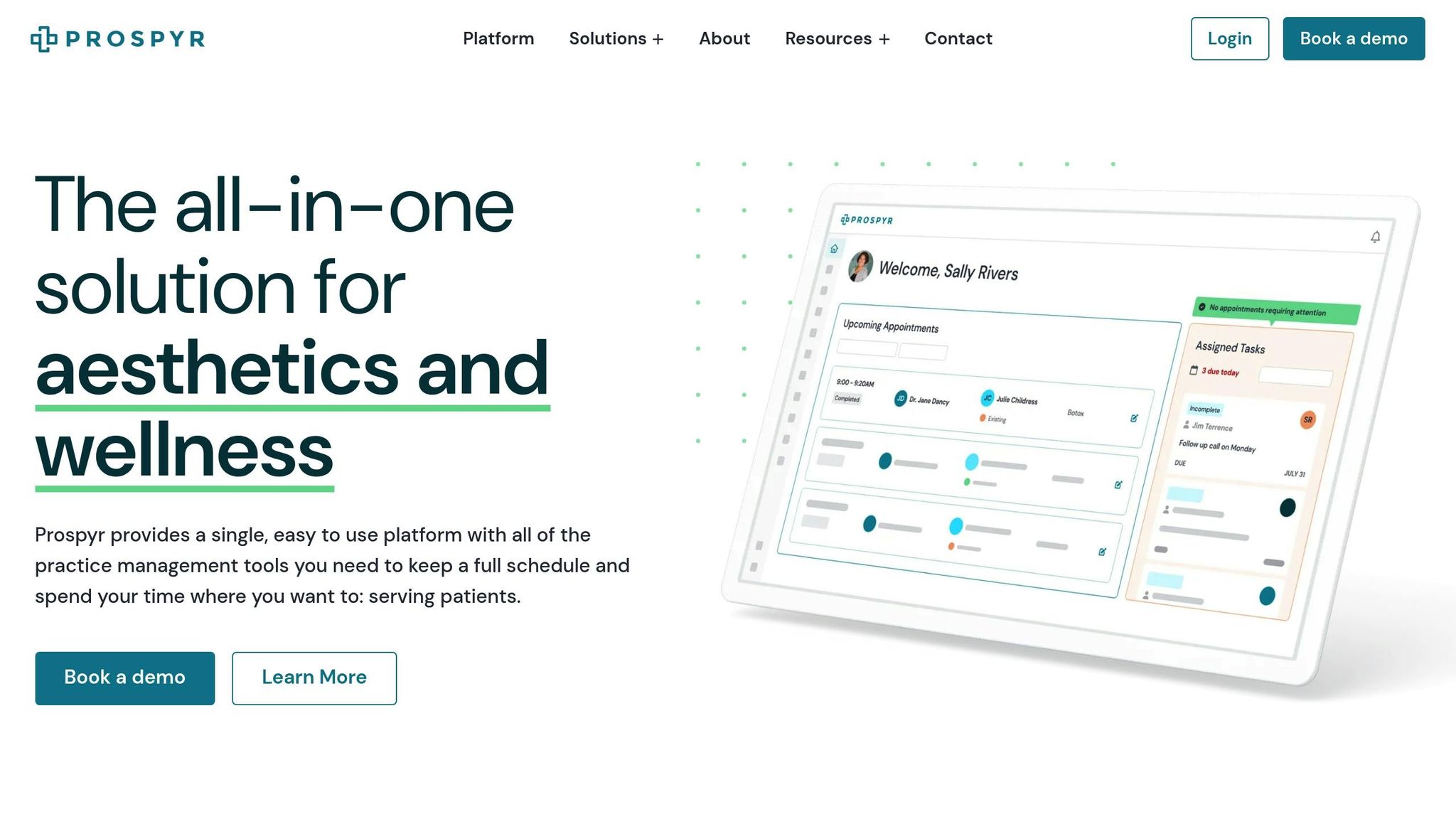
Managing virtual Good Faith Exams (GFEs) can be a complex process, especially when compliance, documentation, and scheduling need to align with strict regulatory standards. Prospyr simplifies this process by offering a HIPAA-compliant platform tailored to aesthetic and wellness practices. It provides tools that centralize and streamline virtual GFE management, addressing common challenges like incomplete records or juggling multiple systems.
By automating critical tasks and ensuring accurate documentation at every step, Prospyr helps practices stay compliant while reducing the risk of errors. Its centralized EMR system consolidates patient data, exam notes, and treatment plans, minimizing the chance of missing required details during audits. Let’s take a closer look at how Prospyr makes managing virtual GFEs seamless.
Prospyr's Features for Virtual GFE Compliance
Prospyr starts with customizable digital intake forms that collect detailed patient information before the virtual exam. These forms gather essential details like medical history, current medications, allergies, and consent documentation. All data flows directly into the EMR system, cutting down on manual entry and reducing the likelihood of mistakes.
The platform also includes AI-powered tools for creating structured SOAP notes (Subjective, Objective, Assessment, Plan). This ensures that documentation meets required standards while saving time. To protect sensitive patient information, Prospyr employs encryption, role-based access controls, and audit trails, creating a secure environment for data management.
But Prospyr doesn’t stop at compliance - it also enhances practice efficiency with features that simplify scheduling and task management.
Improving Practice Workflow with Prospyr
Prospyr improves the flow of virtual GFE management by automating key processes. For example, it uses appointment triggers to ensure scheduling only happens after a valid exam is documented. It also assigns tasks for follow-ups and compliance deadlines, keeping everything on track. Practice analytics pinpoint workflow bottlenecks, helping your team strengthen compliance and improve efficiency.
The platform also ensures no GFE falls through the cracks. It can send reminders when a patient’s GFE is nearing expiration, prompting the practice to schedule a new exam before treatments continue.
On top of that, Prospyr’s email and SMS communication tools keep patients in the loop. These tools send reminders about exam requirements, appointments, and pre-visit instructions, making the entire process smoother for both the practice and the patient.
Conclusion
Virtual Good Faith Exams (GFEs) play a critical role in safeguarding patients, ensuring compliance, and streamlining operations for aesthetic and wellness practices. At the heart of these exams lies the importance of establishing a valid Patient-Provider Relationship (PPR) through thorough and accurate documentation - not just ticking boxes. As Christopher Seitz, MD, CEO and Chief Medical Officer at Guardian Medical Direction, emphasizes:
"Buzzwords don't protect your license. Compliance with valid PPR standards does."
There are a few key points to keep in mind: only licensed practitioners are authorized to conduct these exams, and documentation must adhere to full SOAP note standards. Many states require synchronous video during virtual exams, and the process must include a detailed review of the patient’s medical history, risk factors, and a specific treatment plan. Cutting corners or delegating tasks to unqualified staff risks serious consequences such as license revocation, regulatory penalties, and denied malpractice claims.
Fortunately, advancements in technology have made compliance more manageable than ever. Specialized platforms simplify the process, reducing patient drop-off and ensuring adherence to state-specific regulations. These tools automate intake procedures, eliminate manual data entry errors by integrating with EMRs, and streamline exam clearance. One such solution is Prospyr.
Prospyr addresses common challenges like documentation, compliance tracking, and workflow management. It combines digital intake, AI-generated SOAP notes, automated scheduling, and compliance monitoring into a single HIPAA-compliant platform. Features like reminders for exam expirations and automated patient communications help practices stay on track while improving efficiency.
When conducted properly, virtual GFEs do more than just meet regulatory requirements - they help identify health risks, provide defensible documentation, and support scalable growth. By upholding high standards for patient care, compliance, and operational efficiency, practices can turn virtual exams into a strategic advantage, protecting both their patients and their business.
FAQs
What do I need to know to stay compliant when conducting virtual Good Faith Exams?
To stay compliant with virtual Good Faith Exams (GFEs), it’s crucial to follow legal and regulatory standards that prioritize patient safety and maintain professional licensure. A licensed healthcare provider - such as an MD, DO, NP, or PA - must conduct the exam, as RNs are not permitted to diagnose conditions or prescribe treatments. The process requires valid patient consent and should include steps like verifying the patient’s identity, reviewing their medical history, performing a visual or audio-visual evaluation, and documenting everything thoroughly to meet the standard of care.
State-specific telemedicine laws also play a key role, as requirements often differ. Some states require synchronous video communication, detailed clinical documentation, and strict compliance with scope of practice regulations. Skipping steps - like using blanket orders or generic disclaimers - can lead to compliance problems, audits, or even malpractice risks. By following these guidelines, you can ensure that your virtual GFEs meet legal requirements while delivering high-quality patient care.
How do state regulations affect virtual Good Faith Exams?
State regulations heavily influence how virtual Good Faith Exams (GFEs) are carried out, and the rules vary widely across the United States. In some states, telemedicine-only consultations are permitted, but only if specific conditions are met. These might include verifying the patient’s identity, conducting visual or audio-visual evaluations, and ensuring thorough documentation of the exam. On the other hand, certain states require in-person exams or mandate live video communication to meet legal standards.
These laws also dictate who is qualified to perform GFEs. Typically, this responsibility is restricted to licensed physicians, nurse practitioners, or physician assistants. Registered nurses (RNs), however, are generally not allowed to diagnose or prescribe medications. During the COVID-19 pandemic, many states temporarily adjusted their telemedicine laws to allow for greater flexibility. Because these regulations can change, it’s crucial for healthcare practices to stay informed about their state’s current rules to ensure compliance and avoid legal complications.
What tools are needed to ensure a compliant virtual Good Faith Exam?
To carry out a virtual Good Faith Exam within compliance guidelines, you'll need a few key tools:
- Secure audio-visual communication tools for real-time interaction.
- Patient identity verification systems to confirm the individual’s identity.
- Electronic medical record (EMR) software to ensure accurate documentation.
- Digital consent forms to meet legal and regulatory requirements.
Platforms like Prospyr can simplify this process, helping you handle these requirements while improving the overall experience for your patients.