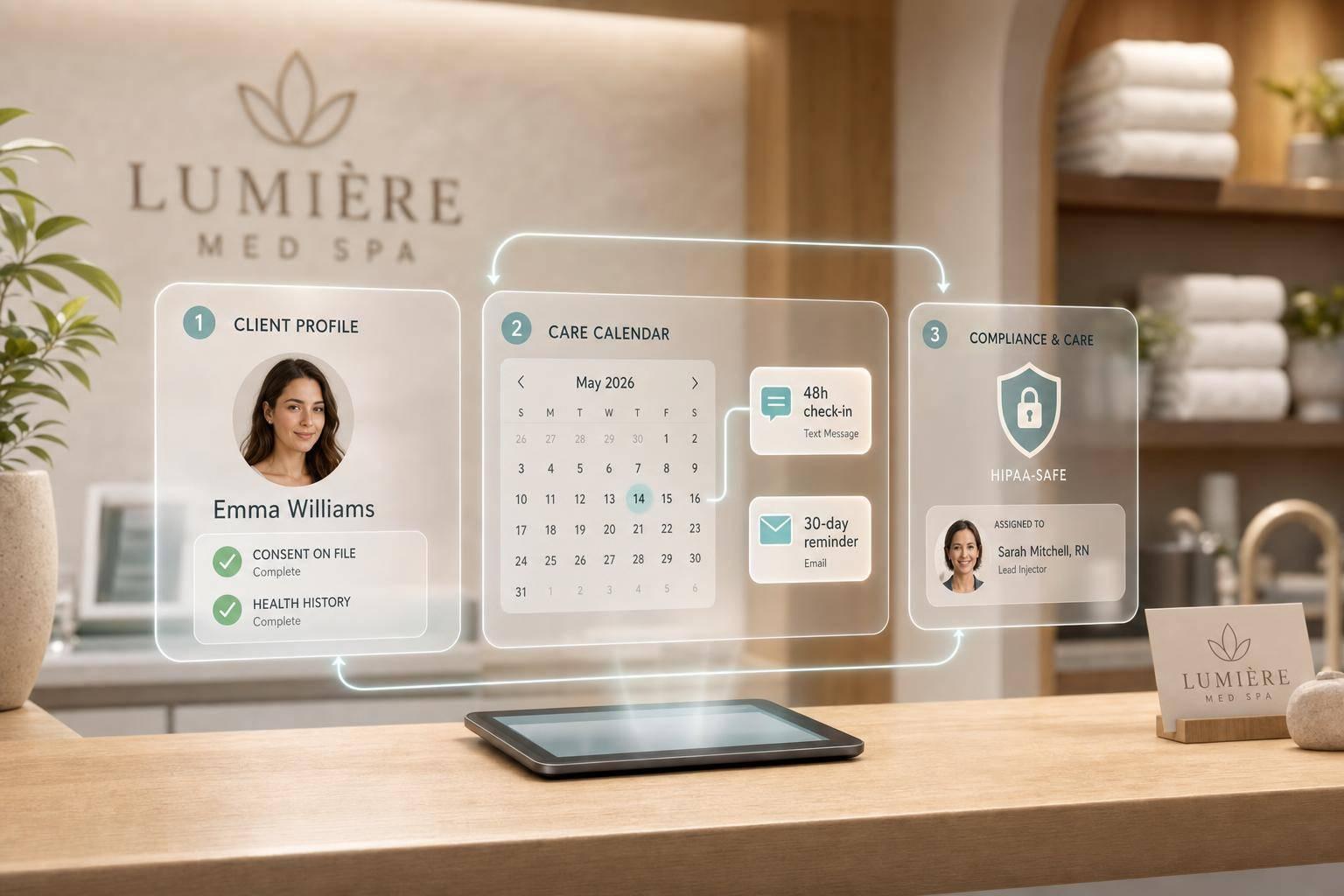

HIPAA compliance is critical for any aesthetic practice looking to grow. It ensures patient data is protected, avoids hefty fines (ranging from $50,000 to $2 million per violation), and keeps operations running smoothly across multiple locations. However, expanding your practice - especially across state lines - adds layers of complexity to compliance.
Key takeaways:
- Sensitive Data: Aesthetic practices handle facial imaging, treatment records, and payment details, all protected under HIPAA.
- Multi-Location Challenges: Each new location may require adjustments for state-specific rules, making standardized procedures a must.
- Technology Needs: Secure, encrypted EMR systems and HIPAA-compliant communication tools are essential.
- Frequent Audits: Regular risk assessments and staff training help maintain compliance as regulations evolve.
Bottom line: Expanding without a solid HIPAA framework risks patient trust, steep penalties, and operational setbacks. Tools like Prospyr can simplify compliance management while supporting growth.

HIPAA Compliance Costs and Challenges for Multi-Location Aesthetic Practices
HIPAA Compliance Challenges When Expanding to Multiple Locations
Keeping Compliance Standards Consistent Across All Locations
Expanding to new locations doesn't mean your current HIPAA compliance measures will automatically apply. For example, a practice that's compliant in Wisconsin might need adjustments to meet the specific requirements of states like Illinois or Iowa, where physician supervision rules and licensing reciprocity can vary significantly.
To address this, creating standardized operating procedures (SOPs) is critical. These SOPs should cover medical protocols, employment practices, and compliance monitoring for every site. Assigning a dedicated HIPAA officer can help ensure these standards are consistently followed, even as regulations evolve.
It's also vital to have systems in place to track regulatory changes across different states. For instance, with stricter enforcement of Business Associate Agreements (BAAs) expected in 2025, you'll need to ensure every vendor handling patient data has a signed BAA in place. These proactive steps are key to maintaining secure data management across multiple locations.
Managing Patient Data Across Multiple Sites
Handling patient data across multiple sites requires a centralized and encrypted Electronic Medical Record (EMR) system. Updates to the HIPAA Security Rule in 2025 introduced tougher cybersecurity standards aimed at reducing risks like malware and data breaches. This means your EMR system should encrypt data both during transfers and while stored.
Physical security also plays a big role. Locked storage rooms, secured devices, and surveillance systems need to be in place and monitored at each location. Since each site has its own vulnerabilities, conducting regular audits is essential to identify and fix gaps - whether they’re administrative, technical, or physical - before they become major issues. And as telehealth becomes more common, these safeguards are just as important for practitioners working remotely.
Compliance for Remote Work and Virtual Consultations
For remote practitioners, maintaining patient privacy is non-negotiable. Consultations should always take place in private spaces to avoid accidental disclosures of Protected Health Information (PHI). Centralized protocols are just as important here as they are for multi-site management.
"Using a protected portal or messaging system for all patient communication is best practice." – Spakinect
Secure, HIPAA-compliant portals should be the standard for patient communications. Regular email simply isn’t secure enough for transmitting PHI. To further protect patient data, enforce strong password policies, implement two-factor authentication, and use kiosk mode on shared devices to block unauthorized access. Any device accessing patient information remotely must meet the same security standards as those in your main office. Additionally, HIPAA training should be refreshed at least every two years so staff are always up to date with the latest guidelines.
sbb-itb-02f5876
Technology Infrastructure for HIPAA-Compliant Expansion
Building a solid technology infrastructure is essential for ensuring HIPAA compliance as your practice grows.
Selecting HIPAA-Compliant Practice Management Software
Choosing the right HIPAA-compliant software is critical for securely managing electronic medical records (EMR) across multiple locations.
First, make sure every vendor you work with signs a Business Associate Agreement (BAA). Without it, you could face fines of up to $1.5 million per violation category.
Look for software with role-based access control (RBAC) to restrict staff access to only the patient information relevant to their specific roles. Continuous audit logs are another key feature, as they allow you to track who accessed or modified patient data, ensuring you're always prepared for compliance reviews.
In aesthetic practices, secure photo documentation is especially important. Before-and-after photos, when linked to patient records, are considered Protected Health Information (PHI). These must be stored in an encrypted system, not on personal devices or unsecured cloud storage. Tools like Prospyr cater specifically to aesthetics and wellness clinics. They integrate EMR, encrypted communication, and centralized data management within a HIPAA-compliant framework, making them a great choice for managing multi-location practices.
Be cautious of platforms that rely on third-party EMR plugins, as these can create compliance vulnerabilities. Additionally, confirm that the software uses AES-256 encryption for stored data and TLS 1.2 or higher for data in transit. With healthcare data breaches rising by more than 55% since 2020, these encryption standards are essential for protecting sensitive information.
By selecting the right software, you set the stage for secure and compliant communications across your expanding practice.
Setting Up Secure Communication Systems
Standard SMS and email are not secure enough for PHI communications. Instead, opt for encrypted, integrated portals.
A secure client portal built into your practice management software is an excellent solution. These portals allow patients to safely message your team, review treatment histories, access invoices, and upload or view before-and-after photos - all within a protected environment. As AestheticsPro puts it:
Secure messaging and communication make a client portal a valuable tool for practitioners and their clients.
For phone conversations, ensure you have clear authentication protocols in place. Always verify a patient’s identity before discussing any health-related information. Additionally, train your team to conduct sensitive conversations in private spaces to avoid unintentional disclosures.
When managing communications across multiple locations, centralize all interactions within your practice management system. This ensures patient communications are securely logged and consistently protected.
Using Centralized Data Systems Across Locations
A centralized EMR system is essential for maintaining consistent and compliant operations across different locations.
This approach simplifies compliance monitoring by unifying data handling, access controls, and risk management protocols. It’s particularly helpful for navigating state-specific regulations, as centralized systems can adapt more easily to varying requirements.
For practices with mobile staff or remote providers, choose software with offline functionality that securely syncs data once reconnected. If you’re considering international expansion, prioritize platforms that can support both HIPAA and GDPR compliance frameworks.
Investing in scalable, secure technology ensures your practice can grow without compromising patient data protection.
Data Security Protocols for Multi-Location Practices
Once your technology infrastructure is secure, the next step is to enforce robust data security protocols to protect patient information across all your practice locations. Here's how you can ensure compliance and safeguard sensitive data effectively.
Setting Up Access Controls
Start by implementing role-based access control (RBAC) to ensure employees only access the Protected Health Information (PHI) necessary for their specific roles. As Monica McCormack, Compliance Copywriter at Compliancy Group, explains:
The HIPAA Privacy Rule, in particular, requires employee PHI access to be restricted to the 'minimum necessary' that allows the individual to perform their job functions.
To strengthen security, assign unique login credentials to every employee and strictly prohibit password sharing. Incorporate multi-factor authentication (MFA), which combines at least two verification methods, such as a password paired with a mobile app code or biometric scan. For employees who work across multiple locations, consider using Single Sign-On (SSO) systems. These systems streamline access while maintaining strong two-factor authentication.
Regularly review access permissions and immediately revoke access for departing employees. Use centralized audit logs to monitor all login and logout activity across systems containing electronic PHI (ePHI).
Encrypting Patient Data and Communications
Encryption is critical for safeguarding PHI. Ensure all PHI is encrypted both at rest (stored on servers) and in transit (when being transmitted between locations). Avoid using standard email for PHI, as it is not secure. Instead, rely on protected portals or secure messaging systems for all patient communications.
Additionally, require all third-party vendors handling PHI to sign a Business Associate Agreement (BAA). These agreements outline the vendor's responsibility to maintain HIPAA compliance. Conduct regular technical risk assessments to evaluate how PHI is accessed, stored, and transmitted.
Conducting Regular Audits and Risk Assessments
While the Office of Civil Rights (OCR) performs periodic audits, it's essential to conduct your own internal HIPAA audits at least once a year. Review your documented policies and procedures bi-annually to ensure they align with any operational changes.
Designate specific HIPAA leads, such as a Security Officer or Privacy Officer, to oversee audits across different areas of your practice. These audits should verify the functionality of technical controls like encryption, MFA, and automatic log-off features. For practices with multiple locations, assess firewall configurations and network segmentation to ensure secure data transfers.
Real-world cases highlight the importance of these measures. In February 2026, Top of the World Ranch Treatment Center in Illinois paid a $103,000 settlement for failing to conduct a compliant Security Risk Analysis. Similarly, in March 2026, MMG Fusion LLC settled for $10,000 after a 2020 cyberattack exposed the PHI of 15 million patients due to inadequate risk assessments.
Ensure all Business Associate Agreements are current for any third-party vendors. Include physical security checks during audits, such as verifying secure PHI disposal bins, locked record cabinets, and visitor access controls. Conduct staff interviews to identify any gaps in HIPAA knowledge or practices. Finally, remember that HIPAA requires you to maintain documentation for at least six years from its creation or last effective date.
How to Achieve and Maintain HIPAA Compliance During Expansion
Expanding your aesthetic practice comes with its own set of challenges, especially when it comes to staying HIPAA compliant. To protect patient data and ensure smooth operations, you need to establish a solid compliance framework from the very beginning. Here's how you can tackle this effectively.
Performing a Compliance Assessment
Managing data across multiple locations can get tricky, which is why a comprehensive compliance assessment is essential every time you expand. Before opening a new location, conduct a detailed risk analysis of all electronic protected health information (ePHI) environments. As Healthcare Compliance Pros explains:
A HIPAA risk analysis must identify where ePHI is created, received, maintained, or transmitted; evaluate threats and vulnerabilities; determine likelihood and impact; and document findings in a way that ties directly to risk management activities.
This process should include an inventory of all systems and third-party connections. Look for potential technical vulnerabilities such as outdated software, firmware issues, or poorly configured cloud services. Document the likelihood and potential impact of each risk.
Physical security is just as important. Make sure all locations have private consultation spaces and secure access to devices. The Office of Civil Rights has already penalized over 50 HIPAA violations related to risk analysis failures as of January 2026. For example, one case involved a ransomware attack affecting 14,273 patients, resulting in a $90,000 settlement. If you're expanding across state lines, keep in mind that HIPAA compliance may vary by jurisdiction. Always perform a fresh risk analysis when making significant changes and work with IT experts to run regular vulnerability scans to keep patient data safe.
Creating Policies and Training Staff
Consistency is key when managing multiple locations. Develop clear standard operating procedures (SOPs) that can adapt to state-specific rules, such as differences in physician supervision requirements or scope of practice limitations. Adam Witkov from Michael Best underscores this point:
Maintaining consistent patient safety standards across multiple locations requires systematic approaches to training, supervision, and quality control.
Implement a structured training program to ensure all new hires receive the same foundational HIPAA and safety training. This minimizes the risk of compliance issues caused by inconsistent practices. Training should also focus on securely managing patient information between different locations. Schedule regular audits of your policies and procedures - ideally every six months - and set up systems to monitor changes in federal, state, and local regulations. With the aesthetic medicine market projected to hit $15 billion by 2026, staying ahead of regulatory changes is more important than ever.
Once your policies and training are in place, the next step is to invest in a centralized platform that supports HIPAA compliance.
Using HIPAA-Compliant Tools Like Prospyr
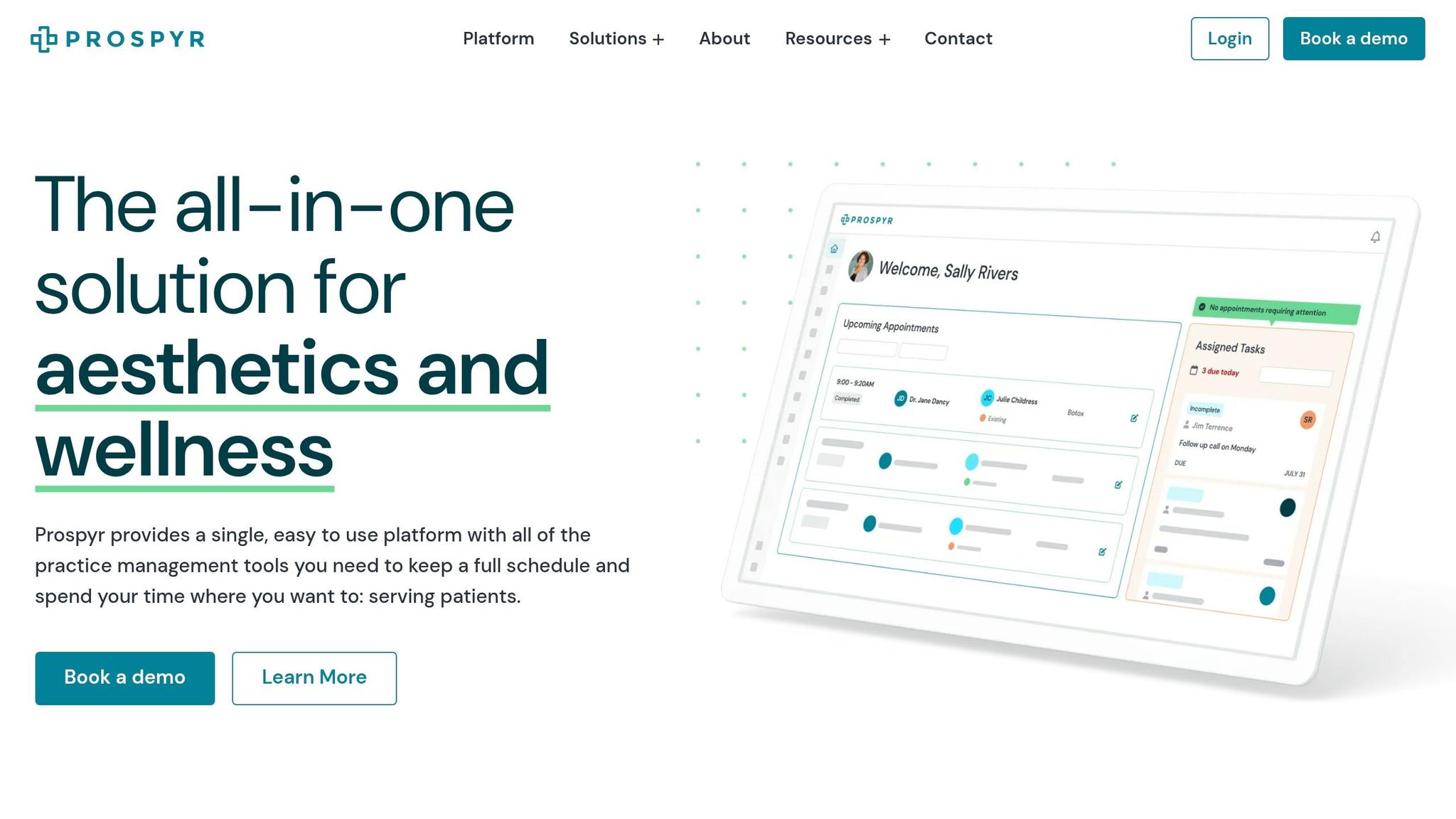
Technology plays a huge role in making compliance manageable as your practice grows. Prospyr is a HIPAA-compliant practice management platform designed specifically for aesthetic and wellness clinics. By centralizing patient data and enforcing strict security standards, Prospyr addresses the challenges of managing data across multiple locations.
With features like integrated CRM and EMR systems, Prospyr ensures patient information flows securely between sites. Role-based access controls enforce the "minimum necessary" standard, allowing employees to access only the data they need for their roles. Automated documentation and digital intake forms reduce manual errors that could lead to compliance issues. Plus, a centralized system simplifies vendor management and audit preparation.
Adam Witkov emphasizes:
Compliance isn't just about avoiding problems - it's about creating a foundation for sustainable success.
For practices expanding into new states, Prospyr’s flexible infrastructure can adapt to different regulatory requirements while maintaining high standards across all locations. Its marketing automation ensures promotional efforts adhere to state and federal guidelines, while integrated payment and communication tools keep the entire patient experience HIPAA-compliant. By consolidating all these functions into one platform, Prospyr reduces the complexity of managing multiple vendors and lowers your risk as you grow.
Conclusion
Opening a med spa and growing your practice starts with a strong HIPAA framework - it’s the backbone of any successful expansion. Without it, the risks are too high.
The healthcare industry is projected to hit $15 billion by 2026, but a single HIPAA violation can cost up to $50,000 per incident. Beyond fines, the damage to your reputation could be even harder to recover from. And as your practice adds locations, compliance becomes increasingly tricky. Each new site brings state-specific regulations and heightened federal scrutiny. Plus, managing patient data across multiple locations manually? That’s a recipe for errors and inefficiencies.
To avoid these pitfalls, your compliance strategy needs both legal and technological components. HIPAA compliance isn’t just a box to check - it can actually set you apart. By standardizing security protocols, you’re not only safeguarding patient data but also streamlining operations and preparing your practice for sustainable growth. Whether you’re looking to attract private equity or expand confidently, a solid compliance framework is key.
Tools like Prospyr (https://prospyrmed.com) can make this process easier. With features for patient management, scheduling, and secure communications, Prospyr helps ensure compliance while simplifying operations across all your locations. It’s a smart way to keep your practice efficient, secure, and ready for the future.
FAQs
What changes when my aesthetic practice opens a location in another state?
When moving your practice into a new state, it’s crucial to align with that state’s licensing requirements, scope-of-practice laws, and regulations. On top of that, you’ll need to adhere to federal HIPAA guidelines while also addressing any privacy laws or operational standards unique to the state. Staying compliant in every location is key to upholding both legal obligations and data security protocols.
Are before-and-after photos considered PHI under HIPAA?
Yes, before-and-after photos fall under Protected Health Information (PHI) under HIPAA if they include any details that could identify the patient. To stay compliant, you need to get explicit patient consent and make sure the photos are securely stored and safeguarded.
What’s the minimum security setup I need for remote consults and telehealth?
To stay compliant with HIPAA regulations for telehealth in 2026, you'll need to prioritize a few key safeguards:
- End-to-end encryption: Ensure all data transmitted during telehealth sessions is encrypted to prevent unauthorized access.
- Business Associate Agreement (BAA): Have formal agreements in place with all technology vendors to confirm they meet HIPAA standards.
- Secure authentication methods: Implement robust login processes, such as multi-factor authentication, to control access to sensitive data.
- Proper session documentation: Keep detailed records of telehealth sessions, including patient consent, to meet compliance requirements.
- Secure endpoint devices: Use devices that are regularly updated and patched to reduce vulnerabilities.
These steps are essential for protecting patient information during remote consultations and maintaining compliance.