
OSHA compliance is non-negotiable for med spas. These facilities must follow strict healthcare safety standards to protect employees and avoid hefty fines. Key areas include bloodborne pathogen protocols, chemical hazard management, and maintaining a safe workplace environment. Failure to comply can result in penalties ranging from $1,500 to $75,000, as seen in real cases like a 2018 inspection that cost one med spa $13,500.
Key Takeaways:
- Bloodborne Pathogens: Implement an Exposure Control Plan, provide Hepatitis B vaccinations, and use proper sharps containers.
- Hazard Communication: Maintain Safety Data Sheets (SDS), label all chemicals, and train employees on handling hazardous materials.
- Workplace Safety: Prevent slips, trips, and falls with clean floors and proper lighting.
- Training: OSHA mandates regular employee training on safety protocols, with records kept for compliance audits.
- Inspections: Be prepared with organized documentation and a clear response plan.
Med spas must meet the same standards as hospitals and clinics. Proactively addressing these requirements not only ensures compliance but also creates a safer workplace and protects your business from financial risks.
OSHA Standards That Apply to Med Spas
Med spas must adhere to various OSHA regulations designed for healthcare environments. These rules address the specific risks tied to working with needles, chemicals, and clinical equipment. Knowing which standards apply and how to implement them is essential for creating a safe and compliant workplace. Below are key OSHA standards and actionable steps for med spas.
Bloodborne Pathogens Standard
Under the Bloodborne Pathogens Standard (29 CFR 1910.1030), med spas are required to have a written Exposure Control Plan (ECP). This document identifies employees and tasks that may involve exposure to blood or other potentially infectious materials (OPIM), such as synovial fluid or amniotic fluid. The ECP must be reviewed and updated annually to incorporate new safety measures and devices.
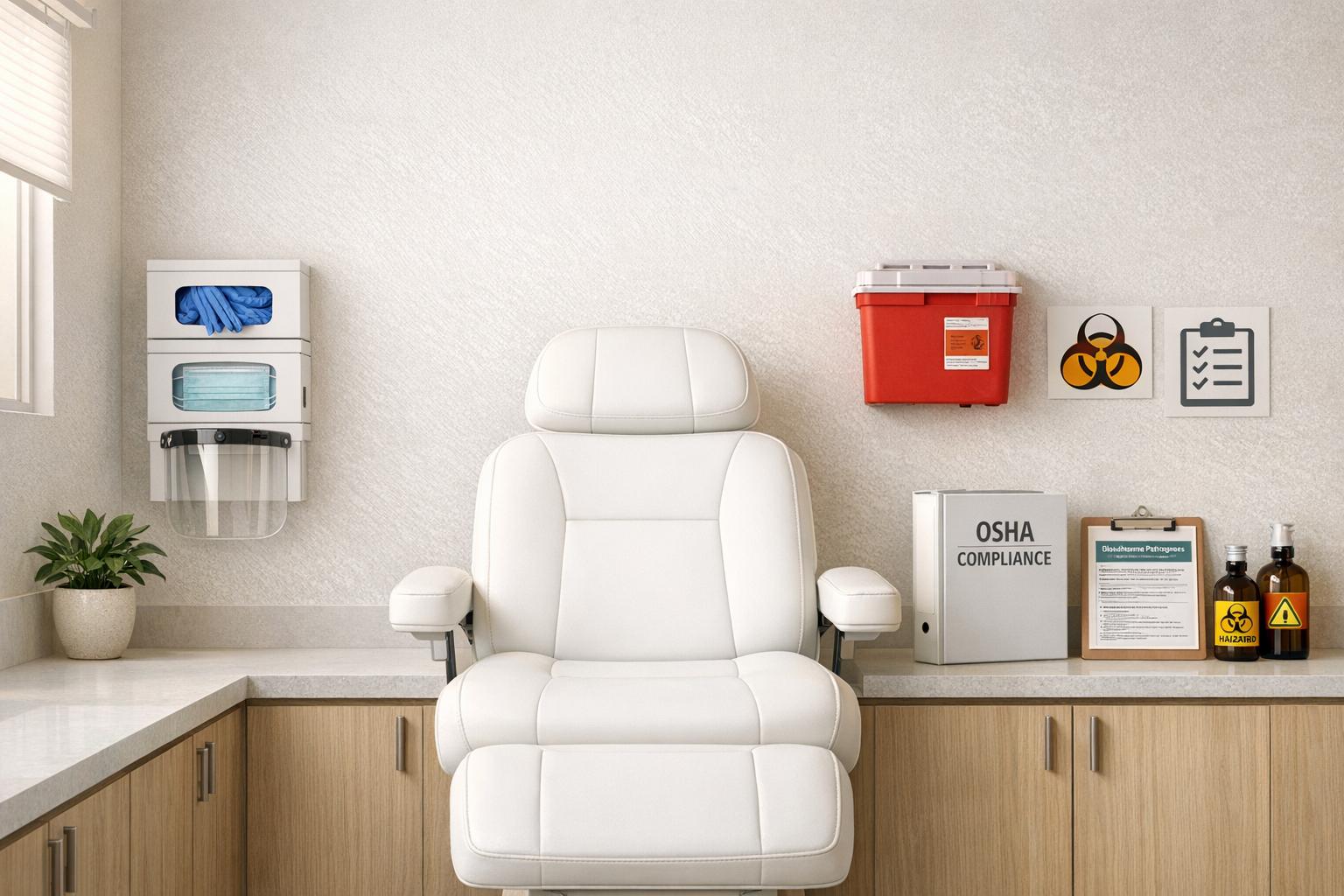
Employers must enforce universal precautions, treating all blood and OPIM as potentially infectious. Staff should use proper personal protective equipment (PPE), including gloves, masks, gowns, and eye protection, all of which must be provided at no cost to employees. Vaccination protocols are also critical: med spas must offer the Hepatitis B vaccine series free of charge within 10 days of an employee's initial assignment. This is especially important since Hepatitis B can survive in dried blood for up to a week.
To minimize risks, med spas should implement engineering controls like puncture-resistant sharps containers, self-sheathing needles, and needleless systems. Safe work practices are equally important - staff should avoid recapping needles and wash their hands immediately after removing PPE. The Needlestick Safety and Prevention Act of 2000 also requires that non-managerial employees help select safer medical devices.
In the event of exposure, med spas must provide immediate, no-cost medical evaluation and follow-up care. Proper documentation is essential and should include details about the exposure route and source. Keep training records related to bloodborne pathogens for at least three years, and maintain employee medical records for the duration of employment plus 30 years.
Hazard Communication Standard
The Hazard Communication Standard (29 CFR 1910.1200) governs the handling of hazardous chemicals like disinfectants, chemical peels, and cleaning agents. This regulation aims to protect both staff and clients by ensuring proper management of chemical hazards. Alongside the Bloodborne Pathogens Standard, it accounts for a large share of OSHA healthcare-related penalties.
Med spas must create a written Hazard Communication Program that outlines procedures for labeling chemicals, maintaining Safety Data Sheets (SDS), and providing employee training. A complete chemical inventory should include all hazardous substances, even those in secondary containers like spray bottles. Each chemical must have an SDS that is accessible during all shifts, either digitally or in print.
All containers must be labeled with essential information, including the product name, hazard warnings, and precautionary statements. If a chemical is transferred to a new container, it must also be labeled unless it is for immediate use.
"The transmittal of information is to be accomplished by means of comprehensive hazard communication programs, which are to include container labeling and other forms of warning, safety data sheets and employee training." – Occupational Safety and Health Administration
Training on chemical hazards should occur during an employee's initial assignment and whenever new chemicals are introduced. This training must be conducted in a language employees understand and should allow for questions. For staff handling corrosive materials, such as certain chemical peels or strong disinfectants, eyewash stations should be readily available in the work area.
Preventing Slips, Trips, and Falls
Med spas often deal with wet floors, spilled products, and liquids used in treatments, making slips, trips, and falls a common hazard. OSHA's General Duty Clause requires employers to maintain clean, dry floors and clear walkways to prevent injuries.
Daily cleaning routines should include wiping down treatment rooms after procedures involving water, oils, or other slippery substances. Use non-slip mats in areas prone to spills, clean up spills promptly, and keep walkways free of clutter. Proper lighting in hallways and treatment areas is another simple yet effective way to reduce accidents.
Regular facility inspections can help identify hazards before they lead to injuries. Assigning staff to check floors, stairs, and entryways at the start of each shift - and documenting these checks - demonstrates compliance during OSHA audits. Small steps, like placing caution signs near wet areas and repairing uneven flooring, can significantly reduce workplace injuries.
sbb-itb-02f5876
Building an OSHA Compliance Program

OSHA Standards for Med Spas: Key Requirements and Applications
Developing a solid OSHA compliance program is essential for protecting both your staff and clients, while also minimizing the risk of costly violations. Med spas face specific risks - like needle sticks and chemical exposure - that require a systematic approach to safety.
Start with a hazard assessment to identify chemical, biological, and physical risks unique to your facility. This evaluation determines which OSHA standards apply and what measures you need to implement. For instance, if your team performs microneedling or injections, you must have a written Exposure Control Plan for bloodborne pathogens. Similarly, using chemical peels or strong disinfectants requires a Hazard Communication Program.
"Medical spas are considered health care entities; therefore, they are subject to the health care requirements of OSHA." – Steve Wilder, President, Sorensen, Wilder & Associates
Keep thorough records of training sessions, meeting minutes, and hazard assessments. Christie Hutchinson, CEO of QCC Healthcare Consultants, emphasizes the importance of documentation:
"In the event of an OSHA inspection, licensing board investigation or conflict with an employee, your documentation of education can protect you".
Additionally, ensure that Safety Data Sheets for all hazardous chemicals are easily accessible to staff during every shift.
Appoint a safety lead - ideally your medical director or a qualified staff member - to oversee compliance efforts. This individual should conduct regular audits (monthly or quarterly) of patient charts, consent forms, staff credentials, and treatment protocols to identify and resolve issues before inspections. The safety lead should also organize staff training and facilitate routine audits to maintain compliance. Involving employees at all levels, such as in the selection of safe medical devices, further strengthens adherence to OSHA standards.
Creating a Safety Plan for Your Med Spa
Once you’ve completed the hazard assessment, the next step is translating OSHA requirements into actionable daily practices. Two essential written programs are:
- Exposure Control Plan (ECP): Focuses on protecting staff from bloodborne pathogens.
- Hazard Communication Program: Addresses chemical safety.
Your ECP should specify which tasks expose employees to blood or infectious materials. It should also outline engineering controls like puncture-resistant sharps containers and self-sheathing needles. Include protocols for offering Hepatitis B vaccinations within 10 days of an employee’s start date and procedures for immediate medical evaluation after exposure incidents.
The Hazard Communication Program should detail how chemicals are labeled, how Safety Data Sheets are managed, and how employees are trained. Create a comprehensive chemical inventory, listing all hazardous substances, including those in secondary containers. Use EPA's "List N" to confirm your disinfectants meet medical-grade standards and train staff on proper "wet time" (keeping surfaces visibly wet for 1–3 minutes) for effective disinfection.
Establish clear procedures for reporting workplace injuries or exposure incidents. For example, a 2018 OSHA inspection of a med spa following an exposure incident resulted in multiple citations totaling $13,500. Proper documentation and protocols can help you avoid similar penalties.
Regular safety audits are crucial for identifying new risks and staying compliant with updated regulations. As of 2025, OSHA has introduced stricter air filtration and ventilation requirements to reduce airborne contaminants in treatment rooms. There’s also a growing emphasis on providing mental health resources for staff in high-stress roles.
OSHA Standards Comparison Table
Here’s a quick overview of key OSHA standards and how they apply to med spas:
| OSHA Standard | Key Requirements | Protections Offered | Med Spa Application |
|---|---|---|---|
| Bloodborne Pathogens (29 CFR 1910.1030) | Written Exposure Control Plan, Hepatitis B vaccines, annual training, sharps containers | Protects against HIV, Hepatitis B, and other infectious materials | Essential for staff performing injections, blood draws, or microneedling |
| Hazard Communication (29 CFR 1910.1200) | Maintain Safety Data Sheets, label all containers, written HazCom program | Ensures staff understand chemical risks | Applies to chemical peels, disinfectants, and cleaning agents |
| Personal Protective Equipment (PPE) | Hazard assessment, provision of gloves/masks/eye protection, training on use | Prevents physical and biological exposure | Required for clinical procedures and handling hazardous chemicals |
| General Duty Clause | Maintain a workplace free from recognized hazards | Broad protection against hazards not covered by specific standards | Covers general safety, including ergonomics and workplace violence |
| Recordkeeping | Maintain OSHA injury logs (Forms 300 and 300A) | Tracks safety trends and ensures transparency | Required for documenting needle sticks and other injuries |
Med spas fall under the Health Care and Social Assistance category (NAICS Code 62) for OSHA purposes, which means they must meet the same standards as other healthcare facilities. Steve Wilder adds:
"OSHA is not getting any gentler; they're not getting any more workplace-friendly. Expect them to be really aggressive in infection control in all areas of medical care".
Training Staff on Safety and Hazard Prevention
Turning written safety protocols into everyday habits requires effective training. OSHA mandates specific training for med spa staff, and non-compliance can lead to hefty fines. For example, one facility was fined $2,500 for failing to train employees on bloodborne pathogens within 10 days of hire.
Training isn't a one-and-done process. Bloodborne pathogens training must be provided upon assignment and revisited annually. Hazard communication training should be updated whenever new chemicals are introduced. Starting in 2025, OSHA will also require more frequent hand hygiene training to emphasize proper techniques and reduce healthcare-associated infections.
The goal of training is to ensure staff not only receive information but fully understand and apply it. Christie Hutchinson of QCC Healthcare Consultants explains:
"Education includes providing access to the information, and ensuring understanding and retention of the information".
To measure comprehension, use quizzes and direct observation. For example, confirm staff understand the "wet time" requirements for EPA-approved disinfectants. These steps align with broader OSHA compliance strategies.
Required Training Topics
Your training program should focus on several essential areas to meet OSHA requirements. Bloodborne pathogens training includes exposure control plans, universal precautions, and proper use of personal protective equipment (PPE) during procedures like injections, microneedling, or blood draws. Hazard communication training ensures employees know how to handle chemicals safely, interpret Safety Data Sheets, and follow proper storage protocols. Laser safety training should cover device-specific settings and eye protection.
PPE training is another critical component. Staff need to know when protective equipment is required, how to properly put it on and take it off, and the limitations of each type. Emergency procedures training should include CPR, first aid, and facility-specific response plans, especially in locations without immediate access to medical care. General safety topics like preventing slips and falls, maintaining electrical safety, and addressing workplace violence should also be included.
| Training Topic | OSHA Required Frequency | Key Components |
|---|---|---|
| Bloodborne Pathogens | Within 10 days of hire and annually | Universal precautions, sharps disposal |
| Hazard Communication | Upon assignment and with new hazards | Safety Data Sheets, chemical labeling |
| PPE Training | Before use and when equipment changes | Donning/doffing, maintenance, disposal |
| Laser Safety | Upon assignment to device | Device settings, eye protection, mitigation |
| Hand Hygiene | Increased frequency starting 2025 | Proper techniques, infection prevention |
| Emergency Response | Annually or as needed | CPR/AED, first aid, incident reporting |
Maintaining Regular Training Schedules
A structured training schedule ensures compliance and keeps staff skills sharp. Create a master calendar to monitor when employees complete required training and schedule refreshers as needed. Many med spas now use software to automate compliance tasks and track certifications.
Proper documentation is equally important. Keep attendance records, quiz results, and certificates organized - whether digitally or in a centralized binder. In one case from October 2018, a med spa faced $13,500 in OSHA penalties due to poor training documentation. Accurate records not only support audits but also strengthen your safety program.
Training should also be updated whenever new equipment or procedures are introduced. For instance, adding a new laser device or switching to a different chemical product requires staff training before implementation. Quarterly meetings or "touch bases" can help review safety protocols and address any questions. This ongoing effort is essential as regulations evolve and OSHA places more emphasis on infection control and workplace safety.
Preparing for and Responding to OSHA Inspections
When an OSHA Compliance Safety and Health Officer (CSHO) shows up, it’s often unannounced - frequently triggered by an employee complaint about safety issues like needle sticks. For example, in October 2018, West Side Medical Spa underwent a three-day inspection that revealed multiple violations. The result? $13,500 in fines, with penalties ranging from $1,500 to $4,500 for lacking a written bloodborne pathogens exposure control plan, inadequate training, and missing needle stick logs. These fines come straight out of your business's pocket, highlighting why preparation is crucial.
Steve Wilder, President of Sorensen, Wilder & Associates, warns about the intensity of these inspections:
"OSHA is not getting any gentler; they're not getting any more workplace-friendly. Expect them to be really aggressive in infection control in all areas of medical care".
Between October 2021 and September 2022, OSHA issued 91 healthcare-related citations for bloodborne pathogen violations, totaling $167,985 in penalties.
Pre-Inspection Checklist
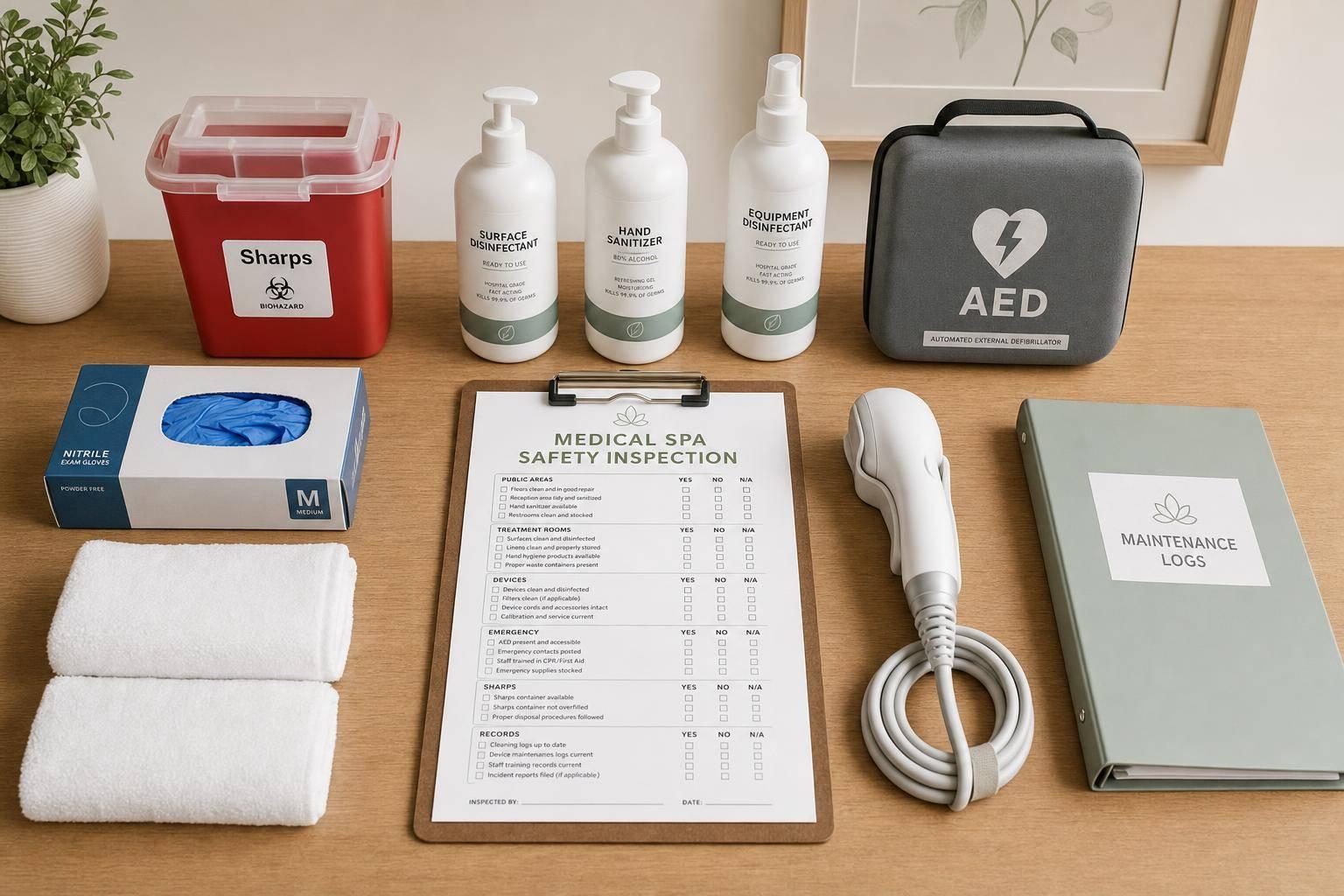
To be ready for an inspection, your compliance program should include a well-organized digital intake and documentation system. Keep essential records - like your Exposure Control Plan, Hazard Communication Program, OSHA Forms 300 and 300A, Safety Data Sheets, employee training logs (complete with attendance and quizzes), and sharps injury logs - in a centralized location, whether physical or digital. Regular self-audits using an OSHA checklist can help identify and fix issues like improper sharps disposal or missing Safety Data Sheets before inspectors do.
Make sure your facility meets all OSHA and EPA standards. For example:
- Use EPA-approved medical-grade disinfectants.
- Properly label biohazard waste receptacles.
- Keep first aid supplies accessible.
- Ensure ventilation systems are operational.
- Place sharps containers at the point of use.
Additionally, PPE should be stored in easily accessible locations. Staff should also understand the "wet" or "contact" time for cleaning products on the EPA’s List N, which is typically 1–3 minutes. Once documentation is in order and the facility is compliant, shift your focus to handling the inspection itself.
What to Do During an Inspection
When OSHA arrives, your response should reflect your safety protocols and readiness. The officer will identify themselves to management and explain the purpose of their visit. Inspections generally include a walkthrough of the site, private interviews with employees at various levels, and a thorough review of safety records. To avoid unnecessary scrutiny, designate a private area for interviews and ensure all requested documentation is immediately accessible.
Christie Hutchinson, CEO of QCC Healthcare Consultants, stresses the importance of being prepared:
"Once a regulatory organization enters your facility, all infractions are fair game".
Employees should be ready to confidently answer questions and know where to find safety materials like PPE and Safety Data Sheets. During private interviews, OSHA officers have the right to speak with staff one-on-one. Encourage your team to answer honestly and rely on their training for accurate responses.
Conclusion
OSHA compliance isn't just a box to check for med spas - it’s a legal obligation designed to safeguard your team, your business, and your reputation. Experts in the field stress that med spas must adhere to rigorous healthcare standards. Failing to meet these requirements can lead to steep fines, none of which are covered by insurance.
But compliance isn’t just about avoiding penalties. A well-implemented compliance program creates a safer workplace for your staff and fosters trust with your clients. Key elements like an Exposure Control Plan, a Hazard Communication Program, and consistent staff training lay the groundwork for a safe and professional environment. Keeping thorough records - such as training logs and Safety Data Sheets - ensures you're prepared for any OSHA inspection. To make this process more manageable, digital compliance tools are worth considering.
As your med spa grows, managing compliance manually can become overwhelming. Platforms like Prospyr simplify the process by digitizing safety training records, automating sanitation checklists, and tracking employee certifications. These tools allow you to stay audit-ready while focusing on providing excellent patient care.
Taking a proactive stance on compliance shifts it from being a chore to becoming a key part of your med spa's success. By embracing the practices outlined in this guide, you’ll protect your team from hazards like needle sticks and chemical exposure, shield your business from hefty fines, and uphold the reputation you’ve worked so hard to build. Compliance isn’t just about meeting standards - it’s about setting the standard for safety and professionalism in your industry.
FAQs
Do med spas have to follow the same OSHA rules as hospitals?
Med spas are required to follow OSHA standards tailored to healthcare and aesthetic businesses. While these regulations aren't identical to those for hospitals, they still demand strict adherence to workplace safety practices. This includes:
- Hazard communication: Ensuring that employees are informed about potential workplace risks and how to handle them.
- Employee training: Providing proper education on safety protocols and procedures.
- Maintaining a safe environment: Creating a workspace that minimizes risks for both staff and clients.
Following these guidelines is crucial for protecting everyone involved - employees and clients alike.
What written OSHA plans does my med spa actually need?
Your med spa needs to maintain OSHA-compliant written plans addressing essential safety standards, including:
- Bloodborne Pathogens Standard: This requires an Exposure Control Plan (ECP) to handle risks effectively. It should outline the use of personal protective equipment (PPE), employee training, and vaccination protocols.
- General Duty Clause: A strategy to identify and reduce workplace hazards, ensuring a safe environment for everyone.
- Infection Control and Sanitation Protocols: Clear, documented guidelines to minimize the risk of spreading diseases.
- Employee Safety and Training: Comprehensive plans for hazard communication and safe handling practices to protect staff and clients alike.
What’s the fastest way to get audit-ready for an unannounced OSHA inspection?
To get ready for a surprise OSHA inspection, make sure your safety protocols are up-to-date, well-organized, and periodically reviewed. Having a written OSHA inspection management policy in place can show compliance and help minimize the risk of citations. Pay special attention to keeping employee training records current, maintaining detailed hazard communication documents, and staying familiar with OSHA standards to ensure you're always prepared.